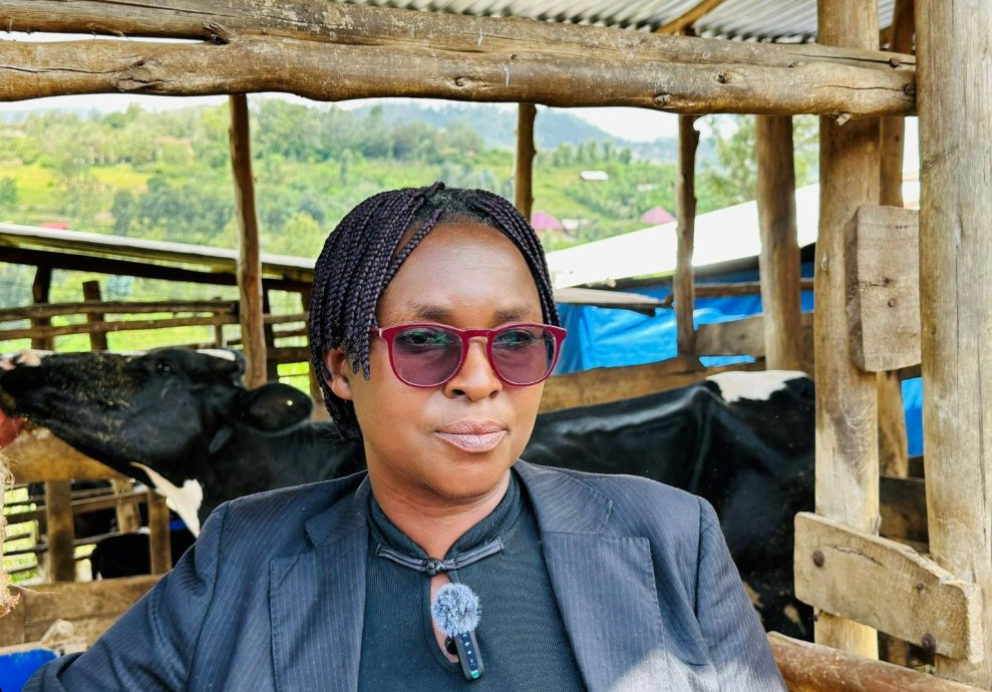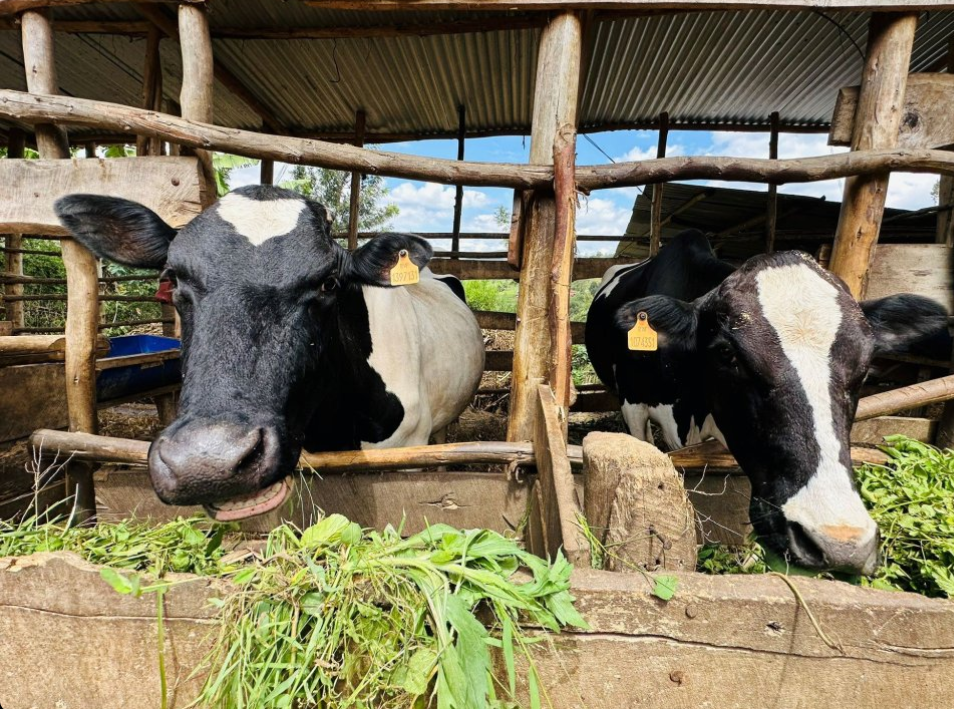




























Karongi farmer Josiane Nyiramisago began her journey in 2016 with just one cow producing 20 litres of milk daily. Through persistence and reinvestment, she now owns 17 cows, 10 of which produce a combined 100 litres of milk every day.

This remarkable growth reflects her determination to transform small‑scale farming into a sustainable business.
ALSO READ: Rwandan Peacekeepers Win Trophy in South Sudan
Expansion and Income Streams
By 2019, Nyiramisago had secured a bank loan, built proper sheds, and expanded her herd. Today, she earns around 40,000 Rwf per day from milk sales.
Beyond milk, she profits from calves and manure: a three‑month‑old bull sells for about 300,000 Rwf, while truckloads of manure fetch 40,000 Rwf each. Her farm employs seven workers, including five who handle feed and two security guards, showing how her enterprise contributes to local job creation.
ALSO READ: Rwandan Team Makes History, Winning the BAL Tournament for the First Time
Risk Management and Innovation
Nyiramisago explained that cows producing less than 10 litres daily are sold and replaced with higher‑yielding ones, ensuring efficiency.
In 2021, she joined the Tekana Urishingiwe Muhinzi Mworozi livestock insurance scheme, which reduced risk and strengthened her relationship with banks. This innovation allowed her to expand further and secure her business against unforeseen challenges.
National Dairy Growth Context
Her success mirrors Rwanda’s broader dairy sector expansion. National milk output tripled between 2010 and 2024, rising from 334,727 tonnes to 1,092,430 tonnes. At the same time, per capita consumption doubled from 37.3 litres to 79.9 litres annually.
These figures highlight how investment and modernization have transformed Rwanda’s dairy industry into a key contributor to food security and economic growth.
Impact and Lessons
Nyiramisago’s story demonstrates how modern dairy farming can generate income, create jobs, and strengthen food security. Her journey underscores the importance of investment, discipline, and innovation in turning agriculture into a profitable and sustainable business model.