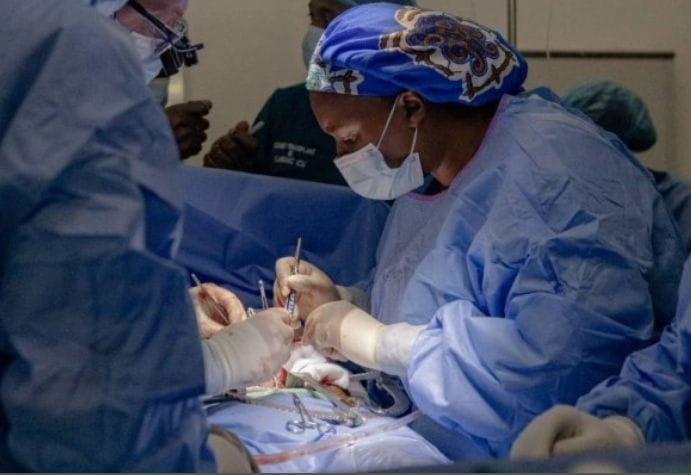





















Rwanda has stopped sending patients abroad for kidney transplants following the successful introduction of the procedure at King Faisal Hospital, marking a major milestone in the country’s healthcare system.

Over 100 Successful Kidney Transplants Performed in Rwanda
A kidney transplant becomes necessary when a patient reaches advanced kidney failure and dialysis is no longer sufficient, particularly after prolonged treatment.
King Faisal Hospital introduced kidney transplant services in May 2023. Since then, more than 100 patients have successfully undergone the procedure and are now living healthy lives.
Dr. Augustin Sendegeya, Director of Medical Services at King Faisal Hospital, said the transplanted kidneys are functioning well and patients have resumed their normal daily activities.
he said: “The transplanted kidneys are functioning, and the patients have returned to their normal lives. The medication they need is available, and we now have the capacity to provide the service. Since January this year, trained Rwandan doctors have been performing the procedures without assistance from foreign specialists.”
No More Patients Referred Abroad
The hospital also confirmed that there is currently no shortage of kidney donors for patients requiring transplants.
According to Dr. Sendegeya, Rwanda has not referred a single patient abroad for a kidney transplant since local services began in 2023.
he said: “Since we started, we have not sent a single patient abroad for a kidney transplant, yet this was previously the largest group of patients we referred overseas. Receiving the treatment in Rwanda reduces costs by about 40% compared with treatment abroad.”
Mutuelle de Santé Eases Burden on Dialysis Patients
Patients undergoing dialysis have praised the inclusion of the service under the Community-Based Health Insurance (Mutuelle de Santé), saying it has significantly improved access to lifesaving treatment.
Dialysis is usually required three times a week, and each session was previously too expensive for many patients.
Jean Claude Munyakabera, who receives dialysis at King Faisal Hospital, said the insurance coverage has transformed his life.
he said: “I was required to pay Rwf255,000 for each dialysis session. When I could not afford it, I missed treatment, which put my life at risk. Since Mutuelle started covering the service, I no longer miss my sessions and I can continue working,” .
Another patient, Mugabekazi Espérance, said many people had previously reduced or stopped treatment because they could not afford it.
she said: “Some people came only once a week, while others managed two sessions instead of the recommended three because they lacked money. Some stopped treatment completely, but when Mutuelle began covering dialysis, they regained hope.”
RSSB Says Saving Lives Comes First
Dr. Regis Hitimana, Director of Benefits for Mutuelle de Santé members at the Rwanda Social Security Board (RSSB), said expanding health insurance coverage to include expensive treatments for non-communicable diseases is a necessary investment.
he said: “We first assessed the costs and the requirements needed to provide treatment. Non-communicable diseases are increasing and claiming many lives, so we could not leave these services out of Mutuelle. Our priority is protecting people’s lives,”
ALSO READ: https://agaciropress.com/rwandas-unemployment-rate-stands-at-13-4-as-job-creation-efforts-continue/
A Major Milestone for Rwanda’s Healthcare System
The availability of kidney transplant services in Rwanda has significantly strengthened the country’s healthcare system by eliminating the need for overseas referrals, reducing treatment costs, building local medical expertise, and improving access to life-saving care for patients with kidney disease.