























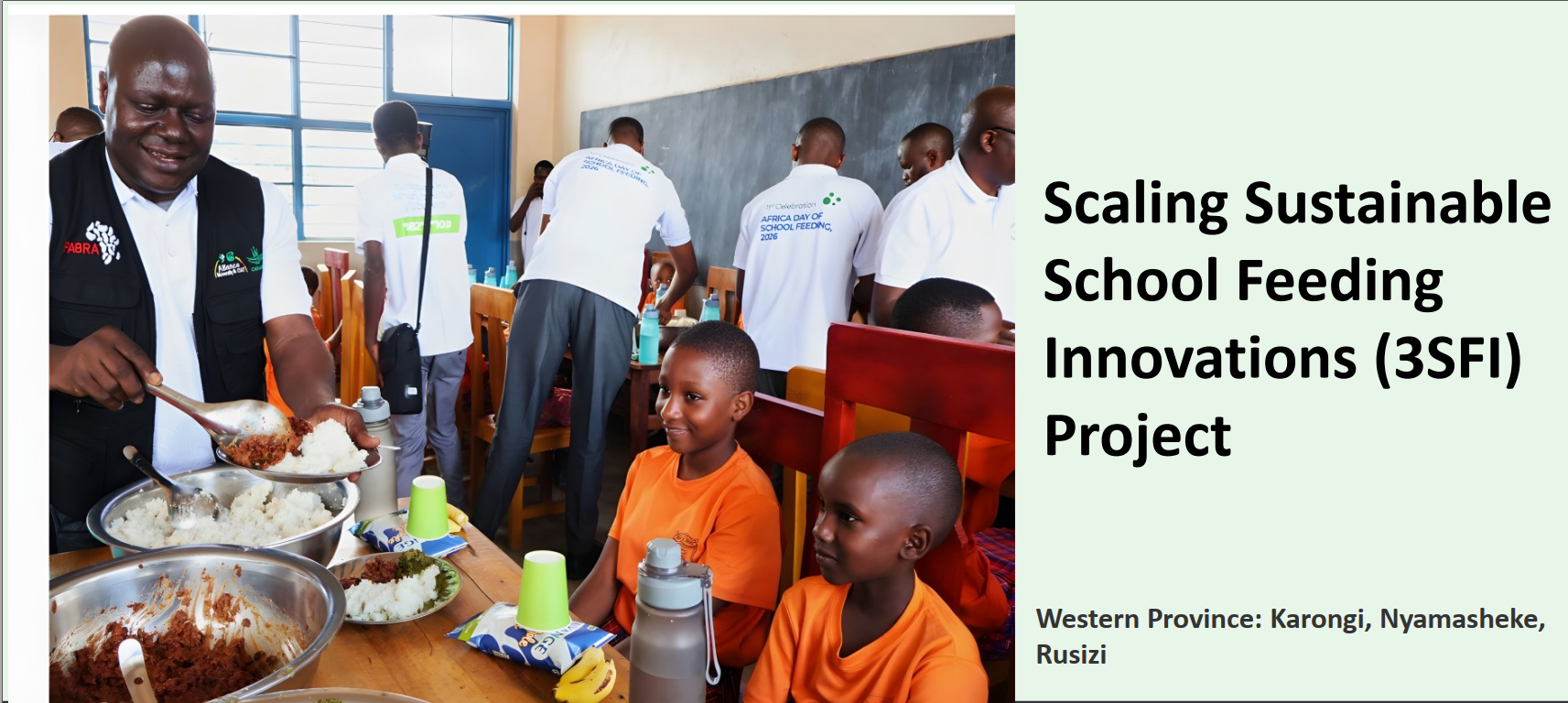
RUSIZI, May 26, 2026 Rwanda has taken a significant step toward eliminating malnutrition among schoolchildren. The country officially launched the Scaling Sustainable School Feeding Innovation (3SFI) project to improve school nutrition in Rwanda. This project is a joint initiative by the Alliance of Bioversity International and CIAT through the Pan-Africa Bean Research Alliance (PABRA).

The 3SFI project is being implemented in Rusizi, Karongi and Nyamasheke districts and supported by the Swiss Agency for Development and Cooperation (SDC).
This launch event brought together high-level representatives from several ministries includes the Ministry of Agriculture and Animal Resources (MINAGRI), the Ministry of Local Government, and the Ministry of Education. Additionally, officials from the Swiss Embassy in Rwanda attended. District leaders from Karongi, Rusizi, and Nyamasheke joined the event as well.
READ ALSO: TVET Education Empowers Young People to Build Successful Lives
High-Iron Beans: A Crop to Improve School Nutrition in Rwanda
At the heart of the project are high-iron beans. Scientists bred these special varieties to produce significantly more iron than conventional beans. Therefore, the crop directly addresses one of Rwanda’s most persistent nutritional challenges. Rwanda already ranks among the highest bean-consuming nations in the world. This high consumption makes the crop a natural and culturally accepted vehicle to scale up school nutrition in Rwanda.
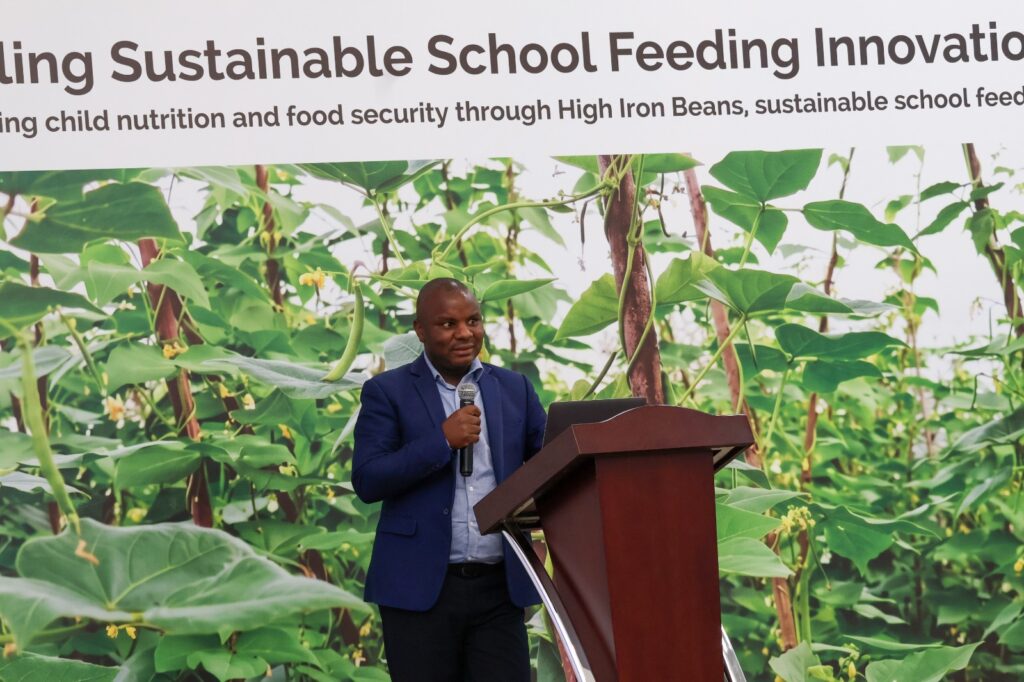
Dr. Olivier Kamana, Permanent Secretary at MINAGRI, praised the initiative during his speech. He noted that the project deserves to reach as many citizens as possible.
“Beans are one of the most important crops in our country. Statistics show that Rwandans are among the highest bean consumers globally. In just six months, this project is already demonstrating it can achieve a great deal. That is why we want it to expand to other districts so that its benefits reach more Rwandans.” Dr. Kamana stated.
READ ALSO: Noam Emeran Proud to Represent Rwanda After First Amavubi Call Up
Science Serving the Farmer and Consumer
Jean Claude Rubyogo, Director of PABRA and Global Bean Program Leader at the Alliance of Bioversity International and CIAT, explained the science behind the seeds. He stated that researchers spent years developing these varieties to meet the needs of both farmers and consumers.
“The bean varieties we bring have been developed through years of research,” Rubyogo explained. “We look at climate resilience, pest resistance, and disease tolerance, as well as consumer preferences. We are working to ensure that the varieties we release yield at least double what ordinary varieties produce. We want farmers to enjoy good harvests and sell at good prices. Also, we want consumers to say ‘what I am eating is delicious.’ We are also working to reduce cooking time so that firewood and charcoal use decreases. Consequently, the time people spend in the kitchen is reduced, and they can do other things.”
Amina Tuyishime, a farmer from Karongi District, echoed his words. She already grows these biofortified varieties in her fields. She offered simple but powerful testimony about her observations during the launch event.
“We learned that these beans are rich in iron and yield very well,” Tuyishime shared. “You can even see it in the many pods they produce. They grow well and have no problems.”
READ ALSO: Rwandan Muslims to Sacrifice 3,078 Animals for Eid Al‑Adha
Supporting National Strategic Goals
The 3SFI project sits at the intersection of several critical national development priorities. Richard Kubana, Director General at the Ministry of Local Government, highlighted its relevance to the Rwanda Vision 2050 agenda.
“The school feeding programme in Rwanda has a very big impact. It supports government strategic programmes in education, social protection, health, nutrition, economic development, and innovations that contribute to our Vision 2050. We need to invest heavily in things that will help us fight malnutrition. We all know how much it benefits our children, especially girls. That is why we expect great changes from this 3SFI project.”
His emphasis on girls reflects a well-documented national health challenge. Adolescent girls in Rwanda face vulnerability to iron-deficiency anaemia. This condition impairs cognitive development, physical strength, and academic performance. By embedding high-iron beans into the school feeding system, the project targets this vulnerability directly and systematically.
READ ALSO: Rwanda Police Cadets Pass Out Ceremony Marks 25 Years of RNP
Swiss Support for Long-Term Scale
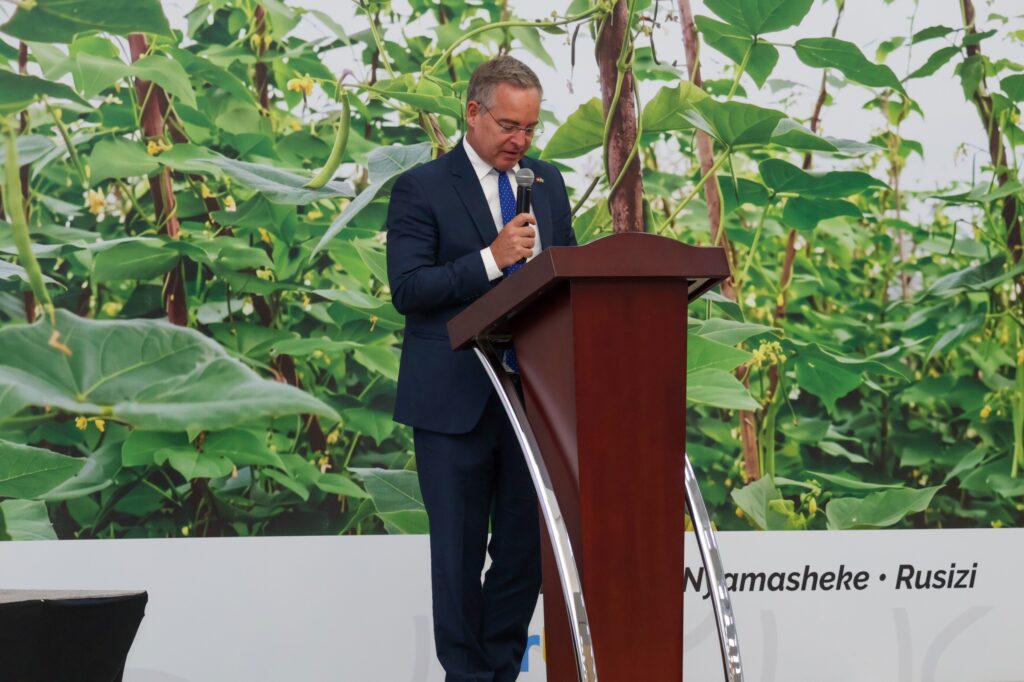
Switzerland, through its development agency SDC, acts as the primary funder of the initiative. Ueli Mauderli, Deputy Head of Mission at the Swiss Embassy in Rwanda, signaled Switzerland’s confidence in the project. He expressed a strong willingness to sustain support if the project continues on its current path.
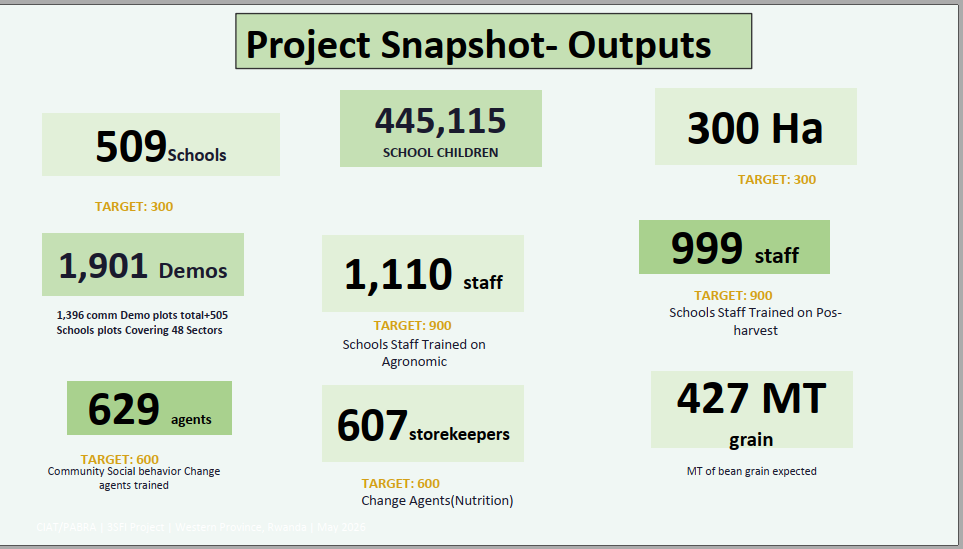
“If this project continues to perform well, we will continue to support it,” Mauderli said. This statement carries significant weight for the project team. Notably, the initiative has already trained 3,345 individuals across the three target districts in just its first operational months.
READ ALSO: Rayon Sports Knocks on the Door of Continental Qualification
Early Progress on the Ground
The 3SFI project achieved measurable progress even before the official launch ceremony. Since it starts, rounds of training have reached multiple local stakeholders. These participants include school bursars, storekeepers, sector-level officials, agronomists, farmer promoters, and head teachers across Karongi, Nyamasheke, and Rusizi.
The training sessions cover nutrition-sensitive cooking techniques and school garden management. Instructors also teach post-harvest bean storage and community behavior change communication. This integrated approach links the farm directly to the kitchen, the classroom, and the community. This method ensures that high-iron beans do not just reach schools. Instead, local networks grow, store, cook, and eat them in ways that preserve their nutritional value.
READ ALSO: MIFOTRA Clarifies Salary Increase Reports
Looking Ahead to National Impact
The 3SFI project possesses a strong launch, high-level institutional backing, Swiss funding, and tangible early results. Therefore, it is well positioned to become a model for nutrition-sensitive school feeding across the region.
The immediate ambition remains clear. The project teams intend to take what is working in Karongi, Nyamasheke, and Rusizi and bring it to every district in the country. This expansion will ensure that the benefits of this powerful bean reach every Rwandan child who needs it most. it most.
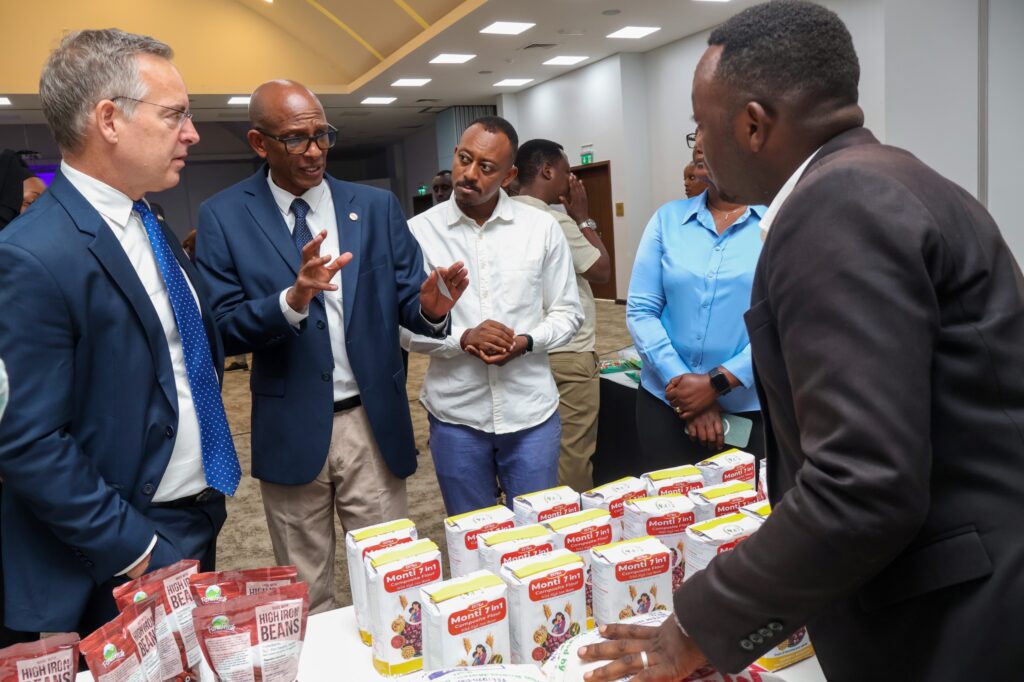
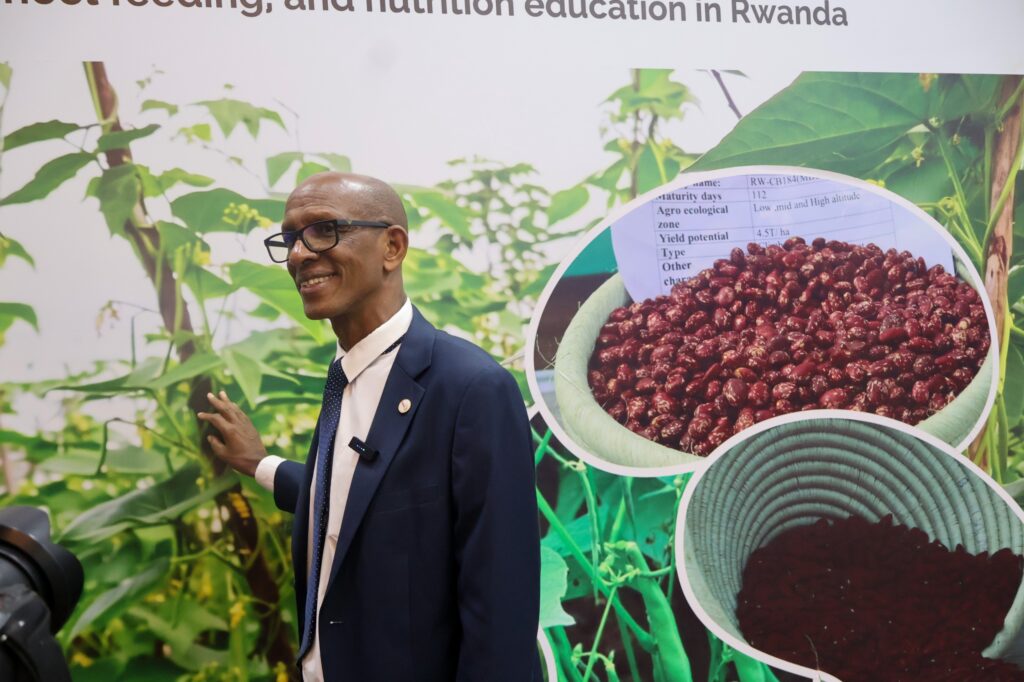
An event participant explores innovative, value-added bean products during the launch exhibition, examining the Monti biofortified porridge line developed by Rainbow Health Food Ltd in partnership with PABRA and CIAT to fight micronutrient deficiencies.
READ ALSO: Disabled RPA Veterans Visit Historic Sites Where Liberation Struggle Began
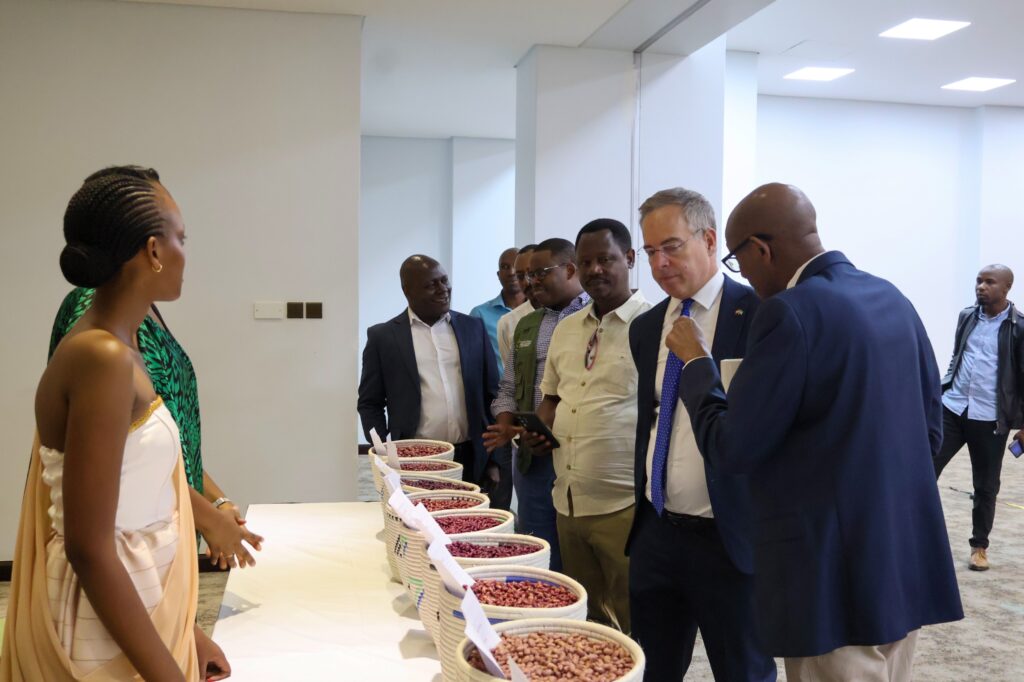
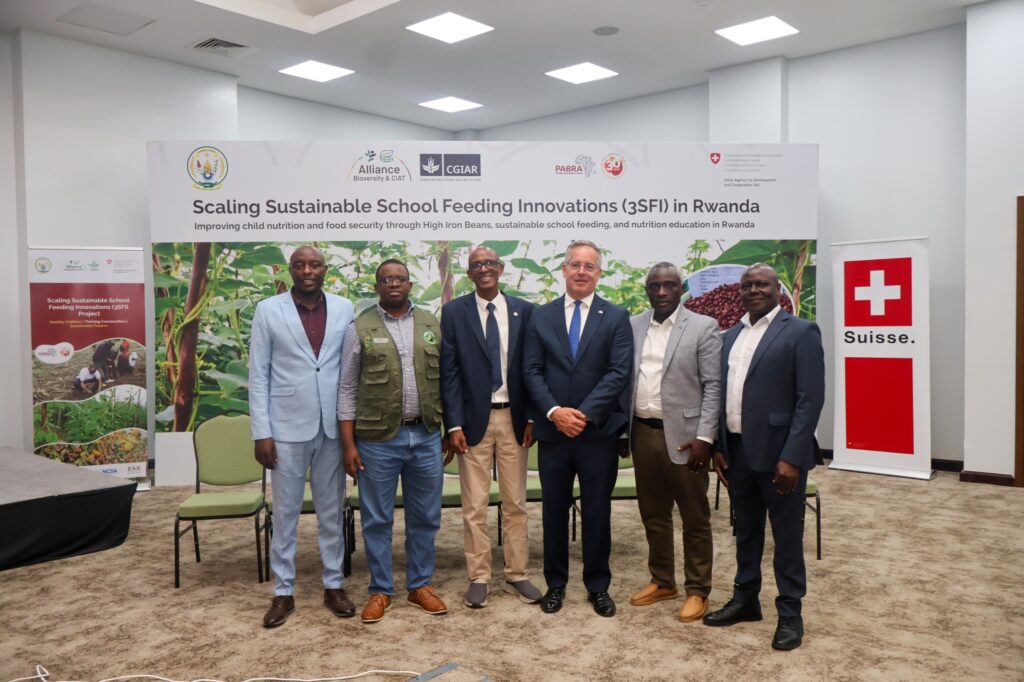
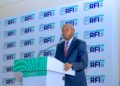
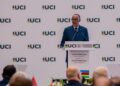
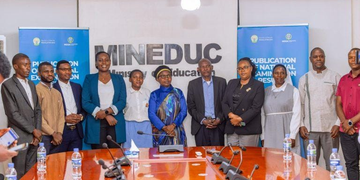
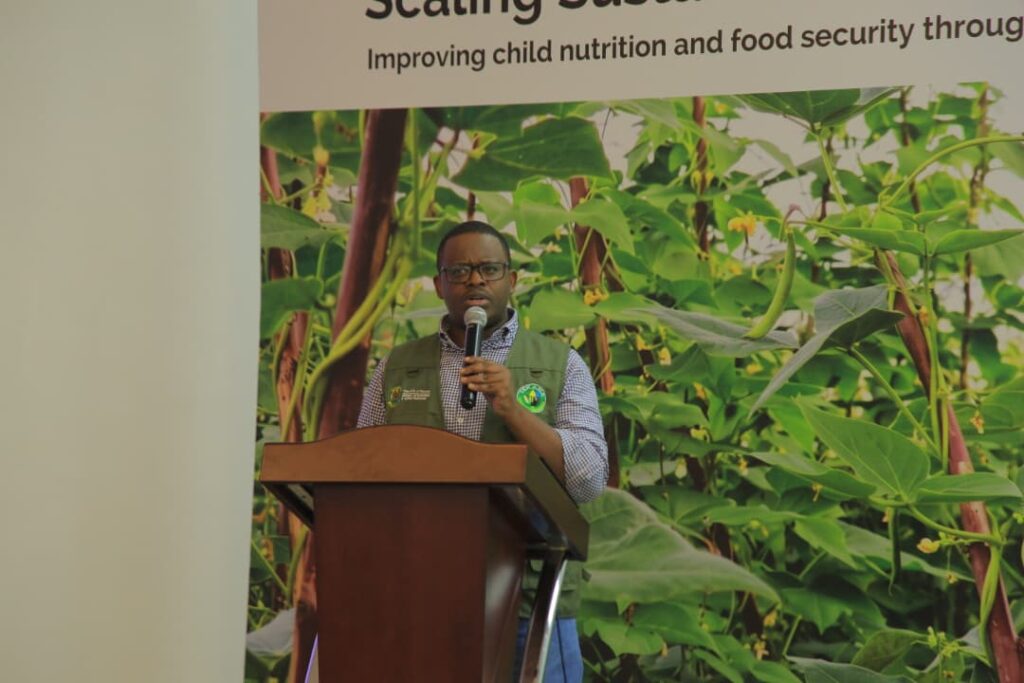
High-level officials and agricultural partners gather in Rusizi to launch the 3SFI project aimed at transforming school nutrition in Rwanda.
READ ALSO: AGACIRO PRESS: Turning Jobless into Opportunities