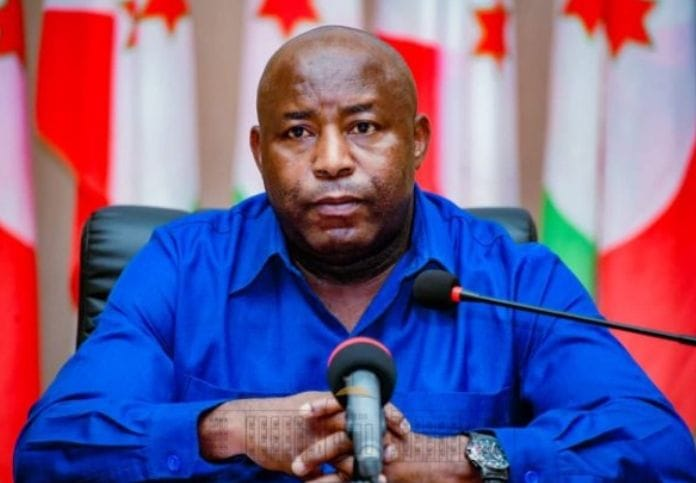





















Burundian troops continue to wage an intense military campaign to seize Minembwe in the Democratic Republic of the Congo (DRC), despite the operation proving increasingly difficult for President Évariste Ndayishimiye, who appears determined to achieve the objective at all costs.

Minembwe’s Strategic Importance in Eastern DRC
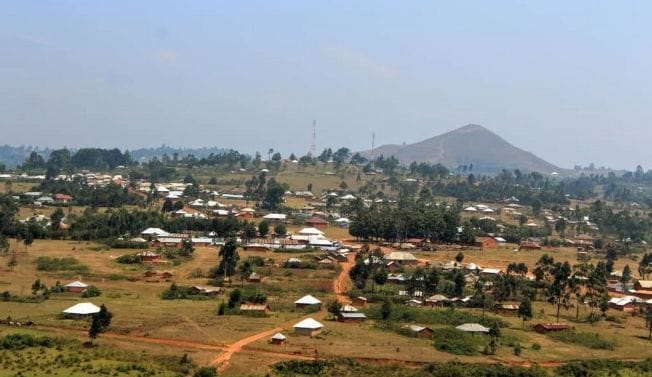
Located in the mountainous region of South Kivu, Minembwe is considered a strategic military position. Control of the area provides access to key transport routes, military supply corridors, and influence over large parts of eastern DRC.
The Minembwe administrative center lies in a valley surrounded by the Fizi Highlands. Within these mountains is the strategic Point Zero junction, which connects the route leading south to Baraka and north to Uvira.
To the west of Minembwe flows the Minembwe River, while the Gahwera hills overlook the area and are widely regarded as the western gateway to Minembwe.
As Burundian forces fight alongside the Armed Forces of the Democratic Republic of the Congo (FARDC) and allied armed groups including the FDLR, a terrorist organization founded by perpetrators of the 1994 Genocide against the Tutsi in Rwanda to capture Minembwe, many observers question whether the campaign is solely aimed at defeating the AFC/M23 coalition or forms part of a broader regional struggle for power and influence in the Great Lakes region.
Burundi’s Military Role and the Battle for Minembwe
Burundi’s deployment of troops to the DRC has sparked considerable debate. While the Burundian government maintains that its forces were sent to combat Burundian rebel groups operating from Congolese territory, critics argue that the military operation reflects a broader agenda jointly pursued by Burundi and the DRC targeting Congolese Tutsi communities.
Although Bujumbura insists that its deployment is intended to neutralize Burundian insurgent groups based in eastern Congo, the location of the fighting, the composition of allied forces, and political rhetoric surrounding Minembwe have led some analysts to conclude that the mission extends well beyond border security concerns.
As the FARDC increasingly relies on foreign military support to confront armed groups, Burundian troops and the FDLR have become key allies in operations to seize Minembwe, where they are fighting Twirwaneho, an armed group that says it is defending the rights of the Banyamulenge community.
Minembwe occupies a unique strategic position in South Kivu, linking the territories of Fizi, Mwenga, and Uvira. Whoever controls the area can influence vital supply routes, troop movements, civilian mobility, and military operations throughout the surrounding region.
Its rugged mountainous terrain has long made Minembwe a stronghold sought by both government forces and armed groups, serving as a base for regrouping and launching military operations. For this reason, repeated offensives against Minembwe are widely viewed as more than routine military engagements; they are seen as battles for control of one of South Kivu’s most strategically valuable areas.
Burundian forces had previously placed Minembwe under effective siege by blocking access routes, a move critics say prevented residents particularly Banyamulenge civilians from leaving to obtain food or specialized medical care.
According to the article, Burundian troops shifted their focus to Minembwe after suffering setbacks elsewhere, allegedly seeking to pressure the local population.
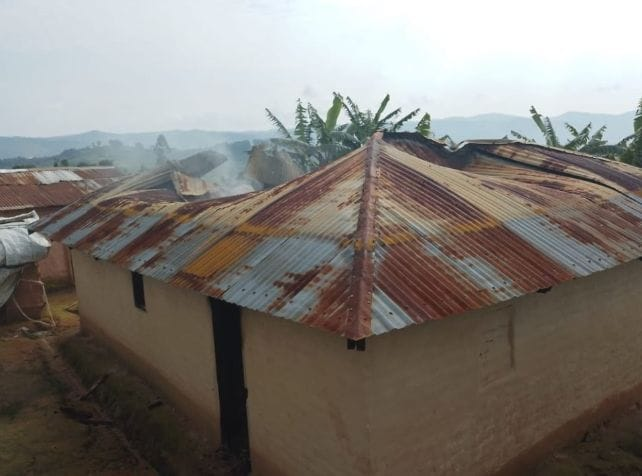
Beyond drone and air strikes that have reportedly targeted civilians, property, and livestock, residents of Minembwe are said to have endured severe restrictions on basic rights.
Claims of Political Alignment Between Ndayishimiye and Tshisekedi
The article argues that President Ndayishimiye’s determination to capture Minembwe is driven by several factors, including a desire to demonstrate loyalty to President Félix Tshisekedi, whom it portrays as deeply hostile toward Tutsi communities.
It further contends that Burundi has so far fallen short of meeting Tshisekedi’s military expectations and that maintaining a presence in Minembwe would allow Burundi to continue receiving financial support from the Congolese government while signaling its commitment to Kinshasa’s military objectives.
The article also claims that control of Minembwe is strategically important for Burundian and Congolese forces because it helps prevent the AFC/M23 coalition from expanding into neighboring areas while advancing what it describes as a campaign targeting Tutsi communities.
Political analyst Tite Gatabazi recently stated that Presidents Ndayishimiye and Tshisekedi had hoped to capture Minembwe before June 30, 2026.
Gatabazi said: “Their plan appears to have failed. The objective was to seize all of Minembwe before June 30, the anniversary of the DRC’s independence. President Tshisekedi wanted to deliver an Independence Day speech declaring that Minembwe had been captured through military force,”
Makuza Jules Sebahizi, a Banyamulenge community leader, also said that the continued presence of Burundian and Congolese forces in Minembwe serves only one purpose.
He said: “Going to Minembwe means their war is about killing. It is about killing civilians who have done nothing. There are no government institutions there only civilians. You bring Congolese soldiers, foreign troops, Interahamwe, and Mai-Mai militias. What are you looking for in Minembwe other than killing people? What we see is a campaign of killing rather than a fight against armed opponents,”
Critics of the Congolese government argue that official rhetoric portraying some Congolese citizens as foreigners, coupled with policies endorsed at the highest levels of government, reflects close alignment between Presidents Ndayishimiye and Tshisekedi, particularly regarding the treatment of Tutsi communities in Minembwe.
A Proxy Seeking to Please His Patron?
The article suggests that President Ndayishimiye is determined to capture Minembwe at any cost in order to strengthen his standing with President Tshisekedi.
However, despite close military cooperation, it argues that Burundi has yet to prove itself a reliable strategic partner, as Burundian forces have not succeeded in recapturing territory held by the AFC/M23 coalition.
Burundi maintains that its military operations in the DRC are intended to safeguard its national security and combat armed groups threatening Burundi.
Some regional analysts, however, believe the deployment also provides Burundi with an opportunity to expand its political and diplomatic influence in Great Lakes security affairs.
Deepening military cooperation with Kinshasa has strengthened Burundi’s diplomatic leverage, while control over strategic territory could also affect trade routes, logistics, and regional relations.
According to these analysts, foreign military interventions in eastern DRC have frequently combined security objectives with political and economic interests.
Although debate continues over Burundi’s primary objectives, many observers agree that foreign military operations in eastern DRC often pursue multiple goals extending beyond security alone.
RED Tabara and Burundi’s Stated Justification
Burundi continues to justify its military presence in the DRC by citing the need to combat RED Tabara, an armed group opposed to the Burundian government.
The group emerged following Burundi’s 2015 political crisis, when former President Pierre Nkurunziza sought a controversial third term, triggering widespread protests.
While the Burundian government described the unrest as an attempted coup, opposition groups argued that the events were used to justify a crackdown on political opponents and forced many Burundians into exile.
Bujumbura says its operations in eastern Congo are aimed at dismantling RED Tabara before it can launch attacks inside Burundi.
Critics, however, contend that operations against RED Tabara have become intertwined with the broader conflict in South Kivu.
As military operations continue to expand, questions remain over whether Burundi’s mission is still focused solely on national security or has evolved into a broader effort to secure long-term political, strategic, and economic interests in the Great Lakes region.
The article concludes by alleging that, despite Burundi’s stated objective of combating RED Tabara, its forces have not carried out military operations against the group and have instead concentrated on attacks targeting Congolese Tutsi communities.