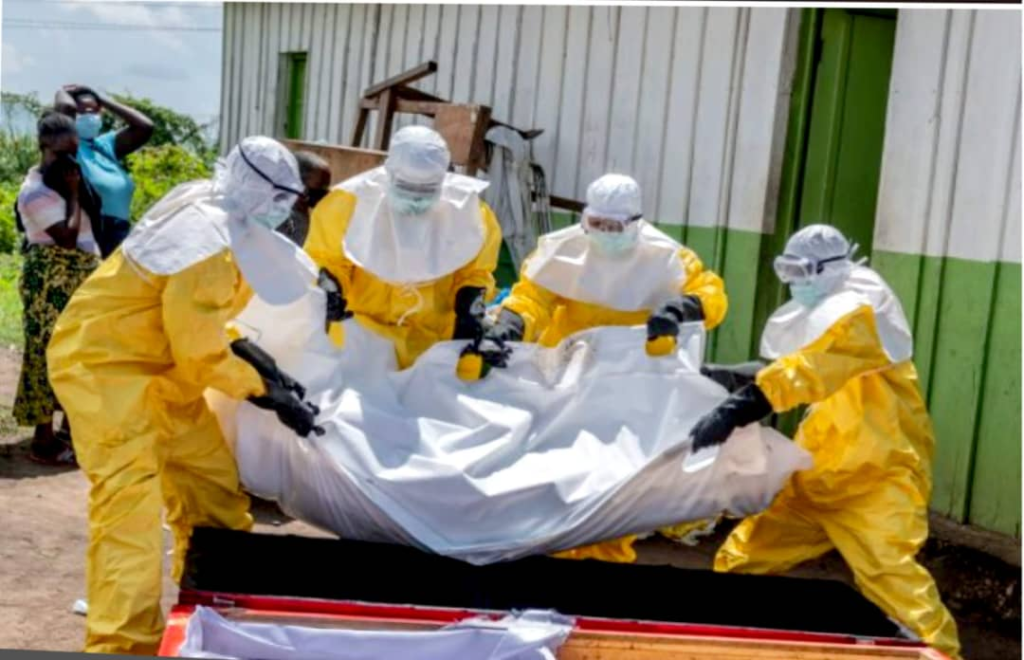









The Democratic Republic of Congo’s National Institute of Public Health (INSP) reports that, as of August 7, 2026, a total of 4,209 people had been infected with Ebola, of whom 1,916 had died.

According to the institute’s report, by that date, 828 people had recovered from the disease, while 595 were either in isolation or receiving treatment at designated health facilities.
Ituri Province remains the epicenter of the outbreak, accounting for 86.5% of all reported cases. In South Kivu, however, 72 days have passed without a new Ebola case being reported.
The outbreak is caused by the Bundibugyo virus. The World Health Organization (WHO) says that there is currently no approved treatment or vaccine specifically for this strain, although clinical trials are underway.
These figures make the outbreak one of the most serious Ebola outbreaks that the DRC has experienced since the disease was first identified in 1976. The WHO reported that, by July 30, the number of infections had already surpassed the number recorded during the 2018–2020 outbreak.
The 2018–2020 outbreak killed 2,299 people out of 3,481 confirmed cases. This means that although the number of infections is higher in the current outbreak, the number of deaths has not yet reached the level recorded during that period.
The number of people killed by Bundibugyo Ebola in the DRC has reached 1,916.