

























Rwanda’s Ministry of Justice has announced significant progress in implementing the country’s Criminal Justice Policy while proposing a review of lengthy prison sentences to strengthen rehabilitation and the successful reintegration of offenders into society.

The Minister of Justice, Dr. Emmanuel Ugirashebuja, made the remarks on July 8, 2026, during discussions with Members of Parliament on the implementation of the Criminal Justice Policy adopted in 2022.
The meeting assessed the achievements of the four-year-old policy, ongoing legal reforms, and the remaining challenges in improving Rwanda’s criminal justice system.
Case Backlog and Prison Overcrowding Continue to Decline
According to Dr. Ugirashebuja, the policy has significantly improved access to justice through the adoption of digital technologies, alternative dispute resolution mechanisms, faster court procedures, and stronger collaboration among justice institutions.
He noted that before the policy was introduced, the backlog of court cases had reached 62%, far above the National Strategy for Transformation (NST1) target of 30%.
“Before this policy was implemented, the backlog in cases was very high at 62%, while in NST1 it was supposed to be 30%, but it had actually increased. Now, in the last year of justice, it had already decreased to 49%. Today, it has reached 42%, which means that this policy has led to a 20% reduction,” he said.
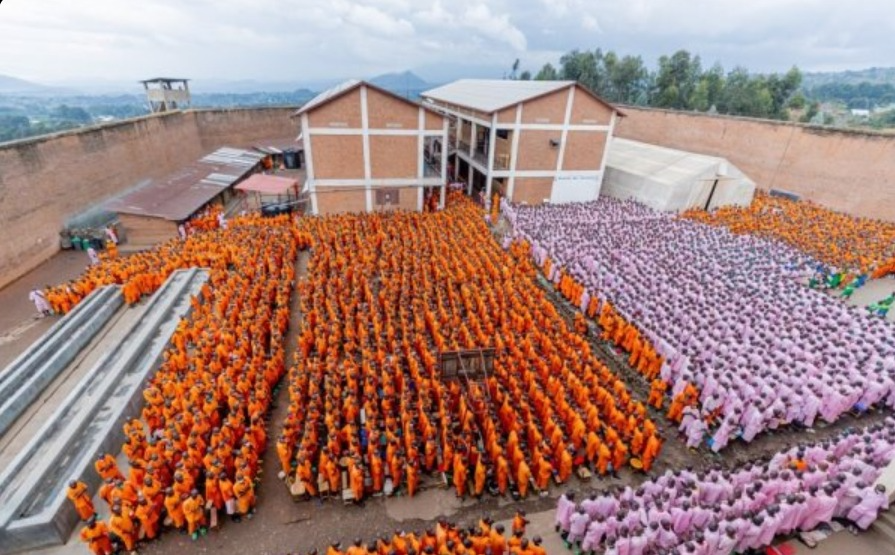
The minister also revealed that prison overcrowding has fallen from 144.5% to 97%, largely due to the expanded use of alternative sentencing measures.
Alternative Sentencing and Plea Bargaining Ease Pressure on Courts
Dr. Ugirashebuja said 858 offenders are currently serving alternative sentences instead of custodial prison terms, helping reduce pressure on correctional facilities.
He added that plea bargaining has become one of the most successful reforms introduced under the Criminal Justice Policy.
“Today, there are 858 people serving these alternative sentences. Since this policy was put in place, the plea bargaining mechanism has helped resolve 35,878 cases that had not been brought to trial,” he said.
Over the past 10 months alone, plea bargaining resolved 1,707 cases that were already before the courts, while another 10,889 cases were concluded through the National Criminal Investigation Service (NCIS).
Criminal Investigation Reforms Improve Efficiency
The Criminal Justice Policy has also expanded the powers of the National Criminal Investigation Service by allowing it to archive certain criminal case files before they are forwarded to prosecutors.
According to the minister, the NCIS has archived approximately 195,000 case files, significantly reducing the workload of the National Public Prosecution Authority and helping to speed up the administration of justice.
Despite these achievements, seven draft laws related to the policy remain under review, while some planned reforms continue to face funding constraints.
Government Proposes Review of Lengthy Prison Sentences
Among the reforms already introduced is the revision of Rwanda’s Crimes and Penalties Law, which now allows judges to reduce sentences where mitigating circumstances exist.
However, Dr. Ugirashebuja said additional legal reforms are necessary after government data showed that thousands of people, including many young adults, received lengthy prison sentences between 2022 and 2024.
“There are other areas that need to be revised so that we can achieve the principle of justice in accordance with the provisions of this policy. The most recent examples are those from 2022 to 2024 for people who have been sentenced to long prison terms,” he said.
Young People Account for a Large Share of Long-Term Sentences
Justice Ministry data shows that between 2022 and 2024, a total of 927 people were sentenced to life imprisonment. Of these, 234 were aged between 18 and 25, 429 were between 26 and 40 years old, while 264 were over the age of 40.
During the same period, 1,861 people received prison sentences ranging from 20 to 25 years. Among them, 589 were aged 18 to 25, 895 were between 26 and 40 years old, and 377 were over the age of 40.
The data further indicates that 6,340 people were sentenced to prison terms of between 15 and 20 years. This group included 2,255 people aged 18 to 25, 3,100 aged between 26 and 40, and 985 who were over the age of 40.
Dr. Ugirashebuja emphasized that a significant proportion of those serving lengthy prison terms are young people, making rehabilitation and reintegration a key consideration in future legal reforms.
he said: “We need to review these sentences to ensure that they are in line with the principle of rehabilitating people so that they can return to the wider community. We found that most of them are young people between the ages of 18 and 35. We will discuss them and see what needs to be changed,”
ALSO READ: https://agaciropress.com/brig-gen-karuretwas-words-that-stopped-rpa-soldiers-from-seeking-revenge/
Continued Reforms to Strengthen the Justice System
According to the National Commission for Human Rights’ 2024/2025 Annual Report, Rwanda’s 14 correctional facilities housed 74,253 inmates. The figures underscore the importance of continuing reforms aimed at promoting rehabilitation, reducing prison overcrowding, improving access to justice, and building a more efficient and people-centred criminal justice system.