


















Overcrowding in public schools is among the factors that may be contributing to private schools continuing to dominate the list of top-performing students in Rwanda’s Primary Leaving Examinations, according to State Minister for Education Claudette Irere.

All Top Eight Students Come From Private Schools
The remarks were made during a press briefing following the release of the results of the Primary Leaving Examinations and Ordinary Level (Tronc Commun) national examinations.
A total of 277,593 students registered for the Primary Leaving Examinations, while 276,579 actually sat the examinations.
The results show that 88.21% of students who sat the examinations passed, meaning they scored at least 50%.
However, all eight students who ranked among the top performers nationally came from private schools.
The top-performing students included learners from Ecole Internationale La Racine in Bugesera, Wisdom Center, Kigali Harvest School, APACOPE, Collège Saint André and Ecole Les Rossignols.
ALSO READ: https://agaciropress.com/kirehe-four-killed-16-injured-in-road-accident/
Overcrowding Affects Learning Conditions
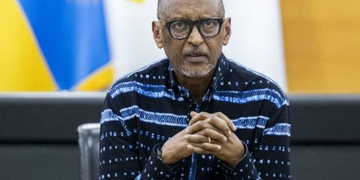
State Minister Claudette Irere said overcrowding in public schools is one of the challenges that can affect students’ performance.
“The top eight students all came from private schools, but if you look further down the rankings, you will find students from other schools. However, we cannot ignore the fact that the conditions in which children study can sometimes differ.”
She explained that students studying in large classrooms may face different learning conditions from those studying in smaller groups.
“As you know, we have challenges related to overcrowding, and you cannot compare children studying in large groups with those studying in smaller groups. Some circumstances put them at a disadvantage compared with others, but that is precisely why we are here—to continue supporting them so that they can study well and achieve good results.”
ALSO READ: https://agaciropress.com/citizens-welcome-police-crackdown-on-youth-indecency-and-immoral-behavior/
Overall Pass Rate Includes Both Public and Private Schools
The Minister emphasized that the overall pass rate of 88.21% includes students from both public and private schools.
However, the students who achieved the highest scores nationally happened to come from private institutions.
This suggests that while public schools continue to produce successful students, private schools have maintained an advantage among the very highest-performing candidates.
ALSO READ: https://agaciropress.com/what-to-know-about-rwandas-anti-corruption-law/
Classroom Congestion Remains a Challenge
The Ministry of Education’s 2024/25 performance report shows that the average number of students sharing one classroom decreased slightly, from 51 students in 2023/24 to 50 students in 2024/25.
Despite this improvement, overcrowding remains a challenge in some public schools, particularly those serving large numbers of students.
The 2025/26 academic year also recorded a particularly high number of students, partly because of the disruption caused by the COVID-19 pandemic. This contributed to an additional 56,252 candidates sitting the national examinations.
ALSO READ: https://agaciropress.com/rwanda-over-371000-students-pass-2025-26-national-examinations/
Rwanda Has More Than 4,900 Schools
Rwanda currently has 2,083 schools operating under government partnership arrangements, 1,576 public schools and 1,337 private schools.
In the 2024/25 academic year, 2,411,376 students were enrolled in schools operating under government partnership arrangements, while 1,879,240 were enrolled in public schools.
Private schools had 475,509 students enrolled during the same period.
ALSO READ: https://agaciropress.com/mtn-rwanda-revenue-rises-by-21-9-profit-reaches-rwf-17-2-billion/
Government Continues to Support Public Schools
The continued appearance of private-school students at the top of national examination rankings has renewed attention on learning conditions in public schools.
Education authorities say efforts to improve learning environments, address overcrowding and provide better support to students remain important to ensuring that learners in all schools have an equal opportunity to achieve excellent results.