



















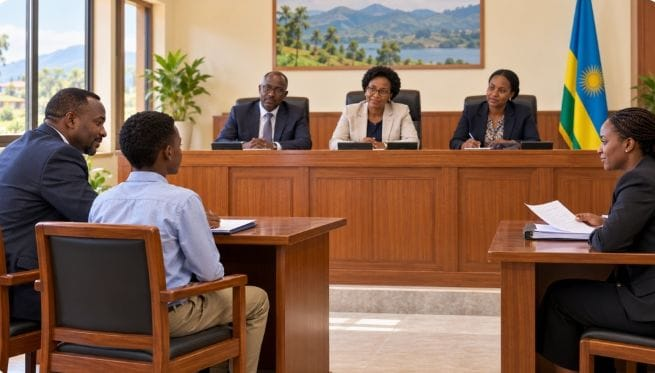
New guidelines governing proceedings involving children in Rwanda prohibit judges, prosecutors and lawyers from wearing professional attire during hearings, while uniformed security officers are not allowed to appear unless their presence is necessary for security reasons.

The guidelines were issued on October 1, 2026, by the President of the Supreme Court, Domitilla Mukantaganzwa, and will come into force on November 1, 2026.
ALSO READ: https://agaciropress.com/rwandas-odds-of-hosting-formula-1-in-2030-continue-to-grow/
Child-Friendly Courtrooms
Article 9 requires courtrooms where cases involving children are heard to be arranged in a child-friendly manner to help children feel calm and comfortable. It states: “Security officers wearing their work uniforms shall not appear in such proceedings unless their presence is necessary for security reasons.”
Children with disabilities must also receive appropriate assistance based on the nature of their disabilities, in accordance with the law. Article 10 stipulates that a judge, prosecutor or lawyer involved in a case concerning a child shall not wear professional attire that identifies their profession.
They must also use language that the child can easily understand and explain everything the child needs to know about the proceedings. Justice-sector personnel involved in cases concerning children must receive training on child protection and child-friendly justice, as provided for under Article 6.
ALSO READ: https://agaciropress.com/learn-about-the-hidden-marker-chatgpt-will-start-putting-in-its-texts/
Children to Be Separated from Adults
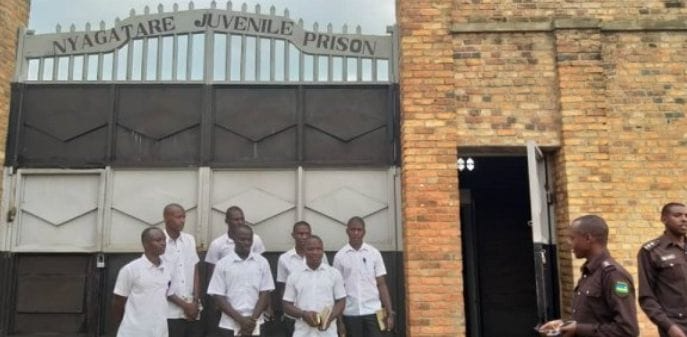
Article 7 provides that a child suspected of committing an offence who is detained must be separated from adults. A child appearing before a court must also be placed in a safe and non-intimidating area before and after the hearing. The child shall attend the proceedings accompanied by a trusted adult and, where necessary, their legal representative.
When a child is detained, they must be brought to court through special arrangements and kept separate from other parties to the proceedings.
ALSO READ: https://agaciropress.com/lionel-messi-plays-final-game-for-argentina-matt-ford/
No Case Without a Child Assessment Report
Before hearing or making a decision in a case involving a child who is either accused of an offence or a victim of an offence, the guidelines require the court to request the prosecutor handling the case to submit a detailed report on the child.
Article 8 states: “This report forms part of the case file, and failure to submit it means that the case shall not be registered by the court.” The report must provide an accurate picture of the child and their family circumstances, including factors that may protect the child and those that may place them at risk.
It must include the child’s personal information, family history and living conditions, health and development, educational background, behaviour at school and outside school, academic performance and attendance.
The report must also describe the child’s upbringing, relationships with others, results of assessments concerning mental health or emotional difficulties, as well as recommendations regarding rehabilitation and reintegration into society. The court uses the report to understand the child’s circumstances and make decisions that prioritize their best interests, including protective measures or alternatives to formal court proceedings.
ALSO READ: https://agaciropress.com/rdf-urged-to-remain-vigilant-in-south-sudan/
Juvenile Hearings to Be Held In Camera
Article 11 provides that cases involving children shall be heard in camera. Only judges, court staff, parties to the proceedings, legal representatives and necessary witnesses may attend. Parents or guardians of the child, a child-protection and welfare officer, and any other persons the court considers necessary may also attend.
A child giving testimony, information or an opinion must be placed in a special and safe environment. In divorce cases, the child’s views must not be disclosed to the parties unless the child consents.
The identity of a child accused of an offence, a child who is a victim of an offence, or a child appearing as a witness must not be recorded in the proceedings or disclosed to the public or the media. Those authorized to attend the hearing are also prohibited from disclosing information concerning proceedings involving a child.
Rehabilitation to Take Priority Over Punishment
The court must ensure that children appearing before it are properly assisted or legally represented. Where this is not the case, the court must take measures to protect the child’s best interests.
If a child has special needs that were not identified during the pre-trial conference, the lawyer handling the case must notify the court as early as possible. Article 15 requires courts, where possible, to encourage parties to use plea agreements or agreements between the offender and the victim, provided that such arrangements are consistent with the law.
It states: “When making a decision, the court shall prioritize the rehabilitation of the child over punishment.” When imposing a sentence, Article 16 requires the judge to take into account the child’s individual circumstances, living conditions and capacity for rehabilitation, and to reflect these considerations in the judgment.
The guidelines also require courts, where possible, to designate specific days and specialized judges to hear cases involving children. Article 5 states: “Cases involving children must be given priority in their processing, hearing and determination. Before scheduling a case involving a child for hearing, the court registry must first conduct a pre-trial conference, using any available means, including technology, to verify that the case file is complete and that the child is ready to participate in the proceedings.”