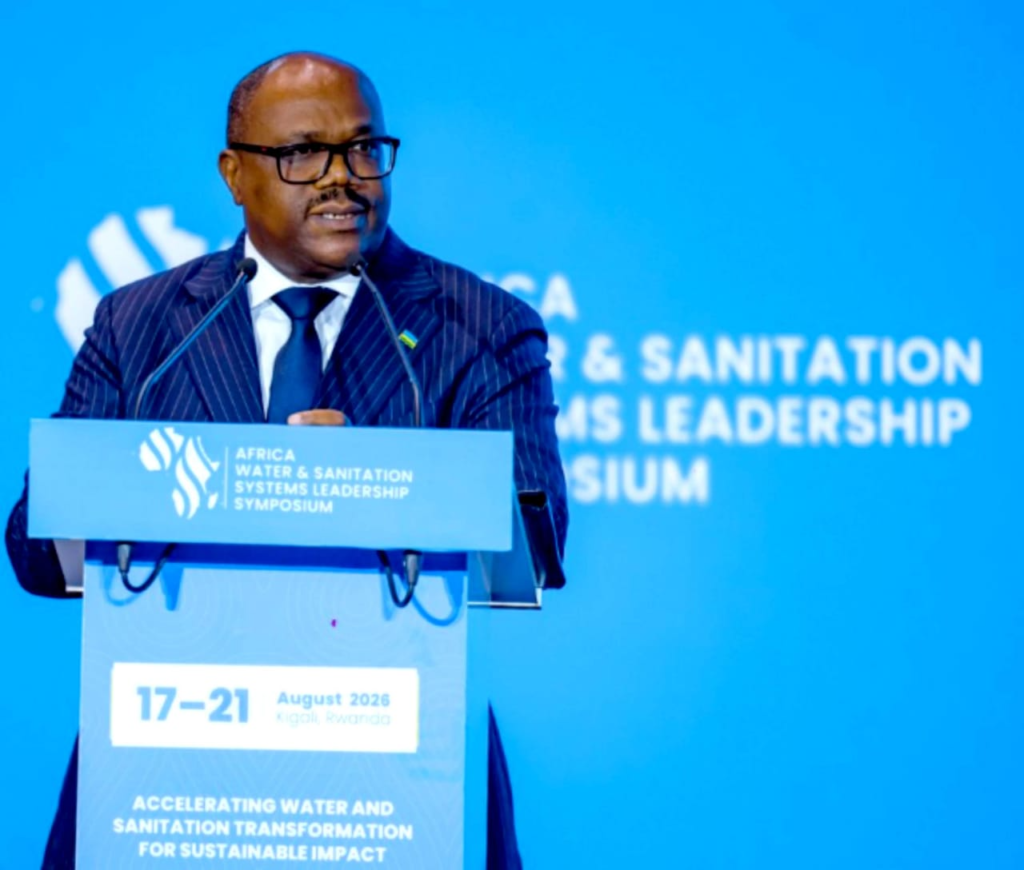


















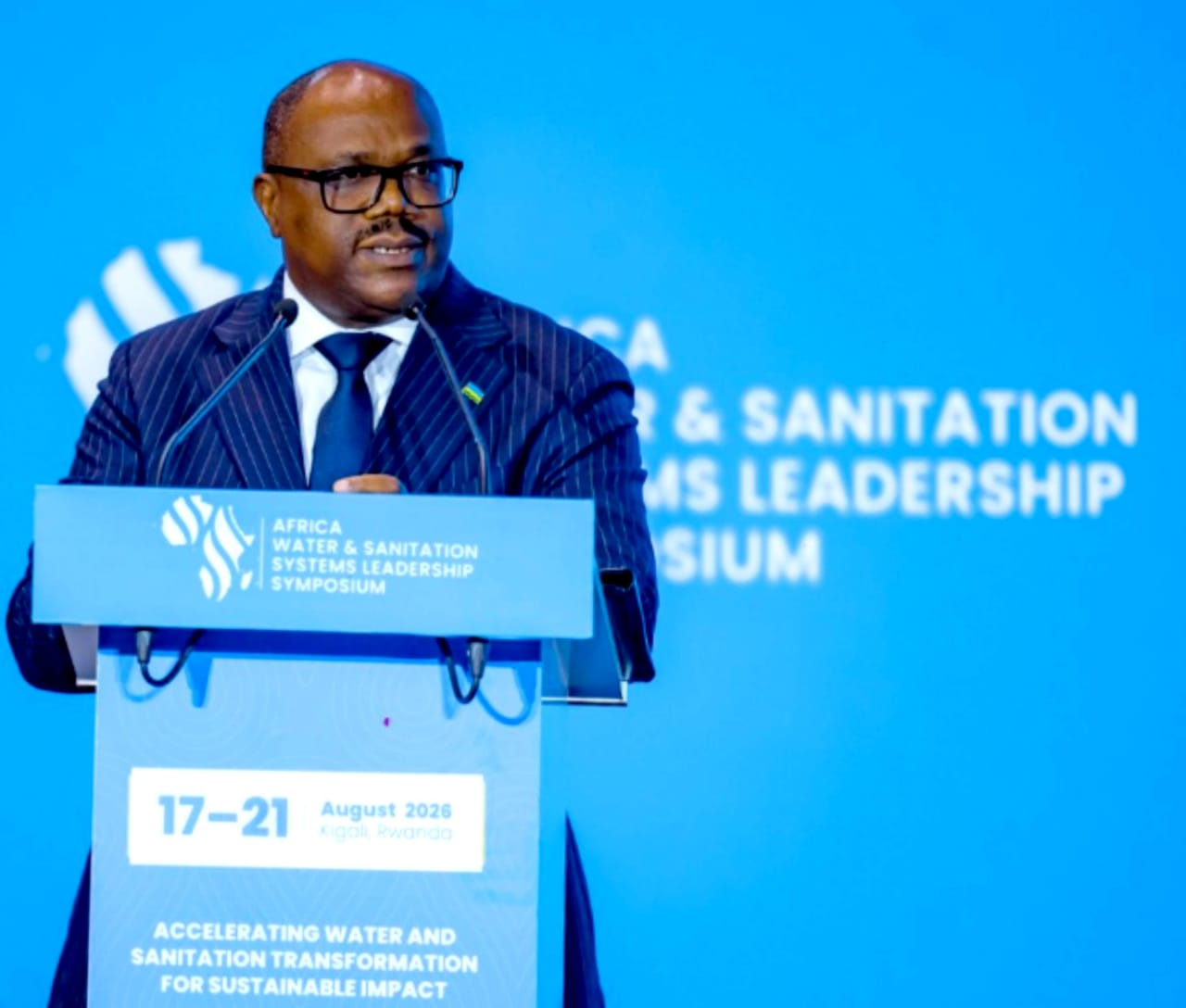
Prime Minister Dr. Justin Nsengiyumva has said that building infrastructure is the first step toward providing citizens with water, sanitation and hygiene services, but that infrastructure alone is not enough. It must be properly monitored to ensure that it is being used for its intended purpose.

He made the remarks at the African Conference on Governance in Water, Sanitation and Hygiene, which began on August 18, 2026. The conference will last five days.
ALSO READ: https://agaciropress.com/protecting-wildlife-is-an-investment-in-the-future/
Africa Faces Major Water and Sanitation Challenges
Dr. Nsengiyumva noted that across Africa, 418 million people lack basic water services, 779 million lack basic sanitation services, while 839 million do not have access to basic hygiene facilities.
He emphasized that this is not because countries have simply stood by and done nothing. Water infrastructure has been constructed, but people have often overlooked the fact that infrastructure alone does not guarantee that all citizens will have access to water, sanitation and hygiene services.
He said: “Across our continent, significant investments have already been made. Water networks have been installed, wells have been drilled, and various water treatment facilities have been constructed and established. However, today, many of these infrastructure facilities are no longer providing the services they were originally intended to deliver.”
He added: “Building infrastructure is important, but in many cases, it is only the beginning. The true measure of success is whether that infrastructure functions properly and delivers services to citizens in a sustainable manner.”
ALSO READ: https://agaciropress.com/government-steps-up-flood-preparedness-as-strong-el-nino-looms/
Better Management Could Reduce Financial Losses
Prime Minister Dr. Nsengiyumva said that poor management of infrastructure is one of the reasons why large amounts of money continue to be lost in water projects. He noted that proper management could help prevent significant financial losses.
He said: “The African Union’s water investment team has shown that good governance, setting fair service tariffs, transparent revenue collection and sound financial management could generate nearly $11.5 billion annually for the continent. Properly mobilizing and improving the use of domestic resources could generate an additional $17.5 billion.”
He added: “This shows us that although international cooperation is important, we have come to realize that external assistance represents only a small share of the financing needed. This should therefore show us that the future of the water sector in Africa can, and should, also be financed by Africans themselves.”
ALSO READ: https://agaciropress.com/nyamagabe-uwinkingi-and-mahembe-sectors-win-inkomo-football-tournament/
Water Services Are Essential to Development
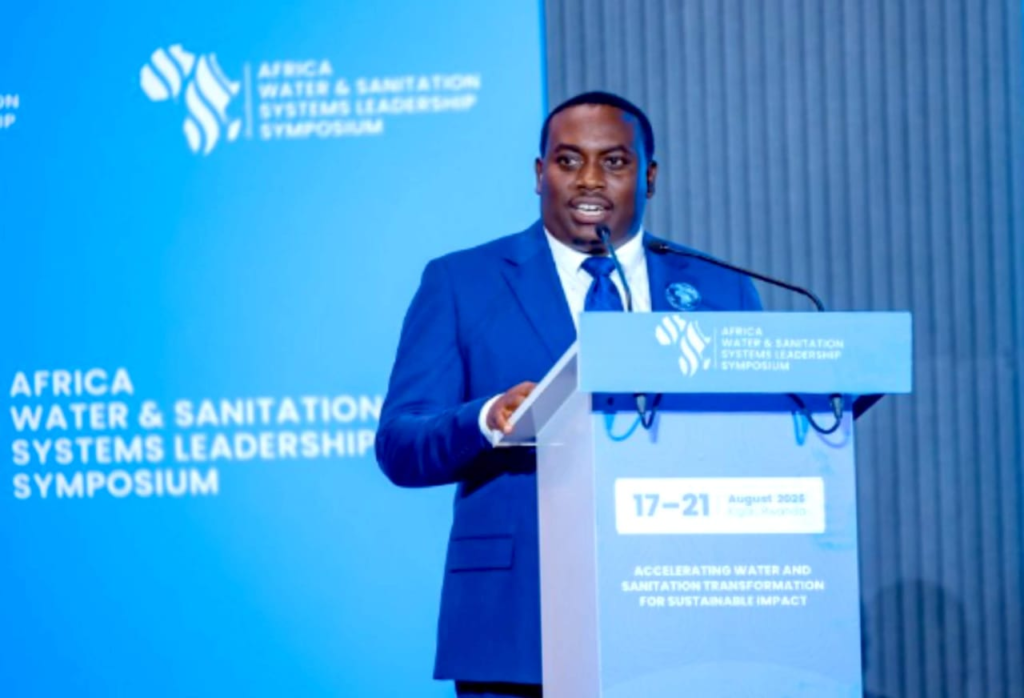
The Minister of Infrastructure, Damien Murwanashyaka, said that water, sanitation and hygiene are not matters that concern only one sector. Rather, they are key pillars of public health, economic development, climate resilience, urban development and ensuring human dignity.
He said: “The issue is not simply about building more infrastructure. We must build reliable, affordable, safe and sustainable water, sanitation and hygiene infrastructure that can continue to provide services to citizens while also contributing to the growth of our economy.”
Rwanda Plans to Increase Clean Water Production
The Government of Rwanda has announced that, as part of efforts to address the insufficient supply of clean water to citizens, various projects are being implemented. These projects are expected to increase water production so that by 2029, 688,000 cubic metres of clean water will be produced and supplied to citizens across the country.
The seventh Integrated Household Living Conditions Survey (EICV7) showed that the proportion of Rwandans with access to clean water reached 90%, up from 87% in 2017.