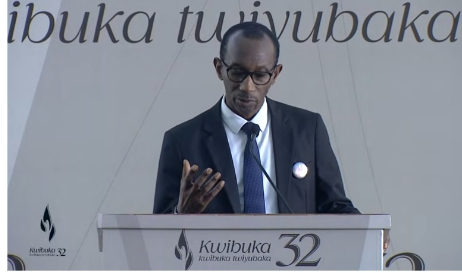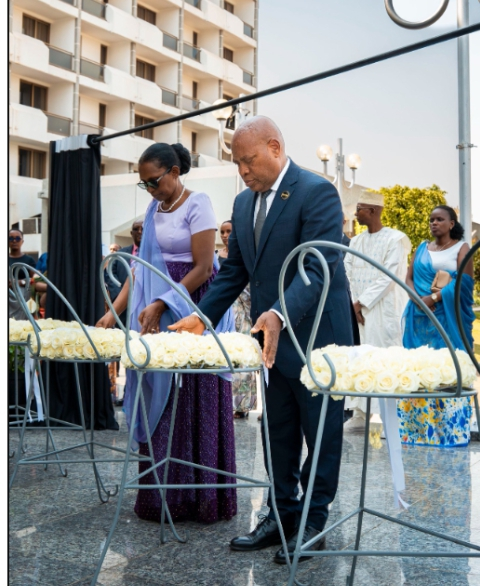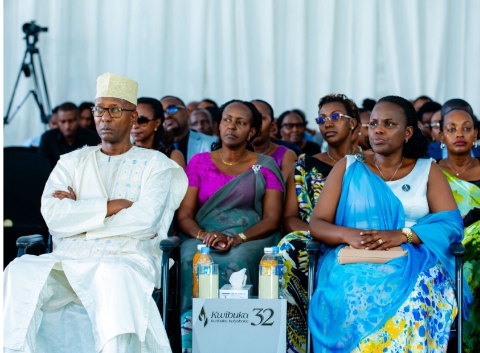


















Kigali – Mugenzi Jean Claude has shared his painful testimony of surviving the 1994 Genocide against the Tutsi after losing his parents and several siblings, including his brother Mugenzi Jean Louis, who worked at the former National Council for Development (CND), whose premises now house Rwanda’s Parliament.

Speaking during a commemoration event, Jean Claude recounted the suffering his family endured before, during, and after the genocide, describing how he narrowly escaped death while witnessing the murder of his loved ones.
A Family Targeted Long Before the Genocide
Jean Claude was born into a family of six children in the former Taba Commune, now part of Kamonyi District. His father was a lawyer, while his mother worked as a teacher.
Although the family was respected in the community, his father was repeatedly persecuted because of his identity. He was dismissed from his job on several occasions and imprisoned, exposing the family to years of discrimination and insecurity long before the genocide began.
The Outbreak of the Genocide Forced the Family to Flee
During the Easter holidays in April 1994, Jean Claude had traveled to visit his parents in the countryside. Following the shooting down of President Juvénal Habyarimana’s plane on April 6, violence rapidly spread across the country.
Local authorities instructed residents to join militia groups, and the killings began almost immediately.
Jean Claude and his family fled their home, hiding in bushes, cultivated fields, and the homes of sympathetic friends. They attempted to reach safer areas, including Mugina and Kabgayi, but were repeatedly intercepted by militias, who beat, threatened, and humiliated them as they searched for refuge.
Pretending to Be Dead Saved His Life
As the violence intensified, Jean Claude and his family were eventually captured.
He recalled that they were subjected to brutal torture in front of one another before many members of his family, including his father and several siblings, were killed.
Jean Claude himself suffered serious injuries but survived by pretending to be dead after the attackers believed he had been killed.
His life was ultimately saved when Rwanda Patriotic Front (RPF Inkotanyi) soldiers arrived during clashes with the attackers, rescuing the remaining survivors.
He was first taken to Murambi for emergency treatment before being transferred to Kinazi, where he gradually recovered from his injuries.
Learning of His Brother’s Death After the Genocide
After the genocide ended, Jean Claude was reunited with his mother and his younger sisters.
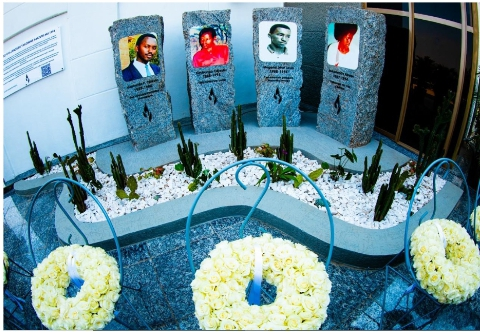
However, he later received the devastating news that his brother, Mugenzi Jean Louis, who had been working at the National Council for Development (CND) in Kigali, had also been murdered during the genocide.
His body had been thrown into a mass grave before it was later recovered and given a dignified burial at the Kigali Genocide Memorial in Gisozi.
A Call to Remember the Victims and Protect the Truth
Reflecting on his experience, Jean Claude expressed deep gratitude to the RPF Inkotanyi soldiers and everyone who risked their lives to rescue survivors during the genocide.
He stressed the importance of preserving the memory of the victims, honoring those who perished, and ensuring that future generations continue to learn the truth about the 1994 Genocide against the Tutsi.
His testimony serves as a powerful reminder of the devastating human cost of the genocide and the enduring importance of remembrance, justice, and the commitment to ensuring such atrocities never happen again.