











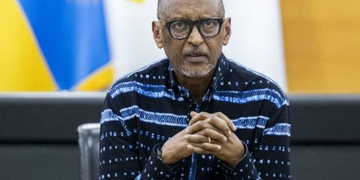
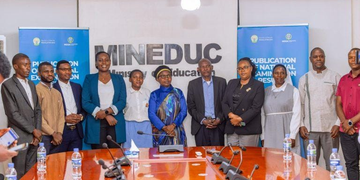


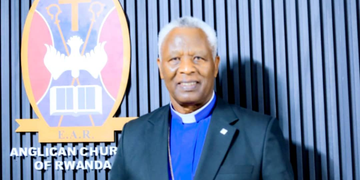


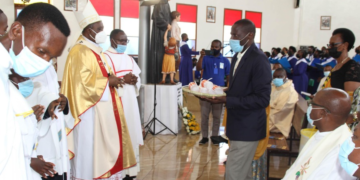










President Paul Kagame met with the Chairperson of the University of Rwanda (UR) Board of Governors, Dr. Pradeep K. Khosla, and the Board’s Vice Chairperson, Ivan Murenzi, to discuss a range of issues focused on strengthening the university’s contribution to Rwanda’s national development.

According to the Office of the President, the meeting took place on July 30, 2026.
A statement from Village Urugwiro said, “Their discussions focused on the University of Rwanda’s strategic direction and continued efforts to advance excellence in education, research, and innovation, while equipping students with the knowledge and skills needed to drive Rwanda’s development.”
University of Rwanda’s Growth and Transformation
The University of Rwanda continues to undergo reforms and institutional development aimed at supporting the country’s ambition of building a knowledge-based economy.
The university traces its origins to 1963. In September 2013, the Government officially merged the former National University of Rwanda (UNR) with six other public higher learning institutions to create a single public university known as the University of Rwanda (UR).
Statistics indicate that between 1963 and 1993, the university graduated 2,997 students.
Following the 1994 Genocide against the Tutsi, the former National University of Rwanda produced 50,490 graduates between 1995 and 2013.
In the decade leading up to 2025, since the merger that established the University of Rwanda, more than 72,000 students have graduated from the institution.
The University of Rwanda was established to provide high-quality education while promoting innovation in teaching and research to address challenges facing communities, students, Rwanda, the region, and the world at large.

Vice Chancellor Highlights Long-Term Education Reforms
In 2024, the university’s Vice Chancellor, Prof. Kayihura Muganga Didas, said integrating institutions that had previously operated independently required significant effort. He noted that although the merger did not disrupt academic programmes, aligning the different institutions under a common vision and shared values was a gradual process.
“For example, the investments we are making in education today may only produce visible results 15 years from now. Education is an investment where immediate returns should not be expected,” he said.
University Ranked Among Sub-Saharan Africa’s Best
The ongoing reforms have already begun to yield results. The University of Rwanda was recently ranked among the top 10 universities in Sub-Saharan Africa, according to the Times Higher Education Sub-Saharan Africa University Rankings 2024.
The rankings assessed 129 universities across 22 Sub-Saharan African countries, evaluating their contribution to the development of their respective nations.
The assessment was based on 20 performance indicators grouped into five categories, with institutions scored and ranked according to their effectiveness in addressing challenges facing the African continent.
Recognition Reflects Ongoing Improvement
The evaluation considered factors such as institutional resources and finance, transparency, student engagement, governance, and overall impact on Africa.
The University of Rwanda ranked eighth overall, underscoring the positive impact of its ongoing reforms and the steady improvement in the quality of education it provides to its students.