















President Paul Kagame has spoken about several former senior government officials, including Kayumba Nyamwasa, Patrick Karegeya and Théogène Rudasingwa, saying they were among those who either saw themselves or were viewed by people outside Rwanda as potential future presidents, but were driven by harmful intentions.

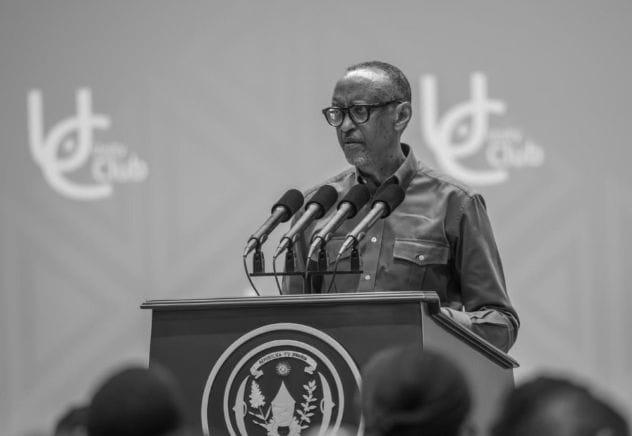
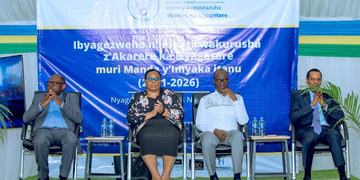
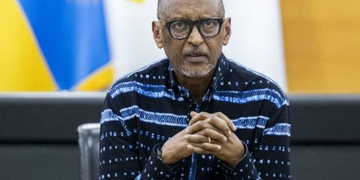
He made the remarks during a symposium on the history of the 1994 Genocide against the Tutsi and the liberation struggle that ended it. The event, held at Intare Arena, brought together President Kagame, First Lady Jeannette Kagame, members of Unity Club, and other senior government leaders.
Kagame Warns Against Leadership Pursued Through Harmful Means
President Kagame said that during Rwanda’s post-genocide reconstruction, several individuals who held senior positions in government or were closely associated with the country’s leadership later became instruments of people who did not have Rwanda’s best interests at heart.
He explained that some ministers were repeatedly approached by individuals from outside the country who encouraged them to seek the presidency.
He said: “There were ministers here who were constantly approached by people from outside people serving as instruments of others who would tell them, ‘Don’t you think you could become president?’ They would go on to tell five or ten others the same thing. Of course, they cannot all become president at the same time.”
President Kagame emphasized that there is nothing wrong with aspiring to become president or holding ambitions for public office. However, he said problems arise when such ambitions are pursued through actions that undermine or betray the country.
He said: “All those people you see abroad people like Kayumba, the late Karegeya, Rudasingwa, and many others some were businessmen. Even among businessmen, some may see themselves as future presidents, and there is nothing wrong with that. There is nothing wrong with believing you could one day become president.”
Former Senior Officials Joined Opposition Abroad
Kayumba Nyamwasa was once one of Rwanda’s highest-ranking military officers, serving as Chief of Defence Staff of the Rwanda Defence Force, holding senior intelligence positions, and later becoming Rwanda’s Ambassador to India.
In 2010, he left Rwanda while facing criminal charges and later sought refuge in South Africa, where he co-founded the Rwanda National Congress (RNC), an organization designated by the Rwandan government as a terrorist group.
Patrick Karegeya previously headed Rwanda’s military intelligence. After escaping from prison while serving a sentence on charges of insubordination, he later became one of the founders of the RNC. He died in 2013.
Théogène Rudasingwa served as Rwanda’s Ambassador to the United States and later as Director of the Office of the President. He left Rwanda after being questioned over allegations related to the embezzlement of funds during the construction of the former Hotel Intercontinental, now Serena Hotel, and over allegations involving the transfer of assets into other people’s names. He later joined the founders of the RNC.
Kagame Rejects Attempts to Control State Leadership
President Kagame said the challenge was not limited to individuals seeking the presidency but also involved businesspeople and other actors who wanted to install leaders they could influence for their own benefit.
He said some sought to dictate government appointments, including ministers and mayors, through political influence: “Imagine me serving as President, yet being controlled by a businessman. Every morning, he would come and tell me, ‘You know, I no longer want this person to be mayor. I no longer want that one to be minister. I have others I want instead.’ Then I would bring them before the President for approval. That happened in the past you know it but it has not happened in the new Rwanda, and it never will. It is impossible, and it will not happen.”
President Kagame stressed that public leadership in Rwanda must never become a tool for individuals, business interests, particular groups, or foreign actors pursuing personal agendas. He said leadership should be attained through legitimate means and exercised in the interest of the nation.
He also commended Unity Club for helping Rwandans overcome harmful ideologies and attitudes linked to the country’s painful past.
He said: “One of the greatest contributions Unity Club has made—and something I hope we continue to build upon is helping people free themselves, letting go of whatever had taken hold of them, whatever had shaped or influenced them in ways that led toward a dark chapter of our history. When a person abandons that mindset, it leaves them. It benefits them, and it benefits others as well. It helps the person who has broken free; it is like an act of repentance.”