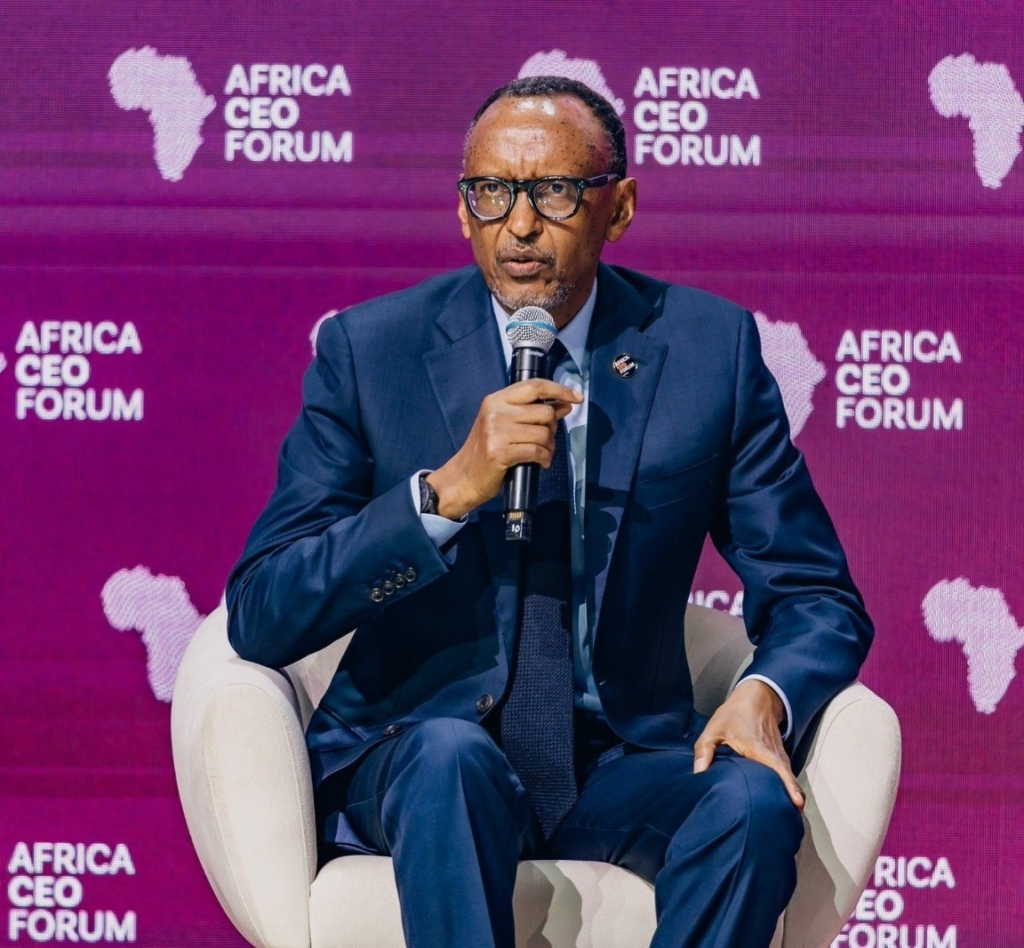




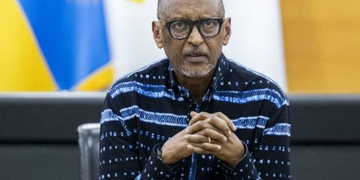







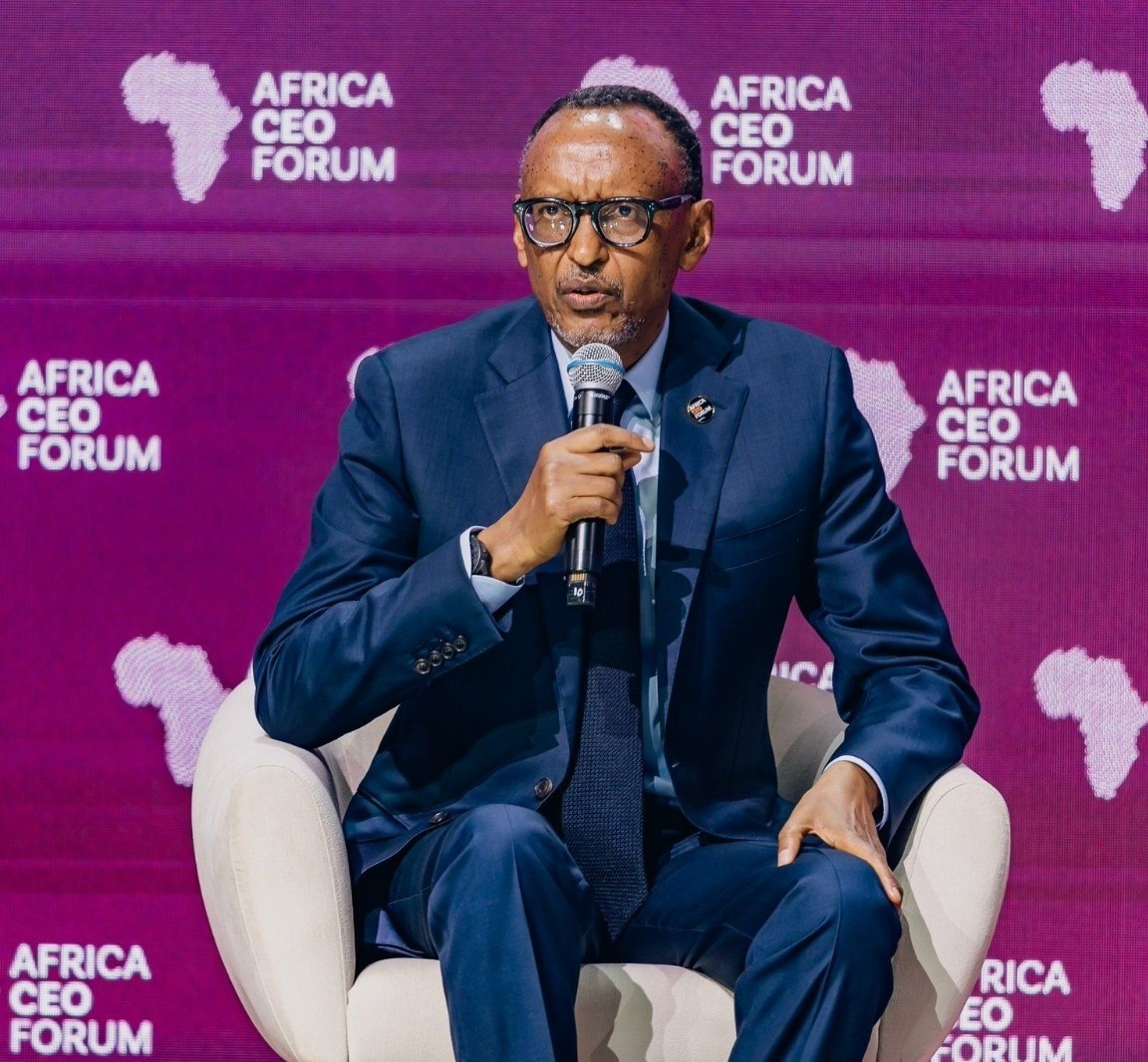
President Paul Kagame has criticised the use of sanctions in global politics, arguing that they are often unfairly imposed and used as instruments of pressure against weaker nations, while calling for stronger African unity and greater self-reliance.

Kagame made the remarks on Thursday during the opening of the Africa CEO Forum 2026 in Kigali, which brought together about 2,800 participants from more than 70 countries, including heads of state, senior government officials, business leaders and international investors.
The high-profile summit has become one of Africa’s leading business and policy gatherings, focusing on investment, economic transformation and continental cooperation. This year’s edition highlighted Africa’s position in a rapidly evolving global political and economic environment shaped by geopolitical tensions, competition for resources and shifting global alliances.
ALSO READ: https://agaciropress.com/president-kagame-ifad-agricultural-development-nairobi/
High Level Leaders Attend the Summit
Among the African leaders attending were President William Ruto of Kenya, President Bola Ahmed Tinubu of Nigeria, President Mohamed Ould Ghazouani of Mauritania, President Daniel Chapo of Mozambique, President Mamadi Doumbouya of Guinea, and President Brice Clotaire Oligui Nguema of Gabon.
The presence of these leaders underscored the summit’s growing influence as a platform for shaping Africa’s economic and political direction.
Kagame Addresses Global Instability and Opportunity
Speaking during the opening panel discussion moderated by CNN anchor Eleni Giokos, Kagame was asked about how African leaders are responding to global instability, including disputes over mineral resources, allegations of coercive economic practices, and the increasing use of sanctions affecting several countries, including Rwanda.
Kagame said crises should be viewed not only as challenges but also as opportunities for transformation, noting that Africa must adapt to recurring global cycles of disruption, including wars, pandemics, and economic shocks. he said: “There are always opportunities in the midst of crises, and there are many opportunities right now more than ever,” .
ALSO READ: https://agaciropress.com/rwanda-car-military-cooperation-visit/
Africa’s Resources and Untapped Potential
He said the world is undergoing a new cycle of transformation that requires countries to rethink their strategies and strengthen internal capacities.
Kagame stressed that Africa must better understand its position in the global system and fully leverage its resources rather than focusing on perceived weaknesses. He noted that the continent holds about 60% of the world’s solar energy potential, as well as significant reserves of critical minerals needed for batteries, renewable energy systems, and industrial development.
Despite this, he said Africa continues to underutilise its resources while external actors often benefit more from them. He also pointed to Africa’s growing human capital, saying the continent is likely to host the world’s largest middle class in the coming years if its potential is properly developed.
ALSO READ: https://agaciropress.com/kagame-gnassingbe-bilateral-ties-kigali-visit/
Call for Action and Stronger Cooperation
The president called for African countries to move beyond discussion and focus on implementation, warning that the continent stands to lose more by inaction than by attempting reforms. he said: “We must come together and find solutions,”.
Kagame also said Africa must avoid unfavourable agreements in an increasingly competitive global environment, particularly in the context of post-pandemic recovery and rising demand for strategic resources.
ALSO READ: https://agaciropress.com/rwanda-car-military-cooperation-visit/
Criticism of Global Sanctions and Power Imbalances
Addressing sanctions and global power dynamics, Kagame said such measures often reflect unequal power relations rather than consistent principles of international justice. He argued that weaker nations are disproportionately affected, while stronger actors are better positioned to shape global outcomes.
He cited ongoing tensions in the Great Lakes region, including the Democratic Republic of Congo and neighbouring states, as examples of complex geopolitical challenges influenced by competing interests.
The president further argued that some global powers promote democratic values while not always applying them consistently in practice. he said: “We must recognize our value. We cannot remain passive and wait to be directed by others. We must be able to say no,”
ALSO READ: https://agaciropress.com/rwanda-electricity-access-2029-goal/
Role of Private Sector and Digital Platforms
Kagame added that African leaders must prioritise long-term national and continental interests even under external pressure, stressing that cooperation among African countries is essential.
He highlighted the role of the private sector in driving Africa’s development, describing it as a key engine of innovation and investment. He called for stronger collaboration between governments and businesses to create enabling environments for growth.
According to Kagame, reducing barriers to private sector activity would unlock greater economic potential across the continent. On social media, Kagame said digital platforms have democratised communication by allowing people to freely share ideas and opinions, but stressed that individuals must take responsibility for how they interpret information.
ALSO READ: https://agaciropress.com/iran-us-oil-crisis-strait-of-hormuz-2026/
Closing Remarks: Africa’s Shared Future
Concluding his remarks, Kagame urged Africans to recognise their collective potential and take responsibility for shaping their future. “Everyone in this room has something to contribute and something to gain. Africa has enormous untapped potential,” he said. He called on leaders, businesses and citizens to work together to strengthen Africa’s position in the global order.
The Africa CEO Forum 2026 continues in Kigali, with discussions expected to focus on investment flows, industrial development, energy transition, and Africa’s role in global economic governance.