














The Rwanda Defence Force (RDF) has reaffirmed that Rwanda’s defensive measures along its border with the Democratic Republic of the Congo (DRC) will remain in place, with military officials stressing that any adjustments will depend on changes in the country’s security environment rather than external pressure.

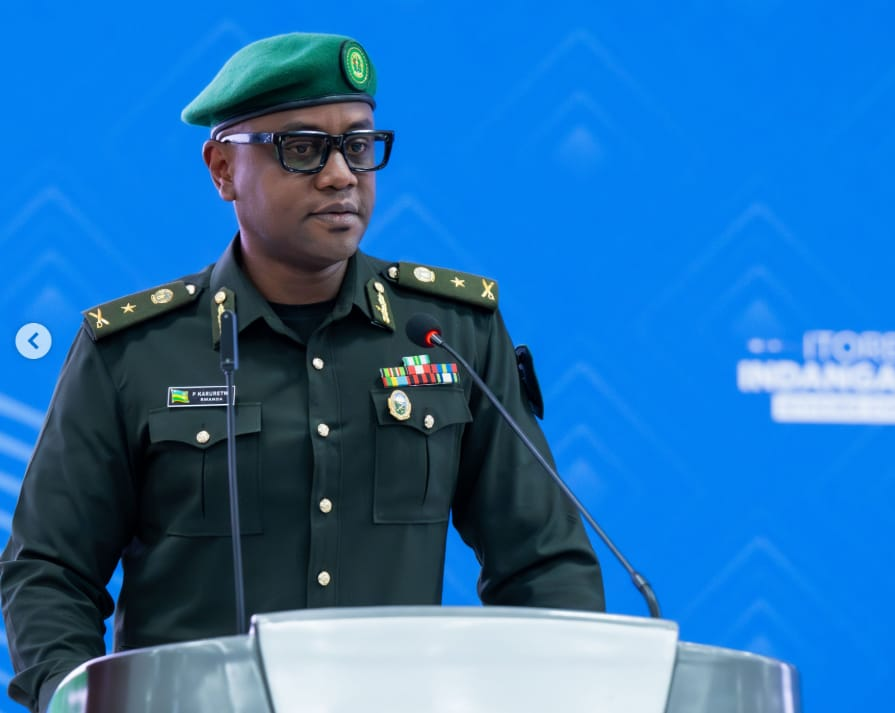
Speaking in an interview with RBA on July 5, 2026, RDF Spokesperson Brig. Gen. Patrick Karuretwa said Rwanda’s defensive posture is guided by national security considerations and lessons learned from past conflicts.
Rwanda Says Defensive Measures Respond to Security Threats
Brig. Gen. Karuretwa explained that Rwanda established its current defensive measures to protect citizens from threats originating across the border in eastern DRC.
He said the measures were informed by Rwanda’s experience during the insurgency wars, when waiting for hostile forces to reach the country’s borders resulted in serious consequences.
He said: “We saw what happened during the insurgency wars. Waiting for the enemy to reach our borders caused great harm. We are not poor students of history. Decisions were made on how defensive measures should look so that citizens could live safely without threats from DRC,”
According to Karuretwa, every country develops security measures based on the threats it faces.
RDF Says Security Measures Will Continue to Adapt
The RDF spokesperson noted that Rwanda’s defensive strategy has evolved over time in response to changing security conditions.
He recalled that Rwanda and the DRC previously conducted joint military operations in 2019 targeting armed groups operating in eastern Congo.
However, he argued that the current situation differs because Rwanda believes the Congolese government is cooperating with armed groups that threaten Rwanda’s security: “When you face a situation like now, where the President of DRC chooses to cooperate with our enemies to destabilize Rwanda, defensive measures do not end they adapt,”
Karuretwa emphasized that Rwanda will continue reviewing its security posture based on developments on the ground.
Rwanda Reiterates Concerns About the FDLR
Brig. Gen. Karuretwa described the FDLR as a major security concern, saying the group includes individuals responsible for the 1994 Genocide against the Tutsi who continue to promote hostile ideology against Rwanda.
He stated that after fleeing Rwanda, members of the group organized themselves militarily and established structures, including schools, to recruit and indoctrinate younger generations.
He said: “To say we should only look at those who crossed back then is either ignorance or deliberate deception. Their schools in Walikale and Pinga are known. The FDLR problem has not diminished; it has grown,”
Rwanda has consistently maintained that dismantling the FDLR remains essential to achieving lasting peace in the region.
Rwanda Rejects Pressure to Remove Border Defenses
The United States has recently called on Rwanda to lift its defensive measures along the border, citing peace agreements signed between Rwanda and the DRC on June 27, 2025, and December 4, 2025.
Rwanda, however, argues that the DRC has not fulfilled its commitments under those agreements, particularly regarding dismantling the FDLR, and instead alleges continued cooperation between Congolese authorities and the armed group.
Karuretwa said Rwanda would not remove its defensive measures while the underlying security threats remain unresolved: “Defensive measures will remain, adapting to the situation. If joint operations like before return, that is excellent. But to say we should remove defensive measures we are not suicidal,”
Rwanda Continues to Participate in Regional Peace Efforts
Despite maintaining its security posture, Rwanda says it remains committed to ongoing diplomatic and security discussions aimed at resolving tensions in the Great Lakes region.
Brig. Gen. Karuretwa serves as one of Rwanda’s representatives on the joint security committee involving Rwanda, the DRC, and the United States, which monitors implementation of the bilateral peace agreements.
He said Rwanda continues to participate constructively in the process but emphasized that decisions concerning Rwanda’s defensive measures will continue to be based on the country’s assessment of national security rather than external pressure.