























Rwanda is preparing to enter the world of wine production, with a new project expected to produce up to 90,000 bottles of wine annually once it reaches full production.

Unlike imported wine, the project will use grapes grown locally in Rwanda, with vineyards being established in Kinigi in Musanze District, Nyabihu District and around Lake Burera.
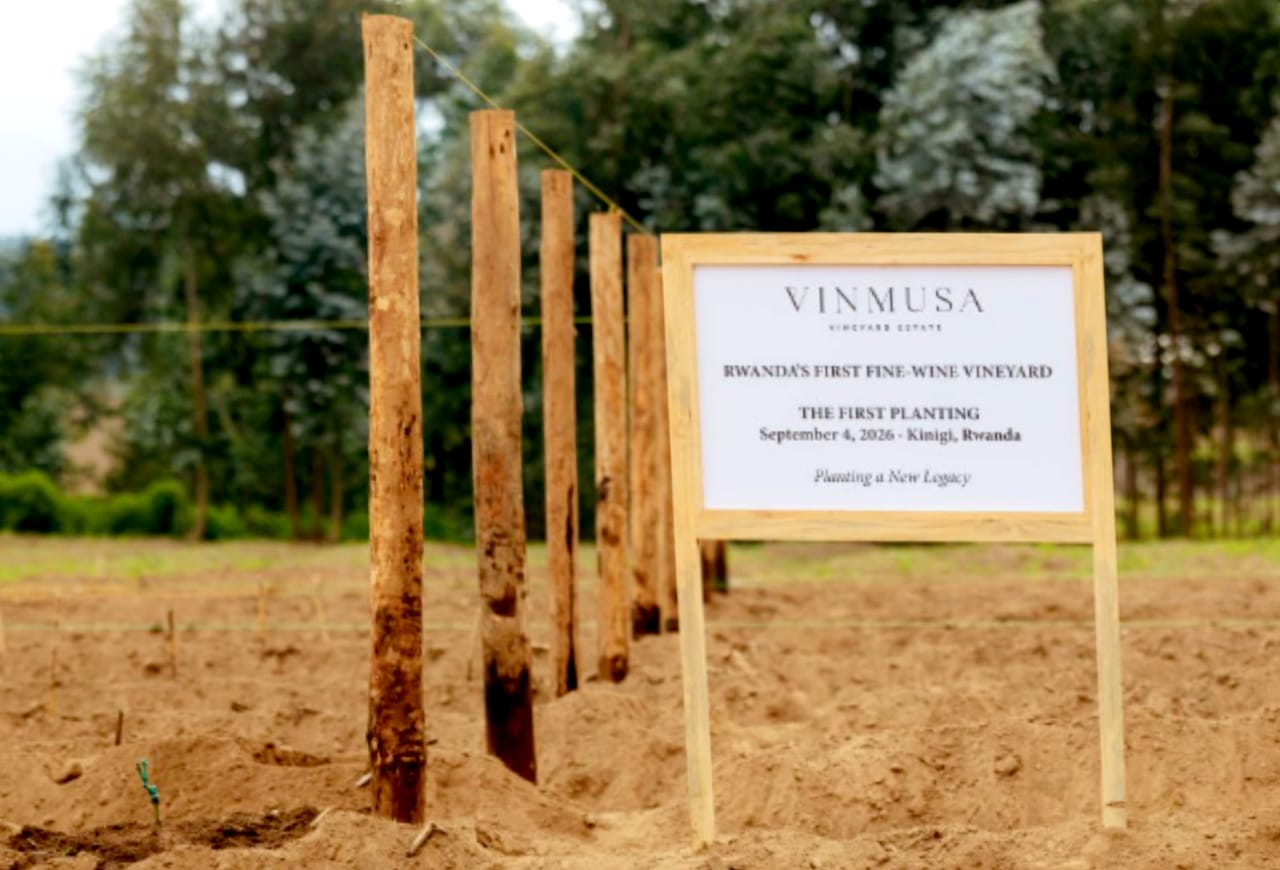
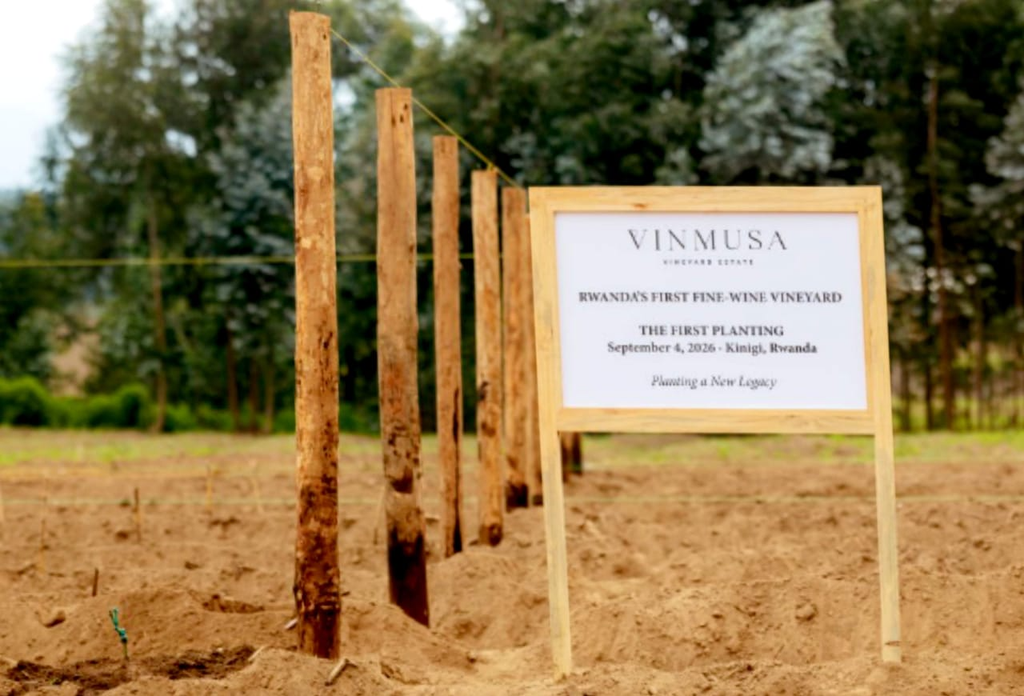
On September 4, 2026, Vinmusa Vineyard Estate officially unveiled its vineyards in Rwanda during a ceremony held in Kinigi following the 21st Kwita Izina Gorilla Naming Ceremony.
Vineyards Established in Three Different Locations
The Vinmusa project consists of three vineyard sites selected because of their different combinations of altitude, climate and volcanic soil.
One of the main sites is in Kinigi, while another covers approximately one hectare near the shores of Lake Burera.
The grapes grown around Lake Burera will mainly be used to produce high-quality red wine.
A third vineyard is located on the western side of Mount Karisimbi in Nyabihu District, where grapevines are being planted on 1.2 hectares at an altitude of approximately 2,700 metres above sea level.
The project describes this as the only vineyard in Africa established at such a high altitude.
Why Rwanda’s Climate and Soil Matter
The project’s locations were selected partly because of their high altitude, cool climate and humidity.
Different grape varieties have been chosen to adapt to these conditions, including Pinotage, Chenin Blanc and Sauvignon Blanc.
The varieties were sourced from Vititec, a South African company specialising in grapevine propagation.
The volcanic soil is another important feature.
According to the project, the minerals found in Rwanda’s volcanic soil could give the wine a distinctive character associated with the country’s own environment rather than simply attempting to reproduce the taste of wines from traditional wine-producing regions.
ALSO READ: https://agaciropress.com/rwandas-top-artists-welcome-guests-at-gorilla-naming-ceremony-in-musanze/
The Vision Behind Vinmusa Vineyard Estate
The project is led by Andres de la Roche, who co-founded Vinmusa Vineyard Estate with Liam T. Dall.
Their ambition is to establish Rwanda as a unique wine destination in Africa while creating a new form of agricultural and tourism activity.
The project also intends to combine wine production with environmental conservation and the protection of gorilla habitats, particularly because the vineyards are located close to Volcanoes National Park.
South African Wine Experts Provide Technical Support
Vinmusa Vineyard Estate has worked with Vinpro, a major South African wine industry organisation.
Vinpro provided technical guidance on vineyard site selection, soil sampling and analysis, and climate assessment.
This technical support is intended to increase the chances of successful grape production under Rwanda’s particular environmental conditions.
Creating Opportunities for Rwandans
The project is also designed to create opportunities for local communities.
Liam T. Dall said the project would train Rwandans in viticulture and winemaking while creating employment opportunities, particularly for women and young people.“What is most important to us is the positive impact this project will have on the country, including training Rwandans to become experts in viticulture and winemaking, and creating jobs for rural communities, with a particular focus on women and young people.”
He added that the long-term ambition is to create a sustainable destination celebrating Rwanda’s mountains, natural beauty, innovation and people.
Local Communities Already Involved
Land preparation and grapevine planting are being conducted in collaboration with local communities.
In Kinigi, Vinmusa has worked closely with women’s agricultural cooperatives involved in preparing the land.
In Sunzu Village near Lake Burera, the project is creating temporary and permanent employment opportunities for young people and other residents.
Vinmusa is also working with the Gold Youth Development Agency, Bridge2Rwanda and the University of Rwanda’s Busogo Campus to develop agricultural skills and promote sustainable development.
Rwanda’s Youth to Learn Viticulture
One of the project’s long-term objectives is to develop a generation of Rwandans with specialised knowledge in grape cultivation and winemaking.
Through training and practical experience, young people are expected to acquire skills that could help establish a stronger grape-growing and wine-producing industry in Rwanda and the wider East African region.
A Winery Focused on Quality Rather Than Mass Production
Vinmusa’s future plans include establishing a small winery that will produce limited quantities of high-quality wine.
Rather than competing through mass production, the project aims to create wines that reflect the characteristics of the land where the grapes are grown.
Research activities, wellness programmes and wine-tasting facilities are also planned.
Wine Tourism to Become Part of the Project
The project goes beyond grape cultivation.
Vinmusa Vineyard Estate has a broader vision involving hospitality, architecture and tourism.
Kinigi will serve as the main centre for the project’s hospitality activities.
Plans include nine standalone luxury villas and three premium suites for visitors seeking accommodation in the mountainous surroundings
ALSO READ: .https://agaciropress.com/tricks-youth-are-using-in-sexual-relationships-to-avoid-responsibility/
Visitors to Experience Local Food and Drinks
Guests staying at the project will be offered meals prepared in partnership with Kinigi Table, known for its farm-to-table cuisine.
They will also have an opportunity to taste locally produced spirits from Virunga Mountain Spirits, including Kari Vodka and Kari Gin.
The project therefore aims to combine agriculture, hospitality, gastronomy and tourism into one destination.
A Space for Artists and Creatives
Another planned feature is an artists’ and creatives’ residency programme.
Artists will be able to stay at the site for periods of time, using Rwanda’s mountains and volcanic landscape as inspiration for their creative work.
Visitors will also have the opportunity to observe artists as they develop their projects.
ALSO READ: https://agaciropress.com/nyaruguru-youth-urged-to-choose-productive-lives-over-drugs/
$22 Million Investment
The entire Vinmusa Vineyard Estate project is expected to require an investment of approximately $22 million from the initial vineyard development through to full completion.
The investment will cover land acquisition, approximately 22 hectares of vineyards, a winery, nine guest villas and three premium suites.
The project will also include a Welcome Center, Tasting Gallery and Experience Pavilion in Kinigi, together with facilities required to receive and process harvested grapes.
First Phase Expected to Cost $9.8 Million
The first phase of the project is expected to cost approximately $9.8 million.It will focus on Kinigi, where the first grapevines have already been planted.
This phase includes three guest villas, the Welcome Center and Tasting Gallery, the Experience Pavilion and a facility for receiving and processing the grape harvest.
So far, approximately $1.1 million has already been invested. The money has been used for land acquisition, preparation of vineyard sites, planting grapevines, construction activities, viticulture skills development and other related work.
The long-term plan is for revenue generated by the project itself to finance further development at the different sites.
First Grapevines Planted on September 4
The first Chenin Blanc grapevines were planted on September 4, 2026.
More grapevines will be planted as the project develops.
The vineyards will include Chenin Blanc, Sauvignon Blanc and Pinotage, alongside other varieties that will be tested as the developers learn more about Rwanda’s soil and its suitability for grape cultivation.\
First Harvest Expected in 2029
The project will not produce large quantities of wine immediately.
According to Liam T. Dall, grapevines require approximately three growing seasons before producing the desired quality and quantity of grapes.
As a result, the first harvest is expected in 2029.
The initial production is projected to be relatively small, at around 9,000 bottles.
White Wine to Come First
The first white wines could reach the market toward the end of 2029 and in 2030.
Red wines will require additional time to mature and are expected to become available between 2030 and 2031.
The gradual approach is intended to prioritise quality as the vineyards develop.
ALSO READ: https://agaciropress.com/rwanda-and-botswana-strengthen-military-cooperation/
90,000 Bottles a Year by 2032
By 2032, Vinmusa Vineyard Estate expects to be close to its full production capacity.
The long term target is approximately 90,000 bottles of wine every year.
This would mark a significant step for Rwanda’s agricultural and tourism sectors, introducing locally produced wine as a new addition to the country’s growing range of value-added agricultural products.
ALSO READ: https://agaciropress.com/rwanda-army-provides-free-medical-services-to-2874-tanzanian-residents/
A New Identity for Rwanda’s Tourism Industry
The project comes at a time when Rwanda is increasingly promoting tourism experiences that combine nature, culture, agriculture and luxury hospitality.
By linking vineyards with the mountains of Musanze, local communities, hospitality and conservation, Vinmusa Vineyard Estate aims to create a destination that is different from conventional tourism attractions.
The project also seeks to demonstrate that Rwanda’s volcanic soil, high-altitude environment and agricultural potential can support new industries while creating opportunities for communities.