












An investigation has revealed that the family of former Rwandan President Juvénal Habyarimana has played a significant role in political and security affairs in the Democratic Republic of the Congo (DRC), particularly as the conflict in the country’s eastern region continues.
According to African Facts, one of the senior figures in the Congolese government with particularly close ties to the Habyarimana family is Kaumbu Mandungu Bula, commonly known as “Kao,” a close adviser to President Félix Tshisekedi.

Kao is the son of Antoine Mandungu Bula Nyati, who served as a minister under former Congolese President Mobutu Sese Seko and died in Benin in 2002.
In an investigation published on July 30, 2026, the publication reported that Kao’s relationship with the Habyarimana family dates back many years, beginning when they met in Belgium.
According to the report, in November 2007, Kao prepared documents for the registration of a charitable organization in Kinshasa as the Congolese branch of another charity that had already been registered in London, United Kingdom. The Kinshasa branch was officially registered in 2008.
Although the organization presented itself as a humanitarian charity, the investigation alleges that it primarily served financial interests and maintained close links to the Habyarimana family.
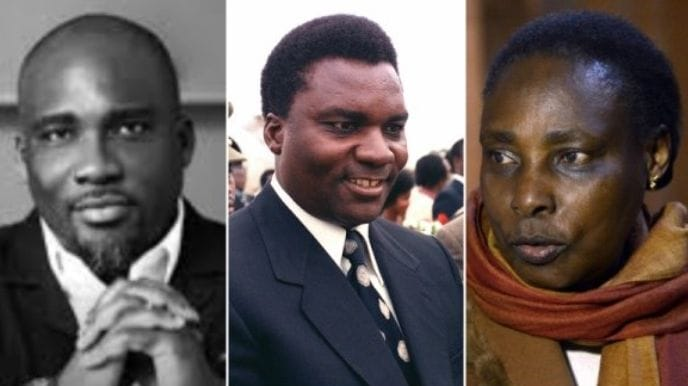
Jean-Luc Habyarimana, the youngest son of the late president, is identified as one of the key figures behind the establishment of the Congolese branch and several other organizations presented as charities. The investigation also links other members of the Habyarimana family to these entities.
The report alleges that between 2008 and 2009, funds were transferred through several organizations before ultimately benefiting members of the Habyarimana family and their close associates.
Financial Transactions Under Scrutiny
According to the investigation, on May 20, 2008, Jean-Luc Habyarimana signed a €125,000 investment agreement with the UK-based charitable organization.
Under the agreement, the organization was expected to repay him €250,000 between December 2008 and December 2009, representing a 100 percent return on investment.
The investigation further claims that from late 2007 onward, Kao and individuals linked to the Habyarimana family received no less than €382,000. The funds reportedly originated from a Swiss bank account that had itself received money from a company registered in Panama.
It also alleges that between 2008 and 2009, Jean-Luc Habyarimana received €325,000 through organizations registered in the United Kingdom between 2007 and 2009.
According to African Facts, it found no evidence that organizations established in the DRC, the Central African Republic, and Gabon carried out genuine charitable activities.
Emails Mention Agathe Kanziga
The investigation also disclosed an email that Kao sent to Jean-Luc Habyarimana on May 17, 2009, asking whether his elder brother, Leon Habyarimana, had received certain funds. He also requested that the family notify him in advance whenever Jean-Luc’s mother, Agathe Kanziga, received money.
According to the publication, Kao wrote: “Hello everyone. I’m writing because Leon has not told me anything since yesterday. I assume he has received the money. Please keep me informed because when Mama Agathe calls me, she doesn’t know what is happening… Keeping me informed is very important.”
Another email from Kao referred to a €15,000 transfer sent to Kanziga through Leon, stating: “The other day, Mama Agathe called me, and I realized her sons had not informed her about the transfer.”
During an investigation into Agathe Kanziga’s alleged role in the 1994 Genocide against the Tutsi, French gendarmes searched the family’s home in Courcouronnes, Essonne, on September 6, 2016, seizing documents and computers.
According to African Facts, documents obtained during that search included a family address book containing contact numbers for several family associates, including three numbers belonging to Fabien Singaye, described as a former intelligence operative for Habyarimana’s government in Switzerland, and two Belgian telephone numbers belonging to Kao.
Adviser to President Tshisekedi
In January 2023, President Félix Tshisekedi appointed Kao as his special adviser. Since then, he has become part of the president’s inner circle, working closely with him on major political and security matters.
The investigation states that Kao has participated in discussions concerning mining agreements, arms procurement, military operations, and the use of foreign mercenaries.
His influential role, combined with his longstanding relationship with the Habyarimana family—which opposes the current Rwandan government has drawn attention as fighting continues in eastern DRC between Congolese government forces and the AFC/M23 coalition.
Both the DRC government and members of the Habyarimana family, particularly Jean-Luc Habyarimana, have repeatedly accused Rwanda of supporting AFC/M23 fighters and deploying troops in eastern DRC. Rwanda has consistently denied the allegations, maintaining that they are entirely unfounded.
Security and Regional Implications
The investigation further reports that Jean-Luc Habyarimana made a secret visit to Kinshasa in June 2024 before returning publicly in November 2025, when he was filmed in the Congolese capital. He is said to have met senior Congolese officials during those visits. Rwanda has argued that such engagements form part of a broader effort to undermine the country.
On April 8, 2026, DRC Government Spokesperson Patrick Muyaya praised Jean-Luc Habyarimana, describing him as a promoter of peace and regional reconciliation and stating that the Congolese government would continue engaging with friends of the Rwandan people.
The investigation also claims that on April 16, 2024, Kao attended a meeting in Kinshasa with representatives of the Wazalendo armed groups, where he reportedly encouraged them to continue recruiting young people into their ranks.
According to United Nations experts, representatives of the FDLR have attended all meetings involving Wazalendo groups, reflecting the long-standing cooperation between the two armed movements.
The investigation concludes that the presence of individuals with historical ties to the Habyarimana family in influential political and military circles within the DRC could have significant implications for the country’s security decision-making.