















For the first time, Rwanda participated in one of the world’s major international assessments measuring students’ abilities, but one particular issue emerged that deserves special attention.

Data show that Rwandan students make extensive use of technological devices, while their performance in other areas of knowledge they are expected to possess, such as mathematics, science, and languages, remains questionable.
In other words, they spend a considerable amount of time in front of phone or computer screens, but the knowledge they gain from them remains limited.
These findings were highlighted in PISA 2025, an international assessment organised by the Organisation for Economic Co-operation and Development (OECD), whose results were released on September 8, 2026, in Kigali.
ALSO READ: https://agaciropress.com/bank-of-kigali-and-ifad-to-invest-21-million-to-support-rwandas-farmers/
Rwandan Students Spend Hours Using Technology
According to the report, Rwandan students said they use technological devices at school for about 3.2 hours per day for learning activities. This was one of the highest figures compared with other countries that participated in the assessment.
The issue, therefore, may not simply be access to computers, the internet, or other technological devices, but rather how these tools are used to improve knowledge and learning.
Students Assessed in Mathematics, Science and Reading
The PISA 2025 assessment did not focus only on technology. Instead, it assessed students in three main areas: mathematics, science, and reading.
Rwandan students were assessed in English, which is one of the languages used as a medium of instruction in Rwanda.
Furthermore, students were not asked traditional questions that simply required memorising information. Instead, they were given questions designed to assess whether a 15-year-old student could use their knowledge of mathematics, science, and language to find solutions to problems in the society in which they live.
However, the scores and performance levels demonstrated by Rwandan students compared with those of students from other countries were not encouraging. They show that Rwanda’s education sector still has significant work to do.
Rwanda Records Low PISA 2025 Scores
In 2025, more than 760,000 students from 91 countries participated in the assessment. Rwanda was among the countries participating for the first time.
The country was represented by more than 6,000 students from 213 schools, including private and public schools, as well as schools from both rural and urban areas.
Rwandan students scored an average of 317 points in science, 301 points in reading and understanding English texts, and 312 points in mathematics. These scores were significantly lower than the OECD averages of 482 in science, 461 in reading, and 463 in mathematics.
Another worrying finding is that 86.5% of the Rwandan students assessed performed below the basic proficiency level in all three subjects, while no student was found in the highest-performing category.
ALSO READ: https://agaciropress.com/president-kagame-holds-talks-with-omans-sultan-haitham-bin-tariq/
Students from Poor Families Show Resilience
Coming from a poor family in Rwanda did not significantly prevent students from performing well, as is often the case in many countries.
PISA 2025 showed that there was a noticeable level of equality in academic performance between students from wealthier families and those from disadvantaged backgrounds in Rwanda.
The OECD refers to such learners as “academically resilient students” students who face socioeconomic challenges but are still able to compete and perform well academically.
The OECD average for this indicator is 11.9%. Rwanda recorded nearly twice this average and was among only four countries, alongside Cambodia, Kenya, and Uzbekistan, that reached at least 22%.
This may indicate that Rwanda has made progress in ensuring that educational opportunities are not reserved only for students from financially advantaged families. However, the general concern remains that overall performance among students is still not at a satisfactory level.
Boys Outperform Girls in All Three Subjects
PISA also revealed another issue that should not be ignored. In Rwanda, boys outperformed girls in all three subjects.
In science, boys achieved an average score of 332, compared with 306 for girls, representing a difference of 26 points.
In mathematics, boys scored 325 points, while girls scored 302. Even in reading, where girls outperform boys in almost every country, boys in Rwanda scored 304 points compared with 298 points for girls.
The OECD report shows that Rwanda and Kenya recorded some of the largest gender gaps in science in favour of boys.
This presents another challenge: determining whether the progress made in ensuring girls’ access to education is also translating into equal learning outcomes.
English Remains a Major Challenge
There is a popular expression used on social media that says, “English is Englishishing,” which people jokingly use to show that the language can be difficult for some learners. The expression is often used when someone is speaking broken or incorrect English.
This may reflect what happened to Rwandan students in this assessment, as the results showed that reading and understanding English was the area in which they performed worst compared with science and mathematics.
However, in English, girls performed slightly better than boys, with girls reaching 3.9%, compared with only 0.4% for boys.
Nevertheless, Rwanda’s education authorities said that efforts are being made to address the challenge of English proficiency through programmes aimed at training teachers in the language.
It remains to be seen whether these efforts will produce the desired results or whether other approaches will need to be considered.
Minister Nsengimana Says Rwanda Must Study the Results
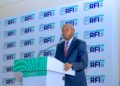
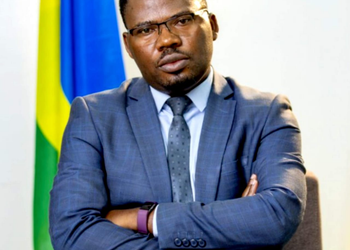
During the event to present the assessment results, held in Kigali on September 8, 2026, the Minister of Education, Justin Nsengimana, said that Rwanda had learned important lessons from the assessment.
He added that the results provided education stakeholders with a clearer picture of existing gaps that need to be addressed in efforts to improve the quality of education in Rwanda.
He said:“When we look at Rwanda’s performance, we are not where we want to be. The results of this assessment are what we are going to study in order to understand them better. We must examine how students responded and how the schools that represented us performed so that we can know what needs to be done.”
Minister Nsengimana further explained that Rwanda participated in the PISA 2025 assessment in order to strengthen evidence-based and data-driven decision-making in the education sector.

Rwanda to Host PISA Regional Dialogue
On September 17, Rwanda will host a meeting known as the PISA Regional Dialogue, where the five African countries that participated in PISA 2025 will come together to examine the outcomes of the assessment and identify areas that need improvement, as well as lessons they can learn from one another.
The discussions will also bring together countries from other continents that performed well and others that demonstrated significant improvement in PISA 2025, so that they can share advice and experiences with African countries on how to improve their education systems.