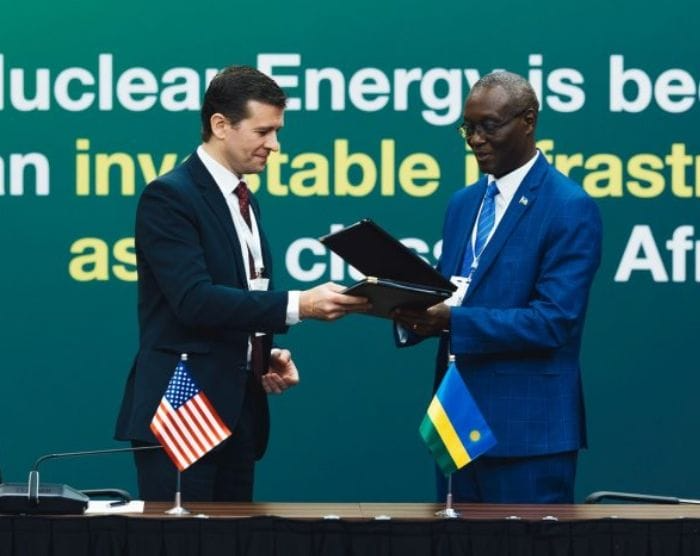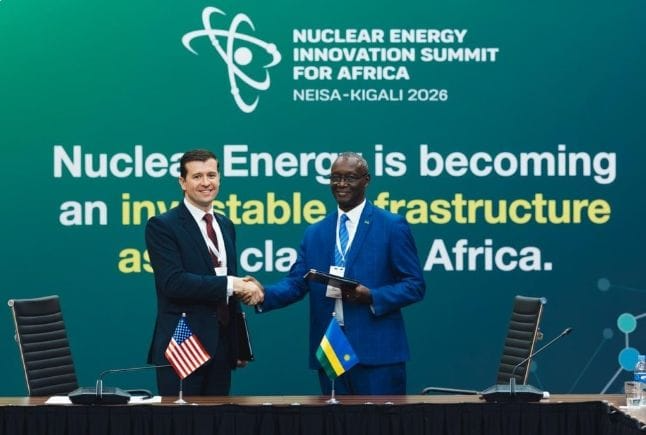
























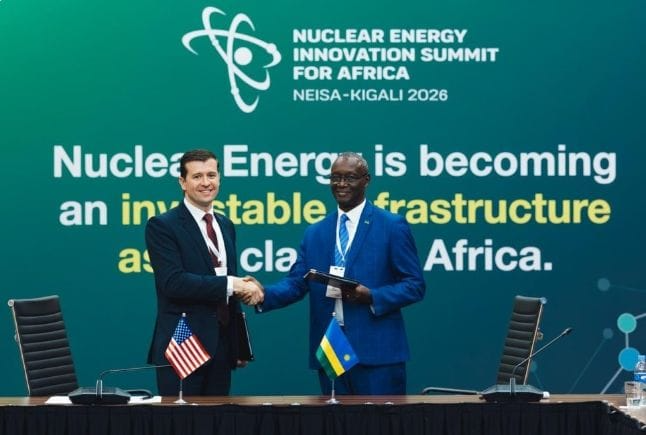
Rwanda has signed a milestone development agreement with Holtec International, a United States-based global energy innovator, to pave the way for deploying Rwanda small modular reactors (SMRs) for domestic electricity generation.

The agreement, finalized during the Nuclear Energy Innovation Summit for Africa (NEISA) 2026, positions Rwanda as a progressive testing ground for next-generation, zero-emission baseload power. Holtec International manufactures small modular reactors used for nuclear power generation and is expected to provide Rwanda with the advanced SMR-300 reactor units the country intends to adopt.
Deploying Holtec SMR-300 Technology in Rwanda
These cutting-edge reactors are sold as dual-unit systems, with each individual unit capable of generating at least 340 megawatts (MW) of electricity. Holtec International is a private American company specializing in nuclear power plant management, nuclear waste handling, and advanced energy technologies.
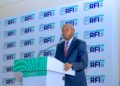
The Chief Executive Officer of the Rwanda Atomic Energy Board, Dr. Fidel Ndahayo, described the agreement as a significant milestone built on work that has been ongoing for some time.
He said: “Holtec International is developing a small modular nuclear technology known as SMR-300.”
He further explained: “The technology is still under development but is nearing completion. Rwanda is recognized as a country that welcomes innovation. We are therefore open to new ideas and prepared to provide a testing ground for such innovations in Rwanda.”
He added: “Rwanda aims to have its first SMR operational by the beginning of the 2030s. Therefore, we are seeking technology that can help us achieve that goal, and we want to work with Holtec International to develop it.”
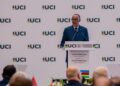
The Managing Director of Holtec Europe, Rafael Marin, said the agreement between Rwanda and Holtec would facilitate the deployment of SMR-300 reactors in Rwanda.
ALSO READ: https://agaciropress.com/rwanda-muslims-mecca-pilgrimage-2026/
Holtec’s Proven Track Record in Global Nuclear Innovation
Holtec International is globally recognized for research and innovation in nuclear technology and has pioneered several major achievements. The company became the first in the world to successfully restart a permanently closed nuclear power plant and is also developing advanced nuclear steam generation technologies. Additionally, Holtec developed the world’s first specialized containers for transporting and storing hazardous waste generated by nuclear plants. More than 100 nuclear power facilities worldwide use the company’s waste-storage systems.
Another distinctive aspect of Holtec’s work involves restoring and reactivating closed nuclear plants. Because of radioactive contamination, restarting nuclear facilities is generally complex and costly. Radioactive materials can cause severe health risks if not properly controlled. Unlike many organizations that move cautiously in handling decommissioned nuclear plants, Holtec purchases such facilities, decontaminates them, and restores them. Recently, the company made history by restarting the Palisades nuclear power plant in Michigan, becoming the first company in the United States to achieve this.
ALSO READ: https://agaciropress.com/rwanda-muslims-mecca-pilgrimage-2026/
Why Rwanda Small Modular Reactors Outperform Traditional Plants
Traditionally, nuclear power plants require many years and substantial investment to construct. However, Holtec has developed Small Modular Reactors, which are smaller, less expensive, and faster to build. SMRs can be compared to prefabricated units built in industrial facilities and later transported to the intended operating site.
Conventional nuclear plants are extremely large, whereas SMRs are much smaller and modular. Additional reactor units can be installed depending on electricity demand. Some of the reactors Rwanda seeks are expected to generate around 200 MW of electricity per unit. Instead of constructing a single large-scale plant capable of producing 1,000 MW, countries can install reactors of varying capacities according to their energy needs.
Holtec states that Rwanda would require approximately 16 hectares of land for the project. The company argues that SMRs provide distinct advantages over conventional electricity sources such as hydropower and thermal generation, which may face operational challenges related to climate-induced water shortages or localized environmental impacts.
ALSO READ: https://agaciropress.com/construction-work-on-ngoma-tomato-processing-plant-nears-completion/
Technical Overview, How SMR Nuclear Reactors Work
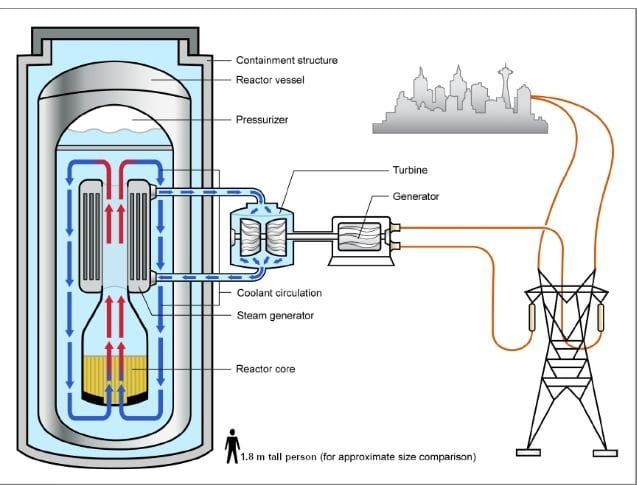
The energy generation process inside the Rwanda small modular reactors operates through four distinct, controlled stages. In the first stage, uranium fuel undergoes nuclear fission, where atoms split and release extremely high levels of heat. Unlike standard combustion, this process does not produce smoke or flames. During the second stage, the heat generated warms water within a closed system.
In the third stage, a steam generator transfers heat from the radioactive water to a separate system containing clean water. This clean water does not come into contact with uranium and remains entirely safe. Finally, in the fourth stage, the resulting steam drives turbines connected to generators, producing electricity that is transmitted through power lines to homes and businesses.
The core process itself does not release harmful greenhouse emissions during operation. Once electricity generation is completed, the main challenge becomes managing nuclear waste. Radioactive waste materials are carefully stored in specialized facilities and may remain there for five to ten years while cooling and being safely managed.
ALSO READ: https://agaciropress.com/rwanda-nuclear-energy-projects-implementation/
Broadening the U.S.-Rwanda Strategic Civil Nuclear Partnership
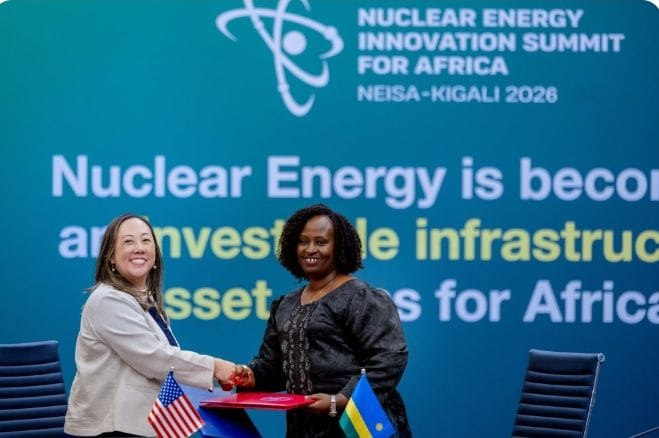
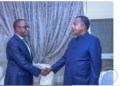
In addition to the commercial vendor agreement, Rwanda also signed a broader cooperation agreement with the United States Government regarding peaceful nuclear energy use. On Rwanda’s side, the strategic agreement was signed by Dr. Usta Kaitesi, Minister of State in the Ministry of Foreign Affairs, and by Renee Sonderman, Acting Principal Deputy Assistant Secretary in the U.S. Department of State responsible for arms control and related matters.
The bilateral cooperation agreement includes key provisions on providing educational opportunities for Rwandan students pursuing nuclear studies in the United States, as well as supporting nuclear-related infrastructural projects. Furthermore, the partnership focuses on enhancing technical cooperation and regulatory capacity building, alongside additional collaborative areas in peaceful nuclear energy development.