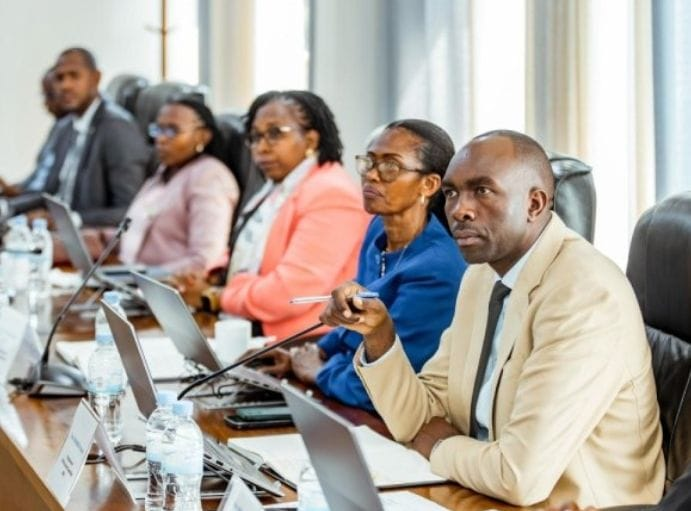
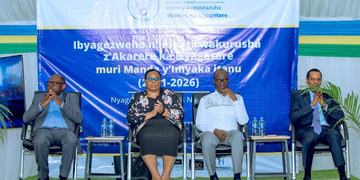
























The Public Accounts Committee (PAC) has announced that it will begin public hearings involving 76 government institutions and agencies to account for their management and use of public resources. The hearings will focus on issues raised in the Auditor General’s Report for the fiscal year ending 30 June 2025.

ALSO READ: Step by Step: Inside the $560 Million Kivu Gas Processing Project
The hearings are scheduled to begin on 25 June 2026 and will continue until 10 July 2026. During this period, the 76 institutions will be required to provide explanations regarding shortcomings identified in the management of public finances and state assets.
Public Hearings to Run from 25 June to 10 July 2026
The exercise forms part of Parliament’s oversight role to ensure that public institutions are held accountable for how they manage taxpayer money and government property.
PAC Says Goal Is Efficient and Responsible Use of Public Funds
PAC Chairperson Valens Muhakwa said the committee’s main objective is to ensure that every public franc is used for its intended purpose, spent on time, and managed without waste.
He stressed that the hearings are not only meant to point out weaknesses but also to give institutions an opportunity to explain how they are addressing those problems and improving their performance.
He stated: “Our primary objective is to ensure that every public franc has been used for its intended purpose, that it has been spent on time, and that there has been no waste of public resources. Public accountability hearings are not solely about questioning institutions over shortcomings; they also provide an opportunity for government entities to demonstrate how they are correcting those issues and improving their operations, with the ultimate goal of ensuring efficient use of public resources for the benefit of Rwandans.”
Institutions Summoned Include Those With Adverse and Qualified Audit Findings
According to a statement issued by Parliament, the institutions called to appear include those that received an adverse opinion in financial audits, compliance audits, or value-for-money audits.
Also summoned are institutions that received qualified assessments in value-for-money audits, as well as those that implemented less than 80 percent of the Auditor General’s recommendations, particularly where unresolved issues were considered serious.
Special, Forensic and IT Audit Cases Also Included
PAC also invited institutions that were subject to special audits, forensic audits, or information technology (IT) audits. These categories are included to ensure that entities with broader accountability concerns are also required to explain their handling of public resources.
The committee’s review is expected to highlight both financial management gaps and systemic weaknesses that may be affecting the delivery of public services.
Hearings Aim to Strengthen Accountability and Transparency
The public hearings are part of ongoing efforts to strengthen accountability, promote prudent management of public resources, and reinforce a culture of transparency and responsibility across government institutions.
By summoning institutions to explain audit findings in public, PAC aims to encourage stronger compliance with public finance rules, improve implementation of recommendations from the Auditor General, and ensure that state resources are used more effectively for the benefit of citizens.