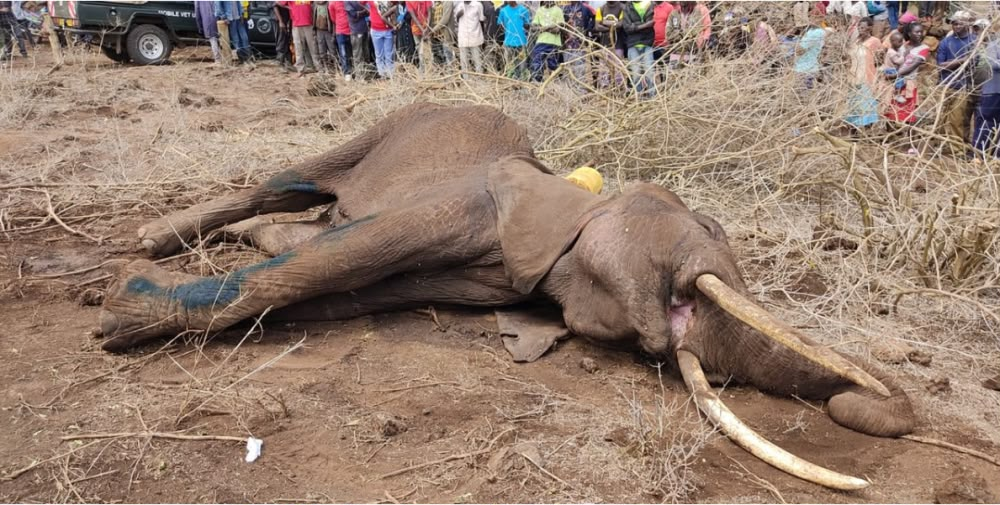



























Two farmers in Kenya have been arrested on suspicion of involvement in the poisoning of elephants in and around Amboseli National Park, where 18 elephants have died between June 24 and July 26.

Elephant Deaths Rise to 18
The Deputy Director General of the Kenya Wildlife Service (KWS), Paul Wambi, said the number of dead elephants had increased from 16 to 18. “The number of deaths has reached 18 so far. Another elephant is being closely monitored by our veterinarians. Our veterinarians are doing everything possible to prevent this number from increasing.”
During the celebration of World Ranger Day at Tsavo West National Park on July 31, KWS Director General Prof. Erustus Kanga said initial tests on the remains of the elephants showed signs of severe poisoning.
ALSO READ: https://agaciropress.com/kirehe-four-killed-16-injured-in-road-accident/
Elephants Suspected of Consuming Pesticide-Contaminated Substances
Prof. Kanga said post-mortem examinations by KWS veterinarians indicated that the elephants had consumed substances containing pesticides used on tomato farms near Amboseli National Park, Kimana Sanctuary and the Kuku Group Ranch area.
The Amboseli area is surrounded by large farms growing different crops. Some of these farms are located along routes commonly used by wildlife to move between different areas.
ALSO READ: https://agaciropress.com/mtn-rwanda-revenue-rises-by-21-9-profit-reaches-rwf-17-2-billion/
Two Farmers Arrested
An investigation by Kenya’s intelligence agency led to the arrest of two farmers following two weeks of monitoring farms in the area.
Intelligence officers reportedly entered some farms while posing as ordinary workers to gather information about the suspected poisoning.
One of the suspects, a Tanzanian national who is alleged to have planned the poisoning, was arrested in Nairobi on Thursday night. The second suspect was arrested in Kajiado County.
Several other farmers are also being investigated because they may have information related to the deaths.
ALSO READ: https://agaciropress.com/rwanda-over-371000-students-pass-2025-26-national-examinations/
Investigators Suspect Poisoned Water
One investigator said the evidence gathered so far suggests that the elephants may have consumed contaminated water. “It is now clear that the animals drank water that had been contaminated with a poisonous chemical, which had been placed in a location prepared in such a way that the animals could not avoid it.”
The investigator added that authorities suspect the chemicals may have been brought into Kenya from a neighbouring country, although the exact motive behind the suspected poisoning remains unclear.
ALSO READ: https://agaciropress.com/citizens-welcome-police-crackdown-on-youth-indecency-and-immoral-behavior/
Authorities Continue Searching for More Suspects
Paul Wambi said the two suspects are currently in the hands of justice authorities while a multi-agency team continues investigating the case. “So far, the two male suspects are in the hands of the justice authorities. A multi-agency team is searching for others. The suspects will be brought before the courts at the appropriate time. We must protect our wildlife, which is a source of national pride.”
ALSO READ: https://agaciropress.com/what-to-know-about-rwandas-anti-corruption-law/
Amboseli Wildlife Important to Tourism
Amboseli National Park is located in Kajiado County and covers approximately 392 square kilometres. It is one of Kenya’s major tourist attractions and is particularly known for its large elephant population.
Wildlife in the Amboseli ecosystem is also important to the economy of Kenya and communities living around the park. Nearly 80% of the wildlife in the area lives outside the park’s boundaries, making cooperation between conservation authorities, farmers and local communities essential for protecting wildlife.