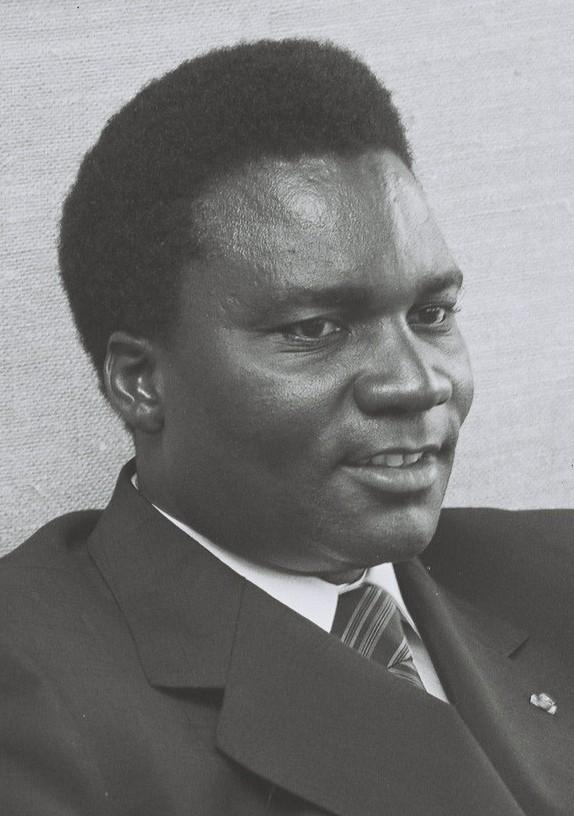

























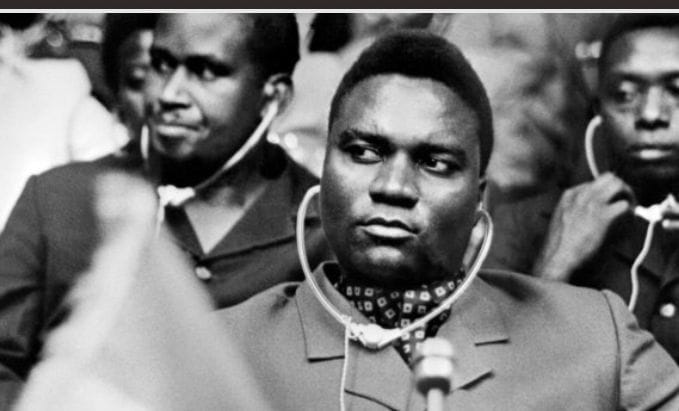
History shows that the hatred that Juvenal Habyarimana, who ruled Rwanda, harbored against the Tutsi was longstanding, and that he became involved in the plan for the genocide against them in 1994 while he was still a young man.

One of the people who knows the history of Habyarimana’s hatred of the Tutsi well is Ambassador François-Xavier Ngarambe, a Rwandan historian and author.
The history of Habyarimana’s conduct is detailed in Ambassador Ngarambe’s book titled Le génocide contre les Tutsi au Rwanda en 1994. Conséquences inéluctables des politiques criminelles et des crimes politiques de 1959 à 1994, which explains how the genocide was planned over a long period.
In an interview with IGIHE, Ambassador Ngarambe recalled that Habyarimana was born in 1937, 20 years before the publication of the Hutu Manifesto. He was among the young people influenced by the document, which sought to promote Hutu interests regardless of the means used to achieve them.
Entry into the Military
He explained that in 1960, a year after what was known as the “Hutu Revolution” began, Habyarimana joined the army through a programme led by Belgian Colonel Logiest, who wanted to build a Hutu army that would eventually eliminate the Tutsi.
He said: “In this army, Logiest saw Habyarimana as someone capable of representing this Hutu youth who had the capacity to kill Tutsi without hesitation. This had already been instilled in him when he was in his 20s, during military training.”
ALSO READ: https://agaciropress.com/putin-promises-retaliation-against-europe-if-it-seizes-russian-ships/
Early Military Operations and Violence
Ambassador Ngarambe explained that in 1962–1963, after completing his military studies, Habyarimana led operations to repel attacks by the Inyenzi, but he and other soldiers also began killing Tutsi civilians in what appeared to be acts of retaliation.
He said that in 1963–1964, Habyarimana began commanding the national army and other security institutions, which had been handed over by the Belgians as they ended their colonial rule in Rwanda. He led operations to kill Tutsi, assisted by the PARMEHUTU party, which he supplied with weapons.
ALSO READ: https://agaciropress.com/in-rwanda-54-of-unmarried-women-use-family-planning-methods/
Genocidal Ideology Predated His Presidency
Ambassador Ngarambe said: “Generally speaking, Habyarimana’s genocidal ideology did not begin in the 1990s or the 1980s. It began with the establishment of PARMEHUTU and the dissemination of the Hutu Manifesto.”
He noted that although signs of genocide had emerged during the rule of Grégoire Kayibanda, Habyarimana preserved the ideology until it was implemented 21 years after he came to power.
Ambitions for Power
Ambassador Ngarambe said that from a young age, Habyarimana was ambitious for power, to the extent that he sought to replace Kayibanda when he was only 26 years old and a Lieutenant in the army.
He said: “At the age of 26, when he became commander of Rwanda’s armed forces, he already had ambitions to become Head of State. From that point on, he began to become a liar who sought to control those around him, using lies to lead people close to him in the direction he wanted them to take.”
Consolidating Power and Building Support
Ambassador Ngarambe explained that after Habyarimana carried out a coup d’état, killed political figures from the southern region, and consolidated his power, he sought ways to win the support of Hutu from that region so that they would help him implement his plan to exterminate the Tutsi.
Although Colonel Lizinde was tried by the Ruhengeri military court and accused of killing the politicians from the south, Ambassador Ngarambe said this could not have been done without Habyarimana’s orders, adding that the killings were carried out in a way intended to avoid provoking people from Habyarimana’s home region.
He said: “Lizinde played a role, but his president was Colonel Ntibitura, who supported Habyarimana by providing him with daily reports. From November 1974, Ruhengeri Prefecture was headed by Habyarimana’s brother-in-law, Monsieur Z. It was during that period that those prisoners were killed. Therefore, it would not have been possible or logical for Lizinde to decide to kill them without Habyarimana’s knowledge.”
Promoting Hutu Power
He noted that, particularly from 1993, Habyarimana did everything possible to build Hutu unity, known as Hutu Power, reaching out to all levels, including communes, and looking for people to conduct campaigns aimed at convincing citizens that they shared a common enemy called the Tutsi.
He said: “He put in place a systematic and well-organized approach aimed at sowing genocidal ideology among all Rwandans, and particularly among all Hutu, preparing them from childhood and from primary school.”
The 1990 War as an Opportunity
On October 1, 1990, the RPA Inkotanyi launched the struggle to liberate Rwanda.
Ambassador Ngarambe explained that Habyarimana saw the war as an opportunity because he viewed it as a way to further unite the Hutu so that they could eliminate the Tutsi.
He said: “When the war broke out, Habyarimana seemed to have thanked God, saying, ‘Now I am going to solve the problem; I am going to unite the Hutu.’ The mastermind behind the plan to mobilize Hutu against the Tutsi, whether they were infants or elderly people who could no longer get out of bed, was Habyarimana and his associates.”
Mobilizing the Population
Ambassador Ngarambe explained that Habyarimana had a group responsible for mobilizing people to turn the Hutu against the Tutsi. It was led by Nahimana Ferdinand, Barayagwiza and others. Their message was that “Rwanda had been invaded by the Inyenzi who came from Uganda, accompanied by Ugandans,” with the aim of convincing the Hutu that they had to rise up and defend themselves.
Although Habyarimana died on April 6, 1994, the genocide he had helped prepare was carried out across the country starting the following day. During the 100 days it lasted, more than one million people were killed. It was the gravest crime committed against humanity in the 20th century.