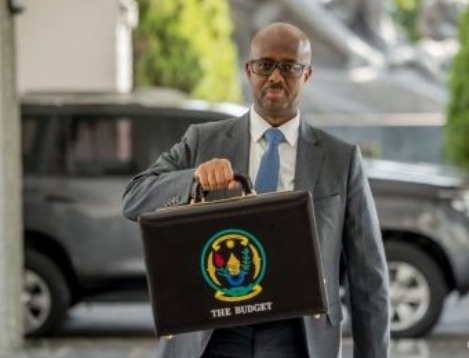
















The Plenary Session of the Chamber of Deputies has approved the law establishing Rwanda’s national budget for the 2026/2027 financial year, which begins in July 2026, with total expenditures set at Rwf7,796.2 billion.

The budget law was adopted by 63 Members of Parliament during a plenary sitting held on June 24, 2026.
The new budget represents a 12% increase compared to the revised 2025/2026 budget approved in February 2026, rising from Rwf6,952 billion to Rwf7,796.2 billion.
Domestic Revenue Remains the Backbone of Financing
Domestic revenues and financing sources, including loans, will account for 93% of the total budget for the 2026/2027 fiscal year.
The Chairperson of the Parliamentary Committee on National Budget and Patrimony, Deputy Uwamariya Odette, said this demonstrates Rwanda’s growing financial self-reliance.
Tax revenues will contribute 56.8% of the budget, while other domestic resources account for 7.5%. Foreign grants represent 7%, domestic borrowing 3.4%, and external loans 25.3% of the total budget.
Recurrent and Development Spending Breakdown
The recurrent budget amounts to Rwf5,306.5 billion, representing 68% of total spending, while the development budget stands at Rwf2,489.7 billion, equivalent to 32%.
The allocation reflects the government’s commitment to maintaining public services while continuing to invest in long-term development projects across various sectors.
Economic Sector Receives the Largest Shar e
The Economic Transformation Pillar has been allocated Rwf4,900.8 billion, accounting for 62.9% of the total budget.
Priority areas include accelerating sustainable agricultural and livestock development, promoting industrialization and services, strengthening environmental sustainability initiatives, expanding domestic manufacturing, boosting exports, strengthening the financial sector and creating jobs.
Social Services and Governance Remain Key Priorities
The Social Transformation Pillar will receive Rwf1,834.2 billion, equivalent to 22% of the total budget.
Funding will focus on improving education quality, equipping citizens with market-relevant skills, strengthening healthcare services, combating malnutrition and stunting, and supporting vulnerable households through poverty graduation programs.
Meanwhile, the Transformational Governance Pillar has been allocated Rwf1,188.2 billion, representing 15.1% of total spending. Resources will support quality service delivery, sound public financial management, the rule of law, citizen engagement, peace and security, and international cooperation.
P arliament Reallocates Funds to Address Urgent Need s
Deputy Uwamariya noted that although the national budget continues to increase annually, development demands are growing as Rwanda pursues ambitious goals.
He said, “It has been seen that the activities that need to be carried out continue to increase, mainly due to the fact that we are a country that always wants to achieve more.”
Following consultations with government institutions, approximately Rwf400 billion was reallocated from some planned activities to more urgent priorities.
Agriculture, Social Protection and Roads Receive Additional Funding
Funding for agriculture and livestock was increased by Rwf3.08 billion, rising from Rwf352.5 billion in the draft budget to Rwf355.6 billion.
The budget for social protection and support for vulnerable populations was also increased by Rwf7.2 billion, reaching Rwf59.7 billion compared to the initial proposal of Rwf55.4 billion.
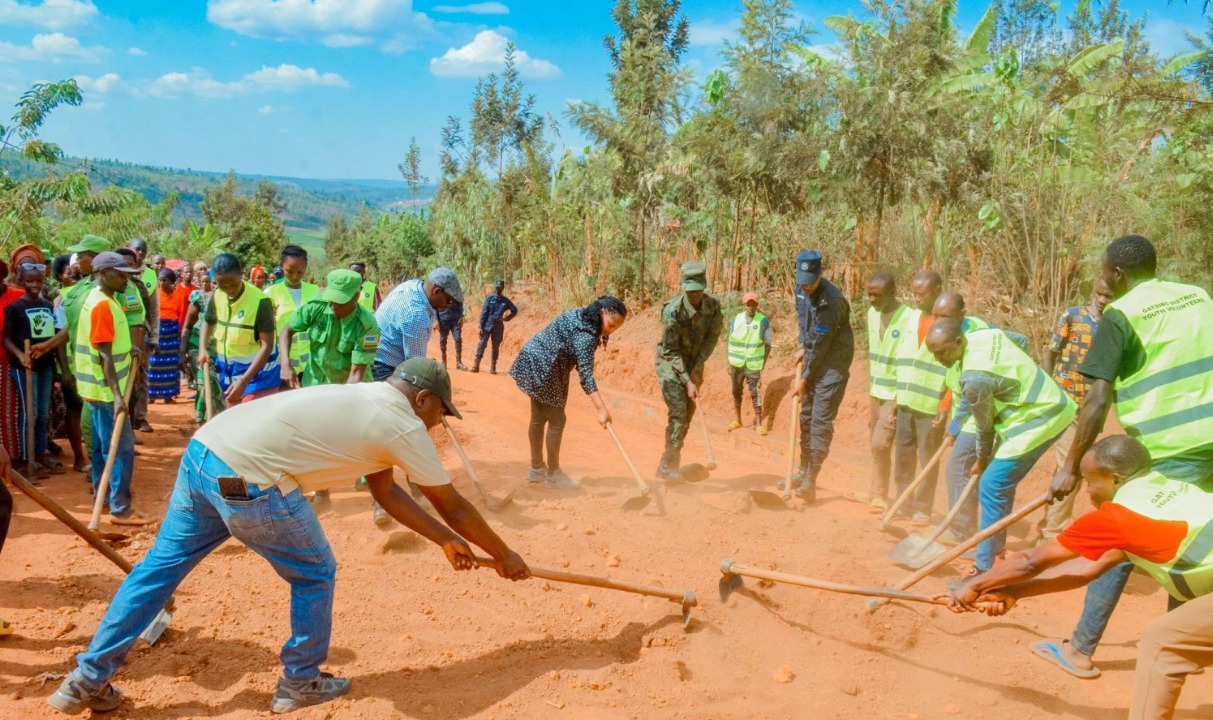
The allocation for feeder road construction and rehabilitation was significantly increased by Rwf483 billion, from Rwf1,244.2 billion in the draft budget to Rwf1,727.2 billion, reflecting the government’s commitment to improving connectivity and supporting economic activity across the country.
Transport Sector Adjusted as New Projects Are Prepared
The transport sector budget was reduced by Rwf2.4 billion due to the nearing completion of several ongoing projects and preparations for new investments.
However, medium-term projections indicate that spending in the sector will continue to grow, with additional allocations planned for the 2027/2028 and 2028/2029 fiscal years as Rwanda continues to expand and modernize its transport infrastructure.