






















As Rwanda steps up efforts to reduce dependence on firewood and charcoal while expanding the use of cleaner energy, the Kivu methane gas processing project is emerging as one of the country’s most significant energy investments. Implemented by GasMeth Energy Ltd, the project is expected to supply cleaner fuel for households, industries and vehicles, while also contributing to environmental protection and lake safety.

ALSO READ: HUYE: Residents of Rwaniro Welcome Electricity Project Expected to Accelerate Development
A Major Energy Project Backed by a $560 Million Investment
The Kivu methane gas processing project carries a total investment value of $560 million, equivalent to more than Rwf 822 billion. Its first phase alone is valued at around Rwf 528 billion, or more than $360 million.
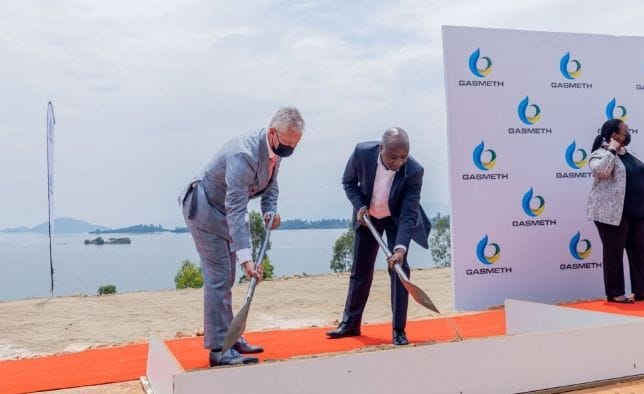
The project is being implemented by GasMeth Energy Ltd under an agreement signed with the Government of Rwanda in 2019. Preliminary works began in 2022 in Bwishyura Sector, Karongi District, marking the start of one of Rwanda’s most ambitious energy transition projects.
Why Rwanda Is Turning to Lake Kivu for Cleaner Energy
Rwanda continues to face a major challenge in expanding access to clean cooking energy. According to the 2024 EICV7 household survey, around 75 percent of households still rely on firewood for cooking, while 18.8 percent use charcoal. Only 5.4 percent use cleaner alternatives such as gas, biogas or electricity.
This heavy dependence on biomass has major consequences, including deforestation, environmental degradation and indoor air pollution that affects public health. By tapping methane gas from Lake Kivu, Rwanda hopes to offer a cleaner alternative to firewood, charcoal, diesel and petrol, while also reducing pressure on forests.
The Project Will Extract Methane from 425 Metres Below Lake Kivu
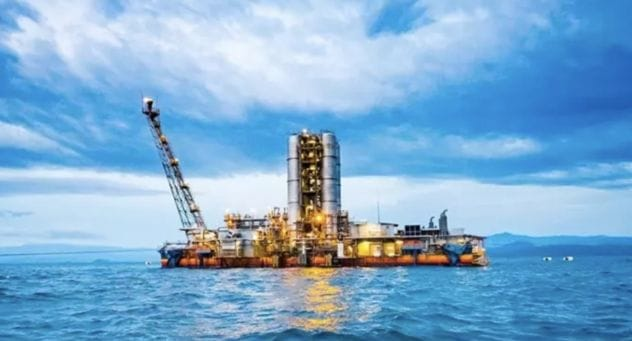
The GasMeth project will be implemented in three phases, beginning with the construction of an offshore extraction barge a large floating platform installed on Lake Kivu.
This platform will draw gas-rich water from a depth of 425 metres, where methane concentrations are highest. Instead of drilling into the lakebed, the system will pump deep water to the surface through specialized pipes. As the water rises and pressure decreases, the dissolved gas separates naturally from the water.
The methane will then be isolated through specialized systems designed to capture and process the gas safely and efficiently.
Purification and Compression Will Turn the Gas into CNG
After extraction, the gas will undergo purification to remove carbon dioxide (CO₂) and other impurities. Although Lake Kivu contains commercially valuable methane, the raw gas must be refined before it can meet standards for household, industrial and transport use.
Once purified, the methane will be compressed into Compressed Natural Gas (CNG). This process makes it possible to store and transport large volumes of gas safely in much smaller spaces, making it practical for nationwide distribution and commercial use.
Processing Capacity Could Reach 40 Million Cubic Metres Per Day
In its first phase, the GasMeth facility is expected to process and compress 13.2 million cubic metres of gas per day. Over the long term, the project aims to scale up to 40 million cubic metres per day.
This means the first phase is not just a standalone development but the foundation for a much larger methane gas operation. The infrastructure currently under construction is being designed to support future expansion as demand grows and additional phases are rolled out.
A 35-Kilometre Underwater Pipeline Will Bring the Gas to Shore
Once the methane is extracted and processed offshore, it will be transported to land through a 35-kilometre underwater pipeline. The pipeline will be installed approximately 20 metres below the lake’s surface, connecting the extraction platform in the middle of Lake Kivu to onshore facilities in Karongi District.
This underwater link will play a central role in the project, ensuring a continuous flow of gas from the offshore extraction site to the processing plant on land, where the gas will be further compressed and prepared for distribution.
Gas Will Be Distributed to Households, Industries and Vehicles
Onshore, the gas will be processed at a plant in Bwishyura Sector, where it will be compressed to pressures of up to 250 bar. This high-pressure compression will allow the gas to be packaged into specialized containers for transport.
The plant is expected to load up to 40 trucks per day, which will distribute CNG to households, industries and vehicle refuelling stations across the country.
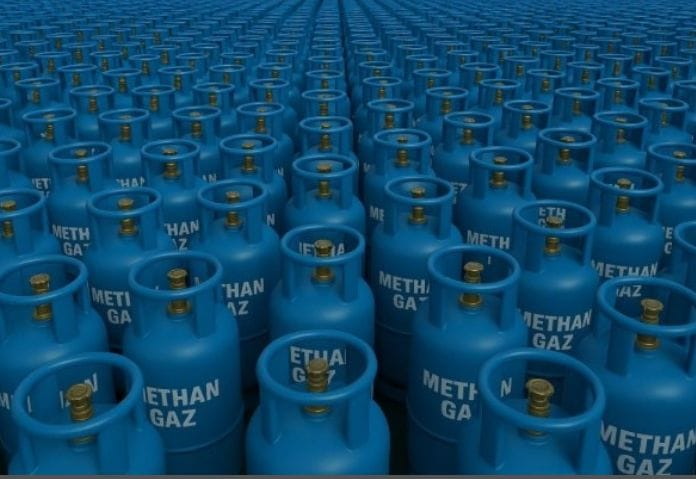
For households, the project could supply cleaner cooking gas to between 300,000 and 400,000 homes, helping reduce dependence on firewood and charcoal. For industries, CNG could provide a cleaner and potentially cheaper alternative to diesel and other fuels. In the transport sector, the gas could replace petrol and diesel, reducing harmful emissions from vehicles.
The Project Could Cut Emissions, Improve Lake Safety and Create Jobs
Beyond energy supply, the GasMeth project is expected to deliver significant environmental and economic benefits. It is projected to reduce carbon monoxide emissions from vehicles by 80 percent and hydrocarbon emissions by 45 percent. It could also prevent around 5.1 million tonnes of carbon dioxide emissions from being released into the atmosphere.
The project also has an important safety dimension. Lake Kivu contains large volumes of methane and carbon dioxide dissolved in its deep waters. Controlled extraction helps reduce the risk of a limnic eruption, a rare but potentially catastrophic event in which large quantities of gas are suddenly released from a lake.
Construction is advancing quickly, with preparatory works reportedly 95 percent complete. These include site preparation, foundations, buildings, roads, water systems and other support infrastructure. GasMeth says the project is expected to become operational in 2028.
At present, the project employs around 250 people directly and indirectly. That number is expected to rise to between 600 and 800 workers by the end of 2026, while full operations could create up to 1,000 skilled and well-paying jobs.
Once operational, GasMeth will become the third major methane gas development project on Lake Kivu, after KivuWatt and Shema Power Lake Kivu, further strengthening Rwanda’s long-term energy security and clean energy ambitions.