















In several Western countries, discussions and laws on assisting terminally ill patients to end their lives have increasingly gained attention. In some cases, doctors administer medication or provide patients with drugs to take themselves so that death may occur sooner and with less suffering. While some Rwandans consider such measures necessary, others strongly reject them, viewing them as equivalent to taking a human life.

ALSO READ: https://agaciropress.com/brig-gen-ronald-rwivanga-takes-helm-of-eastern-africa-standby-force/
Life in Critical Care Situations
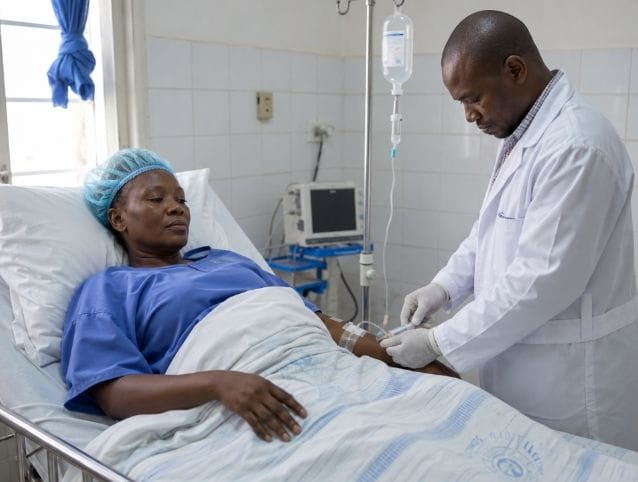
A Rwandan proverb says that when life hangs by a thread, everyone struggles to survive. In intensive care units, critically ill patients often lie in comas, connected to machines and life support systems, while doctors, close relatives, and lifelong friends remain by their side during the most difficult moments.
In countries such as the Netherlands, Belgium, and Luxembourg, severely ill patients who repeatedly request it and meet strict legal requirements may be allowed to end their lives to avoid prolonged suffering. One method involves a physician administering medication intended to bring about a peaceful and painless death, a practice known as euthanasia. In other cases, patients may be given medication to take themselves, commonly referred to as assisted suicide.
Rising Statistics and Public Opinion in Rwanda
In the Netherlands, 10,341 people underwent euthanasia in 2025, accounting for about 6% of all deaths that year. In 2023, the figure stood at 9,068 cases. A survey conducted by IGIHE among its social media followers asked whether helping a patient suffering severe pain and confirmed by doctors as having an incurable condition should be accepted in Rwanda. The results showed that 1,700 respondents supported the idea, 908 opposed it, while 462 remained undecided.
ALSO READ: https://agaciropress.com/aston-villa-crowned-uefa-europa-league-champions-2/
Views of Rwandans Who Support the Practicehttps
Some Rwandans from the Southern and Western provinces, aged between 19 and 68 and mostly young people, told IGIHE that they support allowing patients experiencing unbearable pain with no chance of recovery to make such a decision. Nineteen year old Irankunda Philbert said: “There are situations where someone becomes so seriously ill that even they themselves may feel they would rather die, because some diseases simply cannot be cured.”
Twenty year old Claude Niyomugabo said that if a patient has no hope of recovery and continues consuming a family’s resources, such a decision could be understandable. “Someone may exhaust your financial resources while already beyond recovery. If doctors establish this early enough, helping the person pass peacefully would not necessarily be wrong.”
ALSO READ: https://agaciropress.com/samia-suluhu-hassan-kigali-nuclear-energy-summit-2026/
Fidele Kanyanzira, aged 68, also argued that someone suffering intense pain should be helped to find relief. “Rather than continuing to suffer, especially if the person is over 80 years old and there is no chance of recovery, helping them end their suffering may be reasonable.”
However, he added that he would not support such a request if made by his child, as he would consider them too young, although he personally might consider it for himself. In countries where euthanasia is legal, patients are generally required to make such requests while mentally competent and capable of making informed decisions.
Religious and Moral Opposition
Many of those who opposed euthanasia were older individuals, most of whom said their views were shaped by Christian teachings.
Jean Bosco Akumuntu said: “People who believe in God believe that life is given by God, and when a person’s time comes, they die naturally. Allowing someone else to end that life would resemble killing, and God’s law does not permit killing. Personally, I would not agree to ending someone’s life because they are suffering.”
A 68 year old woman expressed a similar opinion, arguing that even a patient in severe pain should wait for the time appointed by God. “God places people on Earth knowing when He will call them back. Otherwise, it would be similar to suicide.”
ALSO READ: https://agaciropress.com/rwanda-water-sanitation-projects-budget-2026/
Medical Perspective and Ethical Debate
A hospital director in Rwanda’s Southern Province told IGIHE that some families sell land and exhaust all their possessions seeking treatment for patients they already know cannot recover, even though many depend on those resources for survival.
He explained that beyond physical suffering, patients and families often experience emotional and psychological exhaustion. “You reach a point where not only the patient but even the family is overwhelmed. Where euthanasia has been introduced, people quickly adapted and the process was handled smoothly.”
The doctor clarified that euthanasia does not involve physically harming patients, but rather administering medication through an injection that allows them to die peacefully and without pain.
ALSO READ: https://agaciropress.com/rwanda-small-modular-reactors-new-partnership-to-advance-nuclear-energy/
He added: “The pain experienced before death can be severe. Everyone knows death is inevitable, but no one wants to die in agony.” He also noted that cases involving children born with untreatable illnesses place enormous emotional and financial pressure on families.
According to the doctor, cultural values and religious beliefs remain among the major reasons practices such as euthanasia and even cremation have not become widely accepted in Rwanda.