



























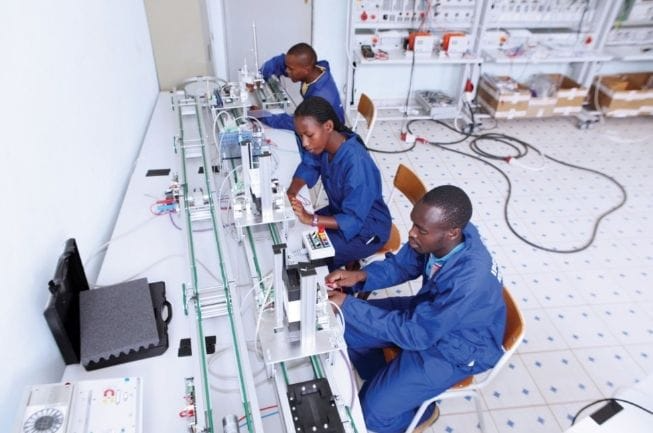
Technical and Vocational Education and Training (TVET) continues to play a critical role in driving economic growth and job creation worldwide, with countries such as Germany, Switzerland, and Singapore demonstrating the long-term impact of investing in skills-based education.

These nations have achieved remarkable economic progress partly through prioritizing vocational and technical training systems that equip learners with practical workplace skills and improve employability.
ALSO READ: https://agaciropress.com/rwanda-welcomes-east-and-central-africas-football-veterans/
Global Success of Technical and Vocational Education
Germany provides vocational training opportunities to more than 1.3 million people annually through programs that combine classroom learning with hands-on workplace experience.
Similarly, Switzerland graduates more than 70,000 students every year in technical and vocational fields, while Singapore records over 20,000 graduates annually. These countries also rank among the world’s leading economies in terms of citizens’ living standards and income levels.
Germany currently has an estimated GDP of $4.6 trillion and an annual per capita income of approximately $60,400. Switzerland’s GDP stands at around $937 billion, with a per capita income of about $116,000, while Singapore records a GDP of $547 billion and an annual per capita income of nearly $99,000.
Rwanda Expands TVET Enrollment and Infrastructure
Rwanda has increasingly embraced vocational education as a pathway toward economic transformation and job creation. In 2025, the Rwanda TVET Board announced that enrollment in TVET programs had risen to 47%, up from 31% in 2020, with a long-term target of reaching 60%.
The number of students currently enrolled in TVET institutions has reached 85,830. Employment outcomes among graduates also remain encouraging, with studies showing that 75.2% secure jobs within six months after graduation. Around 14% find employment within seven to twelve months, while 10.5% obtain jobs after more than one year.
Rwanda currently has 598 TVET institutions, including 408 public schools and 190 privately-owned institutions.
Massive Investments in Skills Development
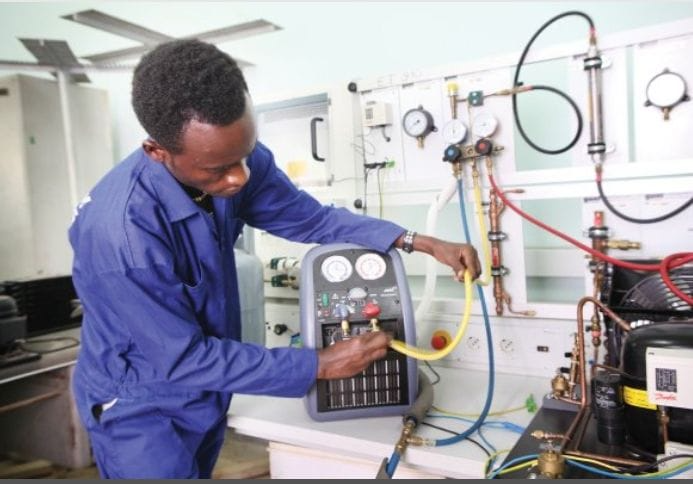
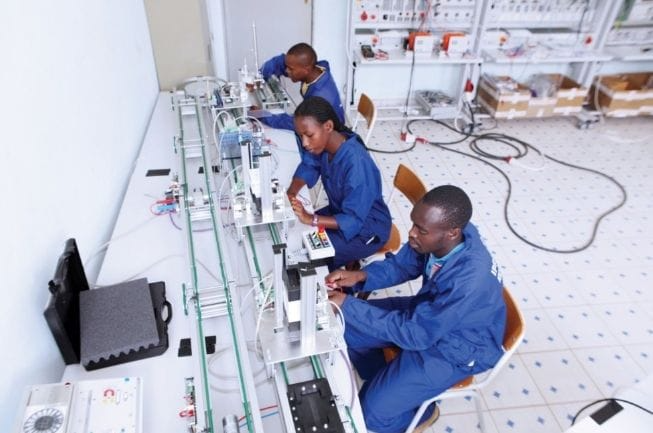
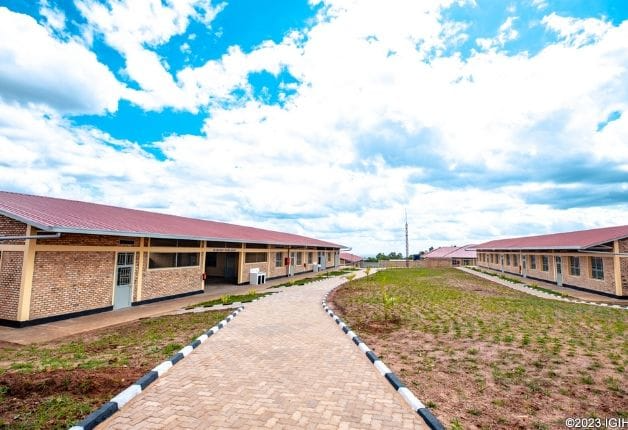
Significant investments have been made in infrastructure and training facilities to strengthen the sector nationwide. A total of 135 TVET Wings integrated within general education schools have been constructed across all districts and equipped with modern facilities. Additionally, 17 TVET schools have been expanded, while six new schools have been built in border areas.
RTB has also revised 158 curricula for Senior Four to Senior Six students to align training with modern technologies and updated educational standards.
ALSO READ: https://agaciropress.com/felicien-kabuga-dies-in-dutch-hospital-while-awaiting-transfer/
Digital Transformation in TVET Schools
Efforts to modernize vocational education have included major investments in digital infrastructure.
About 91% of RTB teachers have received laptops, totaling 5,500 devices, while 526 TVET schools representing 82% of institutions now have access to high-speed internet.
Rwanda has also established 287 computer laboratories in TVET schools, distributing 14,135 computers to support digital learning and technology adoption.
Blended learning systems combining physical and online instruction have been introduced in 11 TVET schools, while students in 26 schools are receiving robotics training.
To strengthen teaching quality, 4,935 teachers have been trained on the revised curriculum, while another 1,060 teachers have undergone technical skills development training.
The TVET e-learning platform has also expanded access to digital education resources, providing students with more than 10,000 educational books and learning materials as efforts continue to digitize all TVET course content.
Private Sector Partnerships and Scholarship Programs
The private sector has continued playing a major role in workplace-based learning through more than 700 partnership agreements supporting internships aligned with students’ areas of study.
Meanwhile, the TVET scholarship program launched in 2023 is currently supporting more than 1,800 beneficiaries, with a target of reaching 4,000 students by the end of the 2025/2026 period. So far, 46 schools have joined the initiative with support from the German Development Bank.
However, plans to establish short-course vocational training centers in every village remain behind schedule, with only 73 centers completed out of Rwanda’s 2,148 villages.
Rwanda Targets 5,000 New TVET Teachers
Under the second National Strategy for Transformation (NST2), Rwanda aims to further position TVET as a major driver of economic growth and middle-income development by 2035.
The strategy outlines seven major pillars focused on increasing access to skills training, improving education quality, and strengthening connections between students and labor markets both locally and internationally.
Rwanda plans to increase annual TVET enrollment by 15% while ensuring that 70% of schools meet required quality standards. Vocational Training Centers are also expected to operate in every village, bringing the total number nationwide to 2,044.
NST2 further targets making 30% of TVET schools accessible to learners requiring special support, including persons with disabilities. To improve education quality, all curricula and instructional materials are expected to be fully revised in line with emerging technologies and industry demands.
RTB projections show that 5,000 new teachers will be recruited, while 15,000 teachers and more than 1,000 school leaders will receive additional training aligned with Rwanda’s long-term vision for vocational education.
ALSO READ: https://agaciropress.com/rwandan-actress-nyiragitariro-heads-to-france-for-cannes-film-festival/
Major Technology and Innovation Goals by 2029https://agaciropress.com/rwandan-actress-nyiragitariro-heads-to-france-for-cannes-film-festival/
As Rwanda accelerates its digital transformation agenda, TVET institutions are expected to receive more than 30,000 computers and additional technological equipment. All public and government-supported schools are also expected to establish ICT laboratories.
Another 10,000 teachers are expected to receive training in modern technologies and blended learning approaches. By 2029, Rwanda plans to construct model TVET schools valued at approximately $360 million, with funding already secured for 15 schools. These institutions will complement eight others financed by South Korea at a cost of $135 million.
The strategy also aims to strengthen innovation and entrepreneurship, with projections showing that by 2029, half of all TVET schools will participate in competitions, while 10% will take part in innovation events such as hackathons.