

































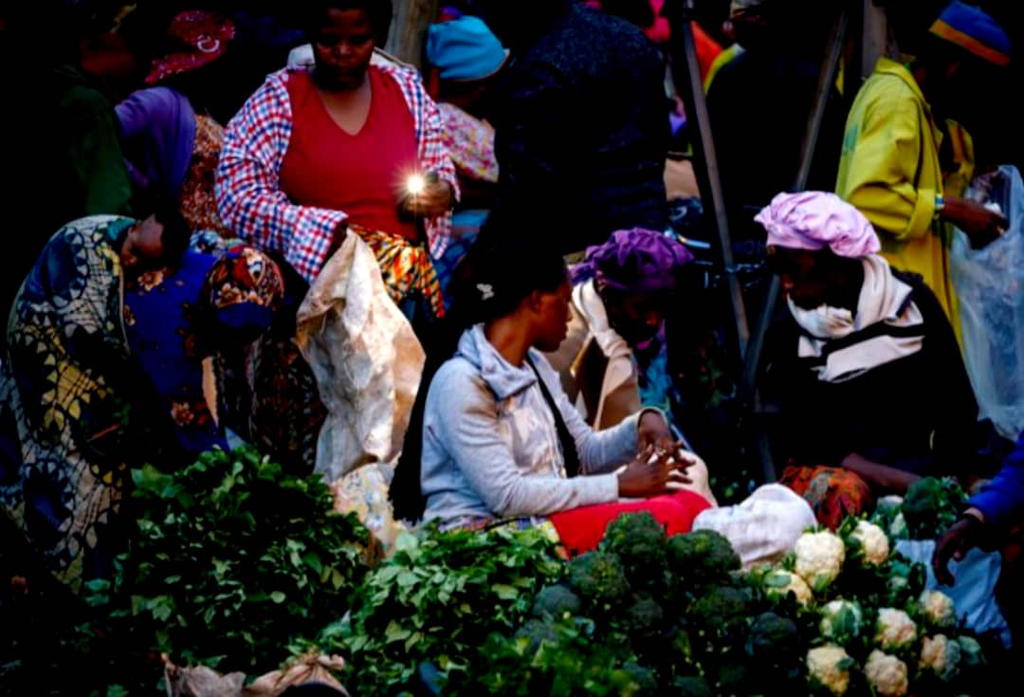
At 1 a.m., when much of Kigali is asleep, Mutangana Market in Nyabugogo is alive with activity. Women selling vegetables and fruits work through the night, battling the cold and exhaustion as they struggle to earn a living and support their families. For these women, the night is not a time for rest but an opportunity to make ends meet.

It is 1 a.m. in Kigali. In many parts of the city, movement has slowed as residents sleep in preparation for another day. However, at Mutangana Market in Nyabugogo, business continues. In the darkness, traders call out to attract customers. Vehicles transport goods, people move hurriedly between stalls, and different activities unfold. Some traders unload goods, others sell vegetables and fruits, while others provide money transfer services or purchase stock for their businesses.
Women are among the most visible participants in this nighttime trade. Some arrive in the evening, while others travel long distances from different parts of Kigali and surrounding areas. They gather at the market with one shared goal: to earn money and provide for their families. For them, the night means working through the cold, overcoming exhaustion and dealing with the challenges that come with their daily trade.
ALSO READ: https://agaciropress.com/amavubi-begin-preparations-for-crucial-afcon-qualifiers-against-mali/
Working Through the Night to Make Ends Meet
Tuyishime Divine is one of the women who spend their nights selling goods at the market. When we met her, she had already spent several hours serving customers. She had arrived in the evening and continued selling to motorcycle taxi riders and other people travelling through Nyabugogo late at night. By early morning, she had sold all her goods. However, instead of returning home to rest, she was preparing to purchase more stock.
She said: “I came yesterday evening and spent the night here selling goods, including during the nighttime hours. I continued selling to motorcycle taxi riders and other people who were late returning home. Now my goods are finished, and I am going back to buy more,” . Asked when she finds time to rest, her response revealed the demanding nature of her work.
She said: “I hardly get time to sleep. I am busy looking for money to pay rent. I sleep only when I get the chance,” Getting to Mutangana Market in the middle of the night is not always easy. Some women travel long distances, sometimes walking through the darkness to reach the market.
To feel safer, some travel in groups, while others pay people to accompany them or use motorcycle taxis. Even after reaching the market and purchasing goods, making a profit is not guaranteed. The prices of vegetables and fruits fluctuate, meaning traders can lose money when the value of their stock drops.
Ayingeneye Donatha, another trader at the market, recalled buying goods worth Rwf140,000 only to discover that their value had fallen to Rwf130,000 before she had even started selling them. She said: “Even when you have sold goods, it can feel like you are committing economic suicide. You tell yourself, ‘Let me just continue selling so that I can at least get potatoes for my children.”
Working at Night, Household Responsibilities in the Morning
The cold during nighttime hours makes the work even more difficult. Some women say it affects their health and sometimes leaves them sick. Nevertheless, they continue because trading is their main source of income and helps them address their families’ needs.
By the time morning arrives, many have already completed their night shifts. However, returning home does not necessarily mean going straight to bed. Some must prepare children for school, cook meals and complete other household responsibilities before finding time to sleep.
Isimbi Kelia said that when she returns home, she immediately takes responsibility for caring for her younger siblings. She said: “By 7 a.m., I arrive home and immediately prepare my younger siblings quickly and take them to school. Then I return and take care of the household chores we left behind. My mother also comes later with food to cook,” For her, the hours when many people are beginning their day mark the end of her night shift, but also the beginning of another round of responsibilities at home.
Uwimana Ernestine, who provides MTN financial services, also follows a daily routine shaped by her nighttime work. She said cooperation with her husband helps them balance their work schedules and childcare responsibilities.
She said “In other words, my daytime is nighttime. Most of the time, it is their father who takes the children to school. However, I am the one who goes to pick up the youngest child who comes home early. Then I immediately go to sleep. My husband comes at night, and together we prepare things for the household and what I will need for the following day at 1 a.m. Then we go to sleep,”
There Is No Job That Cannot Feed a Family
Despite the challenges, the women say they take pride in contributing to their families’ wellbeing. They see their work as a way of becoming financially independent while joining their spouses in meeting household needs.Ayingeneye Donatha believes women should not shy away from work simply because it requires physical effort or involves unusual working hours.
She said“Someone who refuses to wake up is someone who has another person to depend on. But that person should also be courageous and understand that there is no job that cannot feed a family,”
Uwimana Ernestine also believes women should engage in work and join their husbands in improving their families’ living conditions. She said: “The first thing a woman should do is leave the house and work, because when you join forces with your husband, you make progress. Staying at home doing nothing is not good,”
When Nyabugogo Wakes Up, They Head Home
At around 7 a.m., Mutangana Market begins to take on a different appearance. The noise of traders gradually fades as those who have spent the night selling begin folding their bags and packing their remaining goods. They then set off for home after hours of work.
Meanwhile, cleaning workers begin sweeping areas that were crowded with traders, customers and merchandise throughout the night. Within a short time, the market becomes quieter, almost as though the night’s busy activities had never taken place.
As most Kigali residents begin their day, many remain unaware of the hard work that has already taken place in Nyabugogo. For the women who have spent the night trading, however, the morning marks the end of one working shift and, for some, the beginning of another set of responsibilities at