




























The Rwanda Institute for Conservation Agriculture (RICA), in partnership with the Ministry of Agriculture and Animal Resources (MINAGRI), is implementing a $5 million project aimed at expanding conservation agriculture to 600,000 hectares across Rwanda by 2029.

The four-year project will focus on scaling up conservation agriculture through agricultural extension services. It will initially be rolled out in designated Food Basket Sites (FOBASI) in every district.
The nationwide campaign to encourage farmers to adopt conservation agriculture is expected to begin during the 2027 Season A (Umuhindo) planting season, which starts in September 2026. During the first season, conservation agriculture will cover 100,000 hectares, before expanding to 150,000 hectares annually, with the target of reaching 600,000 hectares by 2029.
Conservation Agriculture to Restore Soil Health
According to RICA, many farmers still believe that a well-prepared field is one that has been thoroughly ploughed, completely cleared, and left free of crop residues after harvest. However, conservation agriculture experts at the institution say this perception contributes to the gradual degradation of soil, causing it to lose its natural fertility and productivity over time.
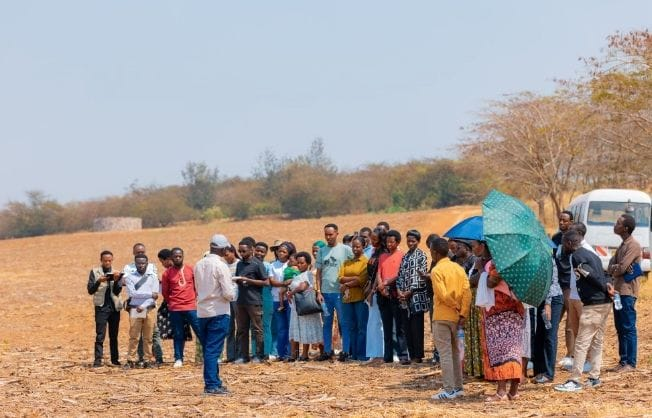
The experts explain that intensive tillage, removing crop residues, and burning them leave the soil exposed. As a result, the soil loses its ability to retain moisture, becomes more susceptible to erosion, and produces lower yields despite increasing use of chemical fertilizers.
Excessive tillage also allows heavy rainfall to wash away nutrient-rich topsoil, while prolonged exposure to the sun depletes the moisture needed by crops. This ultimately reduces agricultural productivity and increases production costs, as farmers spend more on land preparation while harvesting lower yields.
RICA says the solution lies in conservation agriculture, which is based on minimum soil disturbance, retaining crop residues as mulch after harvest, crop rotation, the use of improved seed varieties, and efficient management of water and fertilizers.
Training Agricultural Professionals for Nationwide Rollout
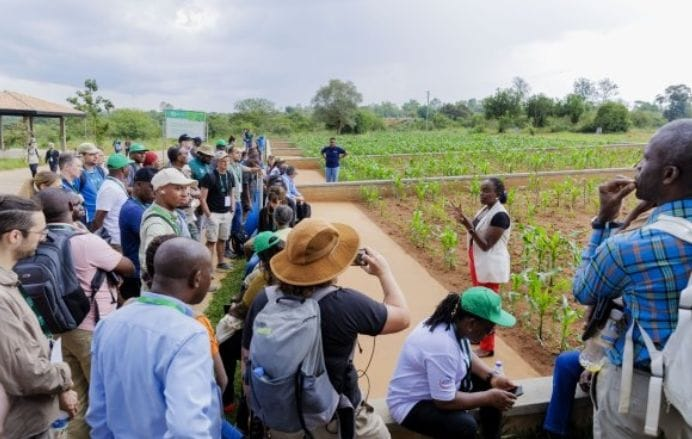
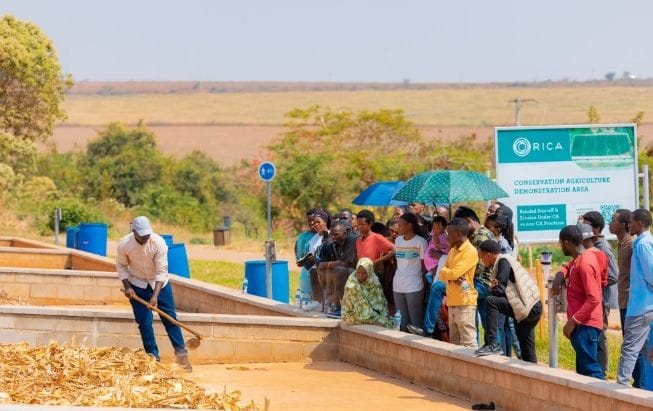
To strengthen the capacity of agricultural professionals and technicians who will support the nationwide rollout of conservation agriculture, RICA, based in Bugesera District, has launched training sessions for agricultural stakeholders. Participants are being taught the differences between conventional farming and conservation agriculture, as well as the benefits of properly implementing conservation farming practices.
Demonstration fields at RICA illustrate that conventionally tilled land is more vulnerable to soil erosion and nutrient loss, whereas fields managed under conservation agriculture maintain and gradually improve their fertility while preserving the soil’s natural structure.
As part of preparations for the project’s implementation, RICA first trained researchers from MINAGRI, managers of Rwanda Agriculture and Animal Resources Development Board (RAB) stations, and district agriculture officials.
The institution has also trained agricultural extension officers, environmental officers, crop intensification program coordinators, agricultural outreach staff, and young agriculture graduates who will work directly with farming communities.
Rather than training every individual farmer, RICA and its partners have chosen to first equip extension personnel and agricultural advisers with the necessary skills so they can transfer the knowledge to a much larger number of farmers across the country.
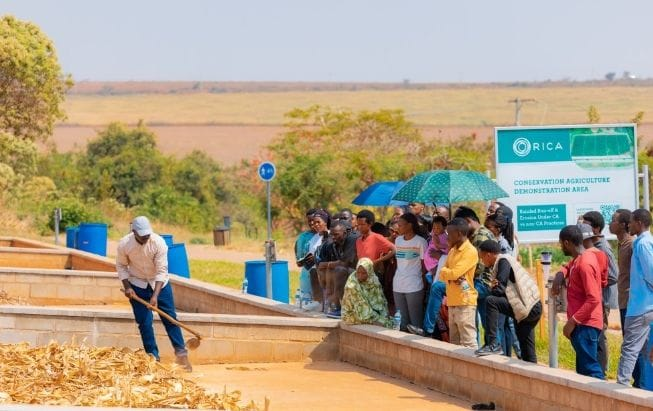
Before the start of the 2027 Season A planting season, the number of trained personnel is expected to reach 889, and they will be responsible for disseminating conservation agriculture practices throughout Rwanda.
Experts Highlight Benefits of Sustainable Farming
Dr. Léonce Harerimana, RICA’s Head of Conservation Agriculture Extension and Associate Professor of Irrigation and Water Management, said the institution’s role extends beyond teaching farming techniques.
He said: “RICA has set itself the goal of promoting conservation agriculture, addressing climate change, and advancing sustainable farming on small plots of land. We teach farmers how to cultivate crops without excessively disturbing the soil. We also promote mulching, crop rotation, the use of improved seeds, efficient irrigation, and proper fertilizer management,”
He added, “Our mission is to ensure that these practices do not remain confined to RICA. We want them to reach farmers across Rwanda because they protect the soil while increasing agricultural productivity.”
The Project Coordinator for the Conservation Agriculture Expansion Initiative at MINAGRI, Dr. Christian Nkurunziza, said the project’s main objective is to address soil degradation, which requires urgent attention to ensure it continues to support sustainable agricultural production.
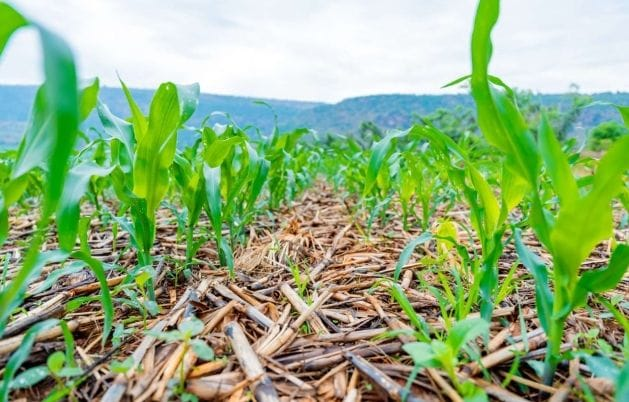
He noted that research shows well-managed and conserved soils can produce up to seven tonnes of maize per hectare when improved seed varieties are used, compared with less than two tonnes per hectare on degraded land.
For beans, conservation agriculture can increase yields to 1.6 tonnes or more per hectare, while land that is not properly conserved typically produces no more than 500 kilograms per hectare.
Eric Uwitonze, one of the trainees from Ruhango District, said the training helped him understand that crop rotation plays an important role in reducing crop diseases. He added that conservation agriculture also lowers overall production costs and that he intends to share the knowledge with local farmers.
RICA Driving Rwanda’s Agricultural Transformation
RICA trains agricultural professionals who are expected to drive transformation in Rwanda’s agriculture sector by promoting food security while safeguarding the country’s most valuable natural resource—its soil.
Beyond education, RICA conducts research that provides practical solutions for conservation agriculture and contributes to the development of national agricultural policies.
The institution also invests heavily in promoting conservation agriculture across different parts of the country, with a particular focus on smallholder farmers. Through training programs for both small and large groups, RICA aims to help farmers adopt climate-smart farming practices that enhance resilience to climate change while combating land degradation.