



























The National Institute of Statistics of Rwanda (NISR) has reported increased production of major crops, including rice, bananas, potatoes, beans and maize, during the 2026 Season B compared with the same season in 2025.

The Seasonal Agricultural Survey (SAS), released on September 22, 2026, shows that 1.41 million hectares, representing nearly 59% of Rwanda’s total land area, were used for agricultural activities.
During Season B 2026, 1.02 million hectares were used to grow seasonal crops, while 526,000 hectares were under perennial crops.
Maize Production Increases by 4%
Maize production reached 122,370 tonnes in Season B 2026, up from 117,711 tonnes during the same season in 2025, representing a 4% increase.
The area planted with maize also increased by 2%, reaching 94,823 hectares.
NISR reported that the highest maize production was recorded in the Eastern Province, particularly in Nyagatare, Gatsibo, Kayonza and Bugesera districts.
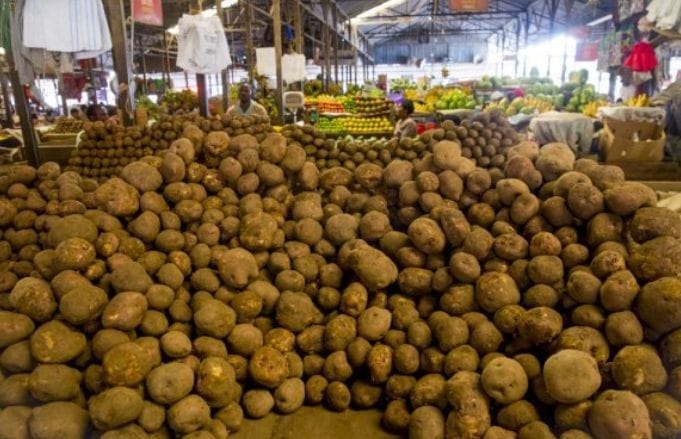
Potato Production Rises by 5.7%
Potato production also increased, reaching 331,963 tonnes in Season B 2026, compared with 314,093 tonnes in Season B 2025, representing a 5.7% increase.
The area under potato cultivation stood at 48,424 hectares, an increase of 5.4% compared with the same season the previous year.
The highest potato production was recorded in Nyabihu, Rubavu, Musanze and Burera districts.
ALSO READ: https://agaciropress.com/rwanda-and-cyprus-sign-agreement-to-boost-air-travel/
Bean Production Records Slight Increase
Bean production reached 243,775 tonnes nationally in Season B 2026, compared with 240,721 tonnes harvested during Season B 2025, representing an increase of 1.3%.
According to NISR, the districts that recorded the highest bean production were Nyagatare, Kirehe, Bugesera, Ngoma and Gatsibo.
Despite the increase in production, the area under bean cultivation stood at 333,735 hectares, representing a 0.4% decline compared with Season B 2025. The average yield was 700 kilograms per hectare.
Banana Production Increases by 5.6%
Bananas were also among the crops that recorded a significant increase in production.
The report shows that banana production reached 1,231,202 tonnes in Season B 2026, up by 5.6% from 1,166,247 tonnes recorded in 2025.
The area under banana cultivation stood at 250,772 hectares, while the average yield was 12.4 tonnes per hectare.
The Eastern Province recorded the highest banana production, particularly in Gatsibo, Ngoma and Kirehe districts, alongside Muhanga District in the Southern Province.
ALSO READ: https://agaciropress.com/kagame-meets-imf-representative-as-rwandas-economy-continues-to-grow/
Rice Production Records 10.1% Increase
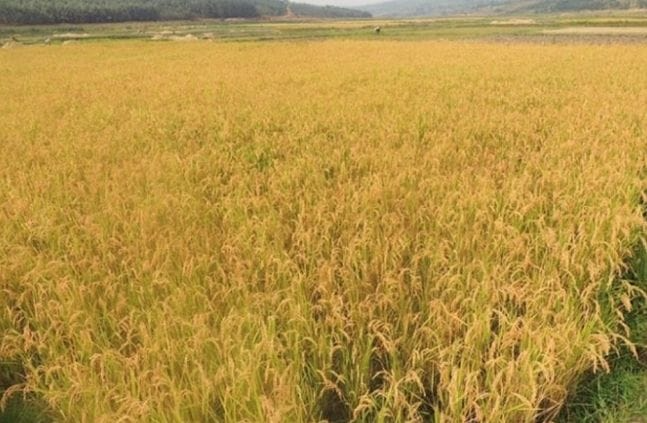
Rice grown in marshlands reached 80,325 tonnes, up from 72,976 tonnes in the previous year, representing a 10.1% increase.
Rice productivity reached 4.6 tonnes per hectare, while the total area under rice cultivation stood at 17,534 hectares.
The districts with the highest rice production were Gisagara, Nyagatare, Gatsibo, Bugesera and Rusizi.
ALSO READ: https://agaciropress.com/rwanda-and-belgium-agree-to-resume-diplomatic-relations/
Fertilizer Use Continues to Increase
The SAS Season B 2026 report indicates that fertilizer use continued to be one of the key agricultural practices during the season.
Organic fertilizer was used by 81.3% of farmers, including 81.7% of small-scale farmers and 71.3% of large-scale farmers.
Inorganic fertilizers were used by 57.5% of all farmers, including 56.7% of small-scale farmers and 80.2% of large-scale farmers. The most commonly used inorganic fertilizers were DAP at 40%, UREA at 35.5% and NPK at 20.3%.
Meanwhile, 13.1% of farmers used irrigation, with irrigation practiced by 11.5% of small-scale farmers and 56.2% of large-scale farmers.
Among farmers who irrigated their crops, 56.9% used modern irrigation methods. Lakes and rivers were the main sources of irrigation water, accounting for 42.4%, while groundwater accounted for 30.3%.
NISR explains that irrigation continues to play an important role in helping farmers cope with the effects of climate change and improving their capacity to achieve sufficient agricultural yields.
The latest figures point to continued growth in Rwanda crop production, with rice, potatoes, bananas, beans and maize all recording higher production during Season B 2026 compared with the previous year.