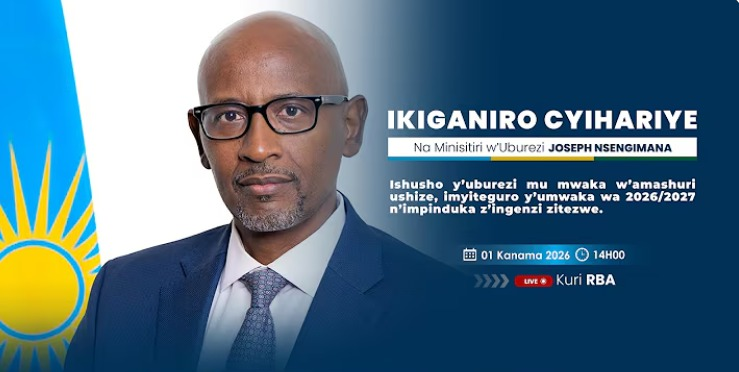









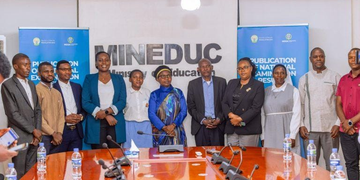










The Ministry of Education has announced a series of major reforms to Rwanda’s education system, including extending Teacher Training College (TTC) programmes from three to five years as part of efforts to improve the quality of education and ensure future primary school teachers graduate with university degrees.

Minister of Education Joseph Nsengimana told RBA, that the reforms will also introduce more time for extracurricular activities, increase support for school feeding programmes and strengthen measures aimed at improving learning outcomes across the country.
Primary school teachers to graduate with university degrees
Beginning in September 2026, students enrolling in Teacher Training Colleges (TTCs) will study for five years instead of the current three-year programme.
The reform is part of the government’s long-term plan to ensure that all primary school teachers hold university degrees rather than secondary school qualifications.
The current TTC curriculum has been criticised for not providing enough time for trainee teachers to develop practical teaching skills, classroom management techniques, child development knowledge and teaching practice.
Minister of Education Joseph Nsengimana said the transition will be implemented gradually over the next 10 years.
He said: “In the programme, we will upgrade the category of primary school teachers so that in the future, teachers will have a university degree [Licence], but we will do this in two stages. Those with A2 will be upgraded to A1, those with secondary school diplomas will be upgraded to A1, and the secondary school will be upgraded from A1 to A0. We will do this over a period of 10 years.”
He explained that students who had already applied to join TTCs before the reforms were announced would be allowed to decide whether to continue under the new programme.
Current teachers will remain in the profession and will be supported through training opportunities to upgrade their qualifications.
The government says the reform will also align Rwanda’s teacher training system with regional and international standards, where university degrees are increasingly required for teaching licences.
Schools to dedicate more time to extracurricular learning
The Ministry also announced changes to the daily school timetable to provide students with more opportunities to participate in extracurricular activities.
Although classes will continue to start at the usual time, formal lessons will end at 3:30 p.m.from Monday to Thursday. Students will then take part in extracurricular programmes until 5:00 p.m.
On Fridays, students will leave school at 3:30 p.m., allowing teachers to participate in professional development workshops and other activities aimed at improving teaching quality.
Minister Nsengimana said the new timetable is intended to reinforce classroom learning while helping students develop creativity, teamwork and communication skills.
he said: “It’s a way to reinforce what you’ve learned without sitting in class. For example, in English, when you sit in class, they teach you grammar, but extracurricular activities are going to debate clubs. We didn’t do that before.”
He added that the activities would use existing school facilities but would focus on practical learning rather than traditional classroom instruction.
he said: “It will help the way children learn… in this change, on Fridays, children will be dismissed at 3:30 p.m…. teachers need to attend these workshops. They don’t need to do it when children are in school.”
The ministry expects the programme to help students develop academically, socially and emotionally while preparing them with practical life skills.
Government and parents to increase support for school feeding
The Ministry also announced higher funding for school feeding programmes to respond to rising food prices.
Beginning in January 2027, during the second term of the academic year, parental contributions will increase to help schools continue providing quality meals.
Parents of children in nursery and primary schools will contribute Rwf2,000, up from Rwf975.
For day secondary schools, the contribution will rise from Rwf19,500 to Rwf24,000, while boarding school fees will increase from Rwf85,000 to Rwf110,000.
The government will also increase its contribution to reduce the financial burden on families.
Minister Nsengimana said the adjustments reflect the rising cost of living.
he said: “These figures reflect how prices have changed. For example, in boarding schools, prices were over Rwf120,000, but since they were already high, we are saying that the government will help so that it does not exceed Rwf110,000.”
**School operational funding to increase by 65%
The Ministry further announced a 65% increase in capitation grants, the funds allocated to public and government-aided schools for their daily operations.
The increase follows concerns that the current funding no longer reflects rising operational costs.
The government believes the additional resources will improve learning conditions and support the successful implementation of the new reforms, ultimately raising the quality of education across Rwanda.