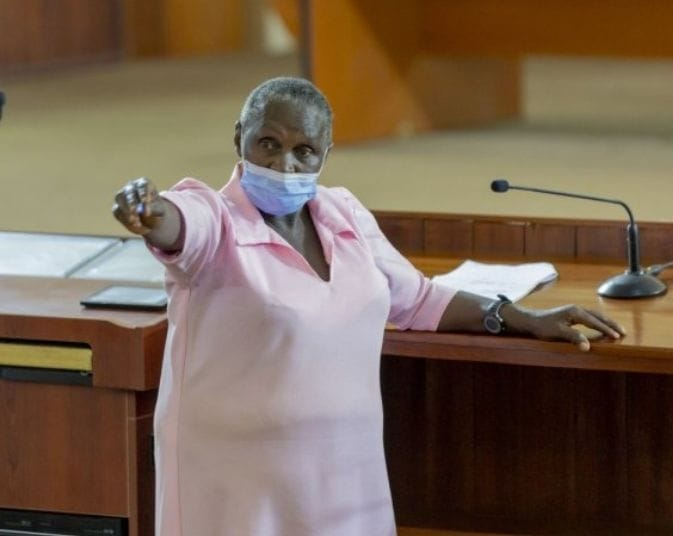













Former female captives of the Democratic Forces for the Liberation of Rwanda (FDLR) have described alleged sexual violence, forced abortions and killings of pregnant women within the armed group, accusing Mukandutiye Angelina of enforcing rules that prevented women and girls from giving birth.

The women, who were abducted and taken to the forests of the Democratic Republic of Congo (DRC), recounted their experiences after returning to Rwanda and undergoing reintegration programmes at the Mutobo Demobilisation and Reintegration Centre in Musanze District.
Their testimonies describe a system in which women and girls were allegedly subjected to sexual abuse, forced to take contraceptive pills and threatened with death if they became pregnant or refused to terminate pregnancies.
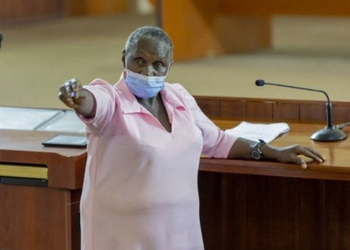
Mukandutiye, a former school inspector who later became a senior figure in armed groups operating in the DRC, has also been convicted in Rwanda in connection with the 1994 Genocide against the Tutsi and terrorism related offences.
Former Captives Describe Alleged Forced Abortions
Caporal (Demobe) Past. Mujawayesu Laurence, a Rwandan woman abducted by the FDLR in 1997 at the age of 14, said Mukandutiye was involved in enforcing the group’s restrictions on pregnancy. Mujawayesu escaped in 2003 and returned to Rwanda. She later became involved in efforts to locate former FDLR combatants and help them return to civilian life through the Mutobo Centre.
She said: “That woman, Angelina, I do not know why she is called a woman. She had no sense of motherhood. She was not even afraid to kill a child she was carrying. They did not want people to give birth, and it was the rule. When a girl became pregnant, she had to be killed or agree to terminate the pregnancy. Many girls died because they refused to have men sexually abuse them.”
Mujawayesu added that some women were killed after refusing to terminate their pregnancies. “There were also those who died because they refused to have their pregnancies terminated. Some were shot, while others were stabbed and cut open in front of the others so that they could see it and fear becoming pregnant. Angelina was never a good mother. She would cut them open. When she had smoked marijuana and taken those alcoholic drinks, she would immediately cut them open in front of us.”
Another former captive, identified as Mutesi, which is not her real name, said she was abducted by FDLR fighters in 1997, when the group was still known as the Abacengezi.
She described the alleged killing of pregnant women and their unborn children. “They did not allow us to become pregnant. If you became pregnant, they would cut you open while you were still alive. They would take you to a place where they intended to kill you, cut you open and remove the baby. They would kill the baby separately and throw the bodies away. I remember Mukandutiye Angelina. Even after she came to Rwanda, she continued encouraging people to believe that others should die. Even when she was in Rwanda, she did not provide you with any security.”
Mutesi said the fear of punishment made life in the group particularly difficult for young girls who had been abducted from Rwanda and subjected to repeated sexual abuse. “Sometimes we would sit together and realise that we were growing old for nothing. You could leave Rwanda as a young girl, perhaps very young, and once you reached Congo you would be sexually abused every day. You would no longer be a girl or a virgin. You would say, ‘If only I could at least give birth and see what my child looks like.’ If Angelina heard that someone had reported you for saying such things, you would be killed.”
ALSO READ: https://agaciropress.com/nba-g-league-united-beat-rytas-vilnius-to-win-fiba-intercontinental-cup/
Pregnant Girl Says She Was Beaten and Given Pills
Umwali, whose real name has not been disclosed, is a 27-year-old Rwandan woman born in Walikale in the DRC after her mother was abducted by the FDLR.
She said she became pregnant while living with the armed group and was tortured as Mukandutiye allegedly tried to force her to terminate the pregnancy.
According to Umwali, the group considered pregnancy an obstacle to a woman’s assigned duties. She said she was among those sent on intelligence missions because the group believed her appearance resembled that of Tutsis, allowing her to approach Banyamulenge communities without attracting suspicion.
She said: “Mukandutiye Angelina was the one who gave us the pills to terminate pregnancies because a soldier was not supposed to perform her duties while pregnant or carrying a child. I carried that pregnancy while suffering and being beaten. They did not even know that I had a child in my womb, while I was also taking the pills to terminate the pregnancy. Instead of the pregnancy coming out, I continued to suffer. The young man who had impregnated me was immediately killed.”
Umwali said the young man was killed because relationships and pregnancies were reportedly restricted within the group.
She explained that women associated with senior commanders were generally the ones permitted to give birth. According to her account, junior fighters who had relationships and conceived children without permission could face severe punishment, including death.
ALSO READ: https://agaciropress.com/sylvester-stallone-reveals-health-cost-of-his-hollywood-physique/
Sexual Abuse Described as a Woman’s Duty
Umulisa, whose real name has also been withheld, said she was abducted by the FDLR at the age of 13 and was born in the DRC.
She said that when she began menstruating at around 16, she was given contraceptive pills to prevent pregnancy. “That life continued. I think I was about 16 when I started menstruating. The older woman known as Angelina was told that girls who had started menstruating should not give birth and that they should be given contraceptive pills. I lived on those pills so that I would not become pregnant.”
Umulisa said Mukandutiye was responsible for monitoring the situation of women and girls within the group. She added that sexual abuse was presented to them as a normal obligation rather than a crime.
She said: “Angelina was responsible for knowing about the situation of all the women and how they were living because they also said she had left Rwanda after working for the Rwandan government under President Habyarimana. She told us that we were not allowed to give birth in Congo because it was prohibited. As for being sexually abused, she did not consider it sexual abuse. She called it ‘being married’ and said that being married was a woman’s and a girl’s duty, that she was supposed to have sex with men and that there was nothing else we should ask about it we simply had to accept it.”
The former captives’ accounts also allege that Mukandutiye selected girls and handed them over to senior male commanders, after which the girls were given contraceptive pills to prevent pregnancy.
The testimonies describe the alleged use of threats and violence to enforce these practices. The accounts presented here are the women’s recollections of their experiences within the armed group.
ALSO READ: https://agaciropress.com/kizz-daniel-says-mothers-death-led-him-to-take-break-from-music/
From School Inspector to Senior Armed Group Figure
Mukandutiye Angelina, 75, was a teacher who served as a school inspector in Nyarugenge, Kigali, from 1986 to 1994. She fled Rwanda in 1994 and went to what was then Zaire, where she became separated from her family. She returned to Rwanda in 1997 before fleeing again in 1998, following the end of the Abacengezi insurgency.
She subsequently went to Rutshuru and Masisi in the DRC, where she joined the FDLR and became one of its senior figures. Between 2016 and 2017, disagreements among FDLR leaders led to a split within the group. The breakaway Conseil national pour le renouveau et la démocratie-Ubwiyunge (CNRD-Ubwiyunge), led by Wilson Irategeka, emerged from the division.
Mukandutiye later served as the group’s commissioner for development, according to the account provided. The CNRD Ubwiyunge split and its emergence from the FDLR have also been documented in reporting on armed groups operating in eastern DRC.
Military operations in Masisi subsequently forced Mukandutiye and those accompanying her to flee towards South Kivu. They were captured and transferred to Rwanda in 2019.
ALSO READ: https://agaciropress.com/jazzma-kendrick-accuses-rick-ross-of-physical-abuse-as-she-announces-split/
Convicted in Genocide and Terrorism Related Cases
In 2008, Mukandutiye was sentenced to life imprisonment by Gacaca courts for her role in the 1994 Genocide against the Tutsi. Because she was sentenced in absentia, she did not immediately begin serving the sentence.
Following her return to Rwanda in 2019, she was detained at Nyarugenge Prison in Mageragere.
She was later prosecuted in a separate case involving 21 people accused of terrorism-related offences linked to the National Liberation Front (FLN), the armed wing of the Rwanda Movement for Democratic Change (MRCD). The case included Paul Rusesabagina and Callixte Nsabimana, also known as Sankara, and concerned attacks in Rwanda in which civilians were killed.
In September 2021, the High Court sentenced Mukandutiye to five years in prison in the case. On April 4, 2022, the Court of Appeal increased her sentence to 20 years, citing her previous conviction for genocide-related crimes when reviewing the punishment.
Her judicial history and the allegations described by former captives form part of the wider account of her involvement in armed groups operating in the DRC.
The women who spoke about their experiences say their accounts reflect the conditions they endured after being abducted and taken into the group’s ranks, where they allege that sexual violence, restrictions on pregnancy and threats of death shaped their daily lives.