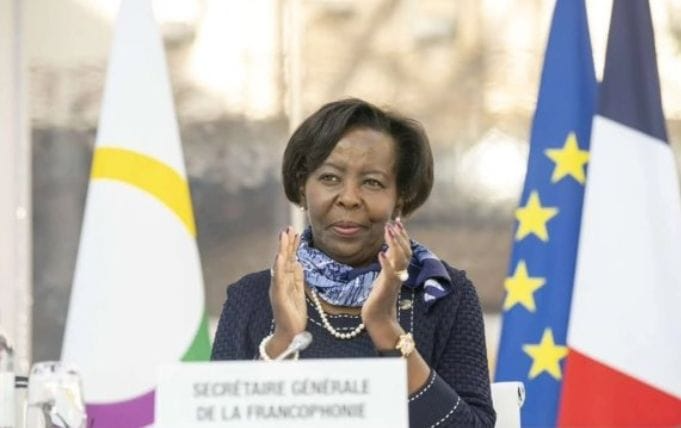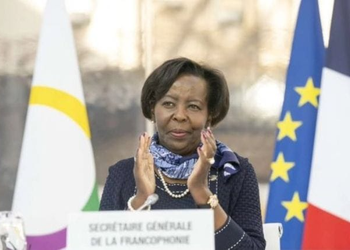
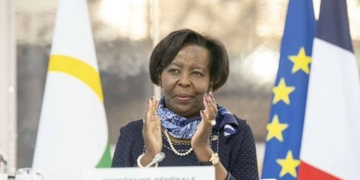












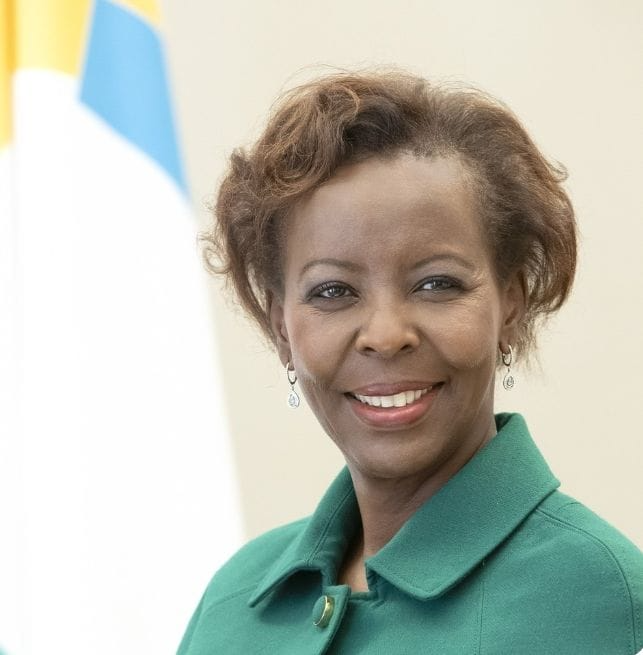
The Secretary General of the International Organisation of La Francophonie (OIF), Louise Mushikiwabo, says she has no fear of competing in the election to choose the organisation’s next leader, expressing confidence based on her record at the organisation and the support she says she has received from member states.

Mushikiwabo made the remarks in an interview with Marc Perelman of France 24 on September 25, 2026, ahead of the 20th OIF Summit, which will take place in Phnom Penh, Cambodia, in November 2026. The summit will mark the first full application of the OIF’s new formal electoral process for choosing its Secretary General.
Mushikiwabo is competing against three other candidates: Coumba Ba of Mauritania, Dacian Cioloș of Romania and Juliana Amato Lumumba of the Democratic Republic of Congo (DRC). The four candidates were formally presented to member states ahead of the election.
ALSO READ: https://agaciropress.com/five-reasons-why-rwandas-clash-with-liberia-could-be-a-turning-point/
Mushikiwabo Defends Electoral Process
Mushikiwabo said she views the decision to choose the organisation’s leader through an election as a sign of institutional development after 56 years of existence.
she said: “It is a good thing that, after more than 50 years of existence the organisation has now been around for 56 years—we are going to an election. It shows a certain level of maturity, but it is also a good democratic process,”
She said she was not concerned about entering an election, particularly because she had participated in reforms that established an electoral mechanism for situations in which member states fail to agree on a single candidate.
“Am I afraid of an election? No, I am not afraid of an election. I should not be afraid of an election because, in the new OIF documents that I helped prepare, I supported the inclusion of an electoral mechanism in the organisation’s reforms for situations where there is no consensus. I could not have helped establish those rules and then turn around and reject them.”
The new procedure was adopted as part of institutional reforms in 2022. It provides for an open call for candidates, formal presentations of their program and a formal election by heads of state and government.
ALSO READ: https://agaciropress.com/nicholas-checkers-priorities-as-new-u-s-ambassador-to-rwanda/
‘I Have Reasons to Believe I Have Strong Chances’
Asked whether she considers herself the candidate with the greatest chances of winning, Mushikiwabo said the outcome cannot be determined before the election. “It would be presumptuous to say, ‘I am the one with the greatest chances,’ because in an election, that is decided at the end. But I have achievements that have been repeatedly recognised by heads of state.”
She added: “I also have the ambition to continue developing this organisation. And because of the responsibilities I previously held, particularly as Rwanda’s Minister of Foreign Affairs, I have strong relationships with many leaders.”
Mushikiwabo said several countries had indicated their support for her, while stressing that the final decision would be made by the heads of state and government who will cast their votes. “I have support in many places; I have been told this by many member states. I have reasons to believe that I am a candidate with strong chances, but ultimately, the decision will be made by the heads of state who will vote.”
Mushikiwabo has served as OIF Secretary General since January 2019 after being elected at the 2018 summit in Yerevan. She was re-elected in 2022.
ALSO READ: https://agaciropress.com/nyagatare-district-council-highlights-achievements-of-2021-2026-term/
Rwanda-DRC Tensions
Mushikiwabo also addressed tensions between Rwanda and the Democratic Republic of Congo, which has a candidate in the OIF election. “I am being honest when I say that it is impossible to deny that there are tensions between my country and its neighbour, the DRC. These are not new tensions.”
She added: “But I think that, regarding the DRC candidate, these tensions should have no place in the OIF. This process should focus on the people expected to lead and develop the organisation.”
Asked whether being Rwandan could affect her candidacy because of the tensions between the two countries, Mushikiwabo said the head of an international organisation should not be assessed solely on the basis of relations between their country and other states. “There are many countries around the world that have conflicts. If we chose leaders of international organisations based on conflicts or the relationships between their countries, it would be very difficult.”
She said the choice should instead focus on a candidate’s ability to lead and represent the OIF, while acknowledging that individual member states may have their preferred candidates.
ALSO READ: https://agaciropress.com/mauro-icardi-barred-from-driving-in-argentina-until-2099-after-viral-video/
Mushikiwabo Wants Sahel Countries to Return
Mushikiwabo also expressed regret over the departure of Mali, Burkina Faso and Niger from the OIF and said she hopes the three countries will eventually return.
The OIF has documented that the three countries had previously been suspended from its institutions, with Mali suspended in 2021, Burkina Faso in 2022 and Niger in 2023. The OIF later recorded their decision to withdraw from the organisation. “I did not want to be the Secretary General of an organisation from which countries were leaving. I was deeply saddened by the departure of the three Sahel countries from the organisation.”
She add ed:“I very much hope that these countries will return to the organisation. The OIF is their organisation just as it is everyone else’s. We are an organisation based on cooperation and human solidarity.”
ALSO READ: https://agaciropress.com/matthew-rhys-makes-emmy-history-with-double-lead-actor-victory/
Election Set for November
The OIF says the next Secretary General will be elected by the heads of state and government of its 53 full member states during the electoral session of the 20th Summit in Phnom Penh. The elected Secretary-General will serve for the 2027–2030 period.
The election will bring together four candidates from the DRC, Mauritania, Romania and Rwanda, marking the first time the reformed electoral procedure will be fully applied to the selection of the organisation’s Secretary General.