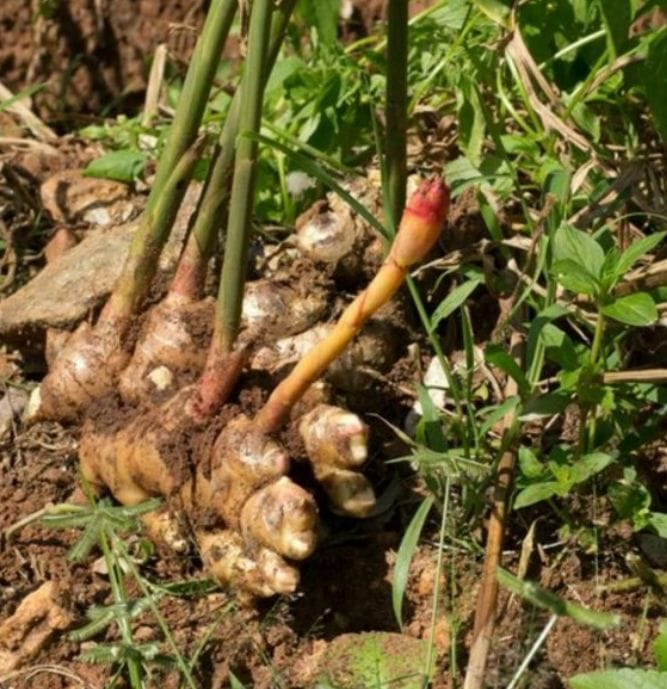






























Ginger farmers in Rusizi District are reporting heavy losses due to a lack of market for the crop, which is rich in vitamin C and helps support healthy digestion.

Ginger is used as a spice, food ingredient and traditional remedy. Many people use it as a tea spice, while others add it to food. Besides aiding digestion, ginger is also known to help reduce nausea and bloating.
Many Rwandans started growing the crop during the COVID-19 pandemic because of its role in supporting the body’s immune system.
Ginger Prices Fall Sharply
While ginger farmers say they had no major problems finding markets for their produce during the years following the outbreak, they say the situation changed in 2026, when the market virtually disappeared. The price of a kilogramme of ginger fell to as little as Frw 600, down from Frw 2,500.
Anicet Ntibizerwa, a farmer from Nyakabuye Sector in Rusizi District, told IGIHE that in the 20 years he has been growing ginger, 2026 was the first year he failed to find a market for his produce.
“This time, I had more than two tonnes, but I did not harvest them. I left them in the field because they had lost their value,” he said.
Ntibizerwa said the lack of a market caused him losses of about Frw 1.5 million, and called for advocacy efforts to help farmers regain access to markets.
Farmers Report Heavy Losses
Gatarayiha Jerome, who had about one tonne of ginger, said that during the COVID-19 period, a kilogramme was sold for Frw 2,500. However, this time, buyers from Bugarama Sector, aware that farmers were struggling to sell their produce, offered Frw 600 per kilogramme to take the ginger to Congo, but the farmers refused to sell at that price.
“It caused me significant losses because if I had sold it, I would have made at least Frw 800,000 or Frw 1 million,” he said.
District Seeks Potential Markets
Rusizi District Mayor Sindayiheba Phanuel said the district plans to visit the affected farmers and explore ways of connecting them with potential markets.
“Besides being used as a household spice, ginger is also needed by beverage-processing factories. Our task as a district now is to visit these farmers, assess the amount of ginger they grow and where they grow it, and then connect them with markets. I have no doubt that markets exist and could help them recover the efforts they have invested,” he said.
Ginger Production in Rusizi
In Rwanda, ginger is commonly grown in the Northern and Western provinces. In Rusizi District, it is grown on two hectares in Nyakabuye Sector and harvested once a year.