





















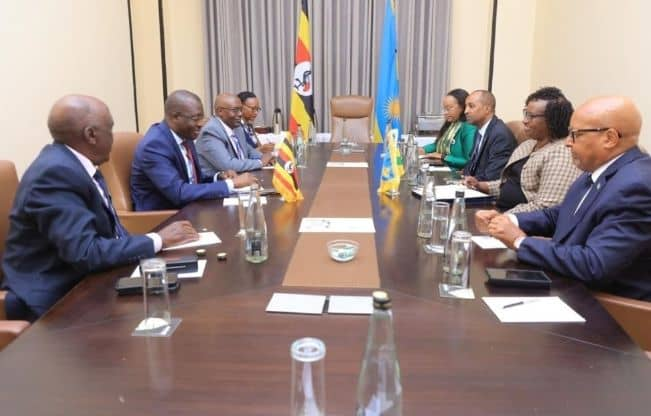
On April 22, 2026, Rwanda and Uganda signed four cooperation agreements aimed at advancing key sectors, including health, agriculture, education, and local governance.

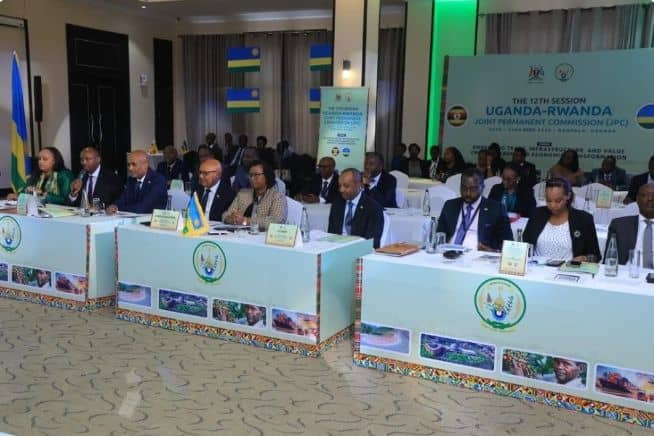
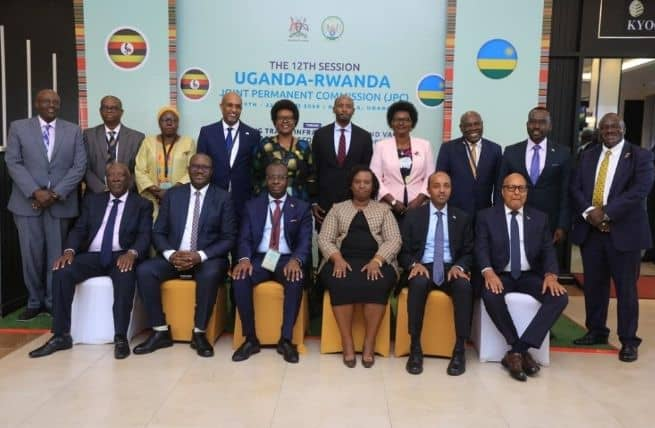
The agreements were concluded as representatives from both countries wrapped up the 12th session of the Joint Permanent Commission, which took place in Kampala from April 20 to 22.
ALSO READ: APR VC Thrash Zimbabwe’s Black Rhinos 3-0 in African Championship Opener
The new deals are expected to strengthen bilateral relations and improve services that directly benefit citizens in both countries.
Ministers Call for Fast Implementation
The meeting was officially closed by Dr. Usta Kaitesi, Minister of State in Rwanda’s Ministry of Foreign Affairs and International Cooperation in charge of regional cooperation, alongside her Ugandan counterpart, John Mulimba.
Dr. Kaitesi emphasized the importance of implementing the signed agreements, noting that they are crucial for the well-being of citizens in both countries.
She stated: “As we move forward, it is our shared responsibility to ensure that the resolutions adopted here are implemented effectively and on time, for the benefit of our people, while strengthening regional integration, cooperation, economic growth, and development.”
Dr. Kaitesi also expressed satisfaction that, following the adoption of the resolutions, a clear implementation timeline has been established for most of the agreed actions, which will guide their execution.
Uganda Seeks More Investment and Tourism Cooperation
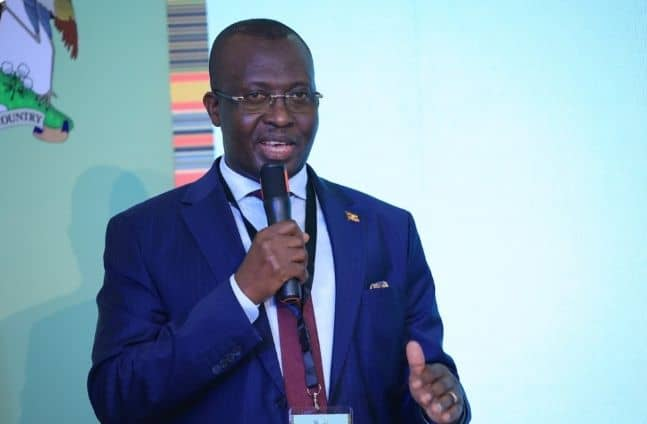
Uganda’s Permanent Secretary in the Ministry of Foreign Affairs, Vincent Bagire, highlighted that both sides agreed to continue dialogue in order to explore new areas of cooperation.
He said: “The ministers agreed to identify further opportunities for collaboration, including promoting and supporting investment and advancing tourism.”
Officials said ongoing discussions will help both countries unlock new economic opportunities and deepen regional ties.
Cross-Border Trade and Security Also Discussed
Mulumba explained that discussions also addressed persistent challenges affecting bilateral cooperation, particularly in cross-border trade, with both parties agreeing to resolve them.
He noted: “Our citizens expect us to remove barriers, not to debate them. I am confident that at the 13th session, which will be held in Rwanda, we will present a report on resolved issues rather than unresolved ones.”
At the opening of the meeting on April 20, both countries commended their cooperation in areas such as defense, noting that military officials from both sides meet regularly to discuss ways of maintaining security along their shared border.















Comments 2