




















The Rwanda Utilities Regulatory Authority (RURA) has cautioned against the misuse of water infrastructure and urged both service providers and citizens to comply with regulations governing water services.

RURA called on private operators supplying clean water to the public to strictly adhere to the approved water tariffs. At the same time, it encouraged citizens to use water responsibly and help protect water infrastructure.
ALSO READ: Rwanda and Uganda Sign Four Agreements to Boost Education, Health and Trade
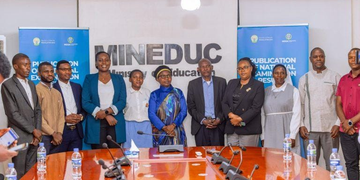
These remarks were made during a public awareness campaign launched by the authority to help citizens better understand their rights and their role in safeguarding water systems and ensuring proper usage.
Water Services and RURA Oversight Explained
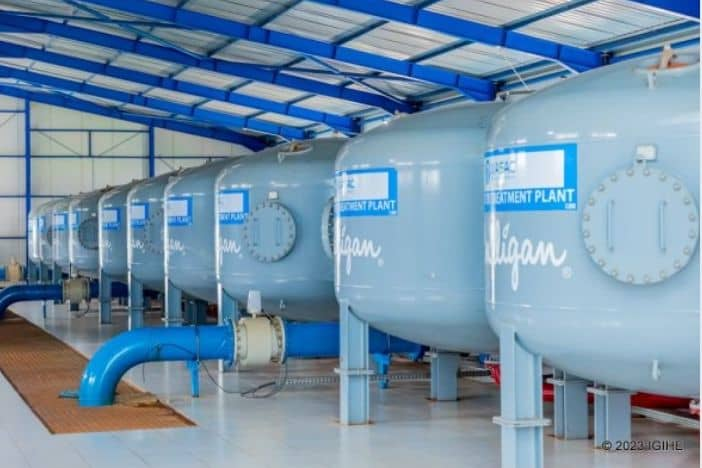
RURA explained that one of its key responsibilities is to license investors interested in supplying clean water. In urban areas and their outskirts, water services are provided by WASAC Utility Ltd, while in rural areas, services are delivered by private companies, including youth-led enterprises.
The Head of Water, Sanitation, and Hygiene at RURA, Hussein Bizimana, stated that after granting licenses to operators, the authority continuously monitors how they fulfill their obligations.
He noted that common challenges include issues related to water distribution, quality, infrastructure, and illegal price increases by some operators, particularly those selling water at public taps.
Current Water Tariffs and Rural Pricing Review
Currently, domestic water tariffs (inclusive of VAT) are structured as follows: consumers using 0–5 cubic meters pay 402 RWF per cubic meter; those using 6–20 cubic meters pay 852 RWF; 21–50 cubic meters are charged 999.635 RWF; and consumption above 50 cubic meters is charged 1,037.49 RWF per cubic meter.
One cubic meter equals 1,000 liters, equivalent to 50 jerrycans of 20 liters each.
For commercial users such as businesses and schools, consumption between 0–50 cubic meters is charged 1,037.491 RWF per cubic meter, while usage above 50 cubic meters costs 1,058.785 RWF per cubic meter.
In the industrial sector, the tariff is 868.854 RWF per cubic meter (including VAT). Industries benefit from a flat rate regardless of consumption levels but are encouraged to use water efficiently, conserve it, and explore the use of treated rainwater in their operations to promote sustainability and environmental protection.
Dr. Bizimana emphasized that RURA continuously analyzes economic data to ensure that water tariffs remain fair, sustainable, and aligned with current conditions—balancing affordability for citizens with the viability of service providers.

He further revealed that a study on water pricing in rural areas is underway. “We are currently reviewing the study to determine the appropriate pricing for rural water supply, taking into account the different methods used to deliver water to communities, with a focus on sustainability and fairness for both citizens and service providers,” he said.
Balanced Prices Needed for Citizens and Providers
The study aligns with a new policy under which WASAC Utility is expected to extend its services to rural areas. According to Dr. Bizimana, the findings are expected by the end of May and will be shared with the public before any final decisions are made.
He stressed the importance of setting balanced tariffs: “We aim to ensure that prices do not burden citizens while allowing service providers to operate effectively. If prices are too low, services may become unavailable; if too high, they become unaffordable.”
Dr. Bizimana also highlighted persistent issues at public water points, where some operators fail to comply with official pricing. He noted that RURA is working with WASAC Utility to address the problem sustainably.
Illegal Charges and Water Losses Raise Concern
Public water points are intended to guarantee affordable access to water. The official tariff set by WASAC Utility is 332 RWF per cubic meter (382 RWF including VAT), which translates to approximately 20 RWF per 20-liter jerrycan. However, some vendors illegally charge higher prices—sometimes claiming water shortages or selling privately stored water, which is not permitted.
He warned that operators who arbitrarily increase prices risk losing their management rights over public taps, although measures are taken to ensure that citizens are not negatively affected.
He said: “Some charge 50, 100, 200, or even 300 RWF per jerrycan. These are serious violations, bad practices, and unacceptable behavior. All this water is metered under one system, and no individual is authorized to sell water privately,”
Dr. Bizimana emphasized that addressing these issues requires cooperation between citizens and local authorities.
He also pointed out ongoing challenges related to water quality, noting that in some areas water becomes contaminated due to poor maintenance. Additionally, there is still a gap between water supply and demand, making proper distribution essential. Efforts to improve this are ongoing in collaboration with WASAC Utility.
RURA further revealed that about 35% of treated water is lost, calling for collective efforts to protect water infrastructure, prevent vandalism and theft, and promptly report any issues.