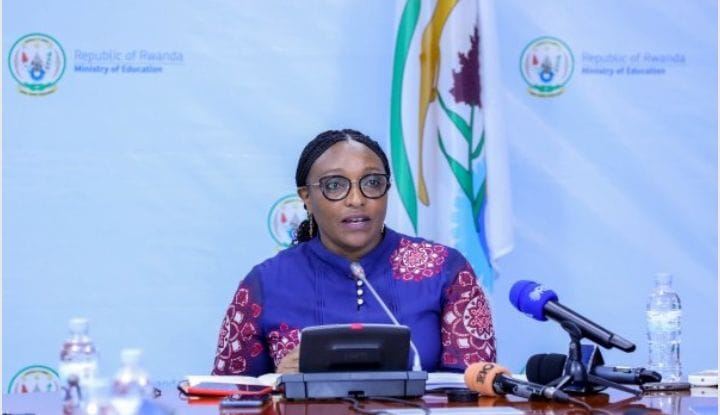

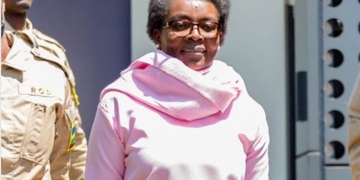













Senator Dr. Valentine Uwamariya has shared her life journey, highlighting her experiences in education, leadership, and a shocking ordeal she faced while studying in South Africa.

Early Life and Education Foundation
She was born in May 1971 and spent part of her childhood with her uncle, a primary school teacher. Because she was too young to stay home alone, she would accompany him to school and sit in his class. This early exposure helped shape her learning foundation.
she said: “I started primary school already knowing how to read, write, and do arithmetic,”
She attended Shangi Primary School and later Groupe Scolaire Sainte Famille in Nyamasheke for secondary education. Her early environment inspired her to pursue teaching, and two of her siblings also became teachers.
Her parents strongly valued education and ensured she attended school regularly. She grew up in a Catholic family where discipline and religious commitment were important.
ALSO READ: https://agaciropress.com/rocky-kimomo-movie-interpreter-rwanda/
Education Challenges Before 1994
Before 1994, access to secondary education in Rwanda was limited and highly competitive. Despite being considered intelligent, she faced barriers in advancing her studies. she said “I completed eight years but was not allowed to proceed,”.
Despite challenges, she continued through vocational training programs and later resumed formal education with support from religious institutions in Nyamasheke.
She completed secondary school in 1993 and began university studies in Butare in 1994, just before the Genocide against the Tutsi. She resumed studies in 1995 and graduated between 1995 and 1999, later joining academia in 2000 at the National University of Rwanda.
Career in Education and Government
Dr. Uwamariya later worked at Rwanda Polytechnic and the University of Rwanda, where she taught chemistry. She described education as transformative and essential for national development. she said “Education transforms a person’s life,” .
In February 2020, she became Minister of Education, overseeing all levels of learning from nursery to university.
She also served in other government roles, including Minister of Gender and Family Promotion in 2023 and later Minister of Environment in 2024, where she emphasized science-based policy-making.
Family and Social Challenges in Rwanda
As Minister of Gender and Family Promotion, she stated that about 80% of families in Rwanda are stable, despite challenges such as drug abuse, teenage pregnancies, and poverty.
She emphasized the importance of early intervention in family issues before they escalate.
she said: “You only realize a problem when it has already escalated,” .
A 2025 NISR report recorded 2,629 divorces, with many involving short-term marriages.
Science Based Environmental Leadership
In the Ministry of Environment, she emphasized that policies must be guided by science. She used vehicle emissions as an example, explaining their impact on human health and the environment.
She noted that environmental issues require global cooperation since they affect multiple countries.
Robbed at Gunpoint in South Africa
While pursuing postgraduate studies in South Africa, Dr. Uwamariya experienced a violent robbery. After withdrawing money to pay for accommodation, she was attacked by armed robbers. One pointed a gun at her while another held a knife, forcing her to surrender all the money. She said public safety warnings advised people not to resist in such situations due to the risk of death.
Reflection on Safety and Experience Abroad
She contrasted her experience abroad with Rwanda’s security, stating that Rwanda remains significantly safer despite minor crimes. she said: “In South Africa, you had to be extremely cautious,”.
ALSO READ: Biography of Jean Mourice Uwera_Deputy Government Spokesperson of Rwanda.
Appointment as Senator
On October 21, 2025, Dr. Uwamariya was appointed a Senator in Rwanda’s Senate. She holds a PhD in Chemistry from the University of the Witwatersrand in South Africa and an advanced degree from IHE Delft.
Her journey reflects resilience, academic excellence, and public service, alongside personal experiences that shaped her understanding of security, education, and governance.