































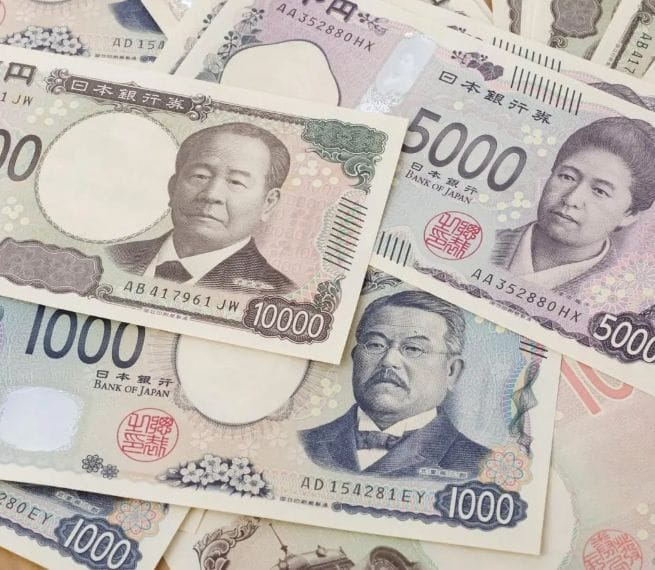
The Government of Rwanda has decided to change the currency denomination of two World Bank loans, one worth $126 million and the other €68 million, converting them into Japanese yen. The decision aims to reduce the impact of foreign exchange rate fluctuations on the country’s public debt and limit the risks associated with repaying loans denominated in foreign currencies.

According to the Ministry of Finance and Economic Planning, over the past five years, the Rwandan franc has depreciated by an average of 8 per cent annually against the US dollar and 7.2 per cent against the euro. Its depreciation against the Japanese yen, however, has averaged 1.2 per cent. In practical terms, when the US dollar or euro appreciates against the Rwandan franc, the amount of money required in francs to repay loans denominated in those currencies increases. Converting the loans into Japanese yen is intended to reduce this exposure to exchange-rate fluctuations.
ALSO READ: Huye: Police Urge University Students to Play an Active Role in Crime Prevention
Rwanda’s Public Debt Reaches Rwf17.8 Trillion
The decision comes as Rwanda’s total public debt stood at Rwf17,845.3 billion in June 2026, equivalent to 69.1 per cent of Gross Domestic Product (GDP), according to figures from the Ministry of Finance. This represented a decline from 74.8 per cent of GDP recorded in June 2025.
External debt accounted for Rwf14,537.3 billion, representing 81.5 per cent of total public debt, while domestic debt stood at Rwf3,308.1 billion. The Ministry of Finance attributes the decline in the debt-to-GDP ratio mainly to economic growth and the slower pace of implementation of some projects.
ALSO READ: Prevent Fires Instead of Waiting to Fight Them _ Minister Maj. Gen. Murasira
Why the Japanese Yen?
Changing the currency denomination of the two loans does not mean that Rwanda’s public debt has decreased or that the government has borrowed additional money. Rather, the move is a debt management strategy intended to reduce the risks associated with foreign currency repayments.
The choice of the Japanese yen is linked to its comparatively lower depreciation against the Rwandan franc over the five-year period cited by the Ministry of Finance, compared with the US dollar and the euro. Currently, the Japanese yen accounts for 5.28 per cent of the currencies in which Rwanda’s external debt is denominated.The currency conversion is therefore intended to help manage exchange-rate exposure as Rwanda continues to meet its external debt obligations.