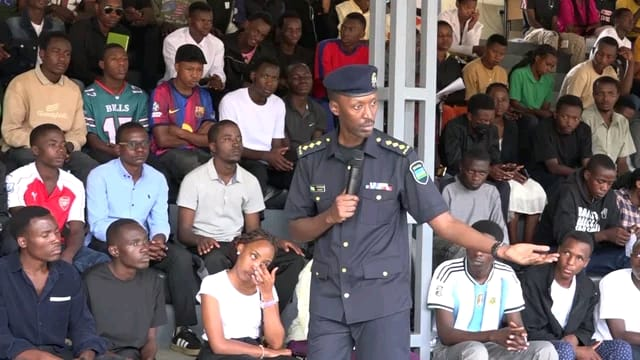























The Rwanda National Police has called upon students of the University of Rwanda’s Huye Campus to take a proactive role in preventing and combating crime by upholding the values and ethical principles embedded in Rwandan culture and by promptly reporting any activities that may threaten public security.

The message was delivered during an awareness campaign aimed at encouraging young people to contribute to crime prevention and the preservation of the country’s achievements. The campaign was conducted under the theme: “The Role of Youth in Preventing and Combating Crime through Rwandan Cultural Values and Taboos to Safeguard National Achievements.”
The spokesperson for the Rwanda National Police in the Southern Province, CIP Hassan Kamanzi, reminded students that young people are a vital pillar of the nation and must fully understand their responsibility in maintaining security and preventing criminal activity.
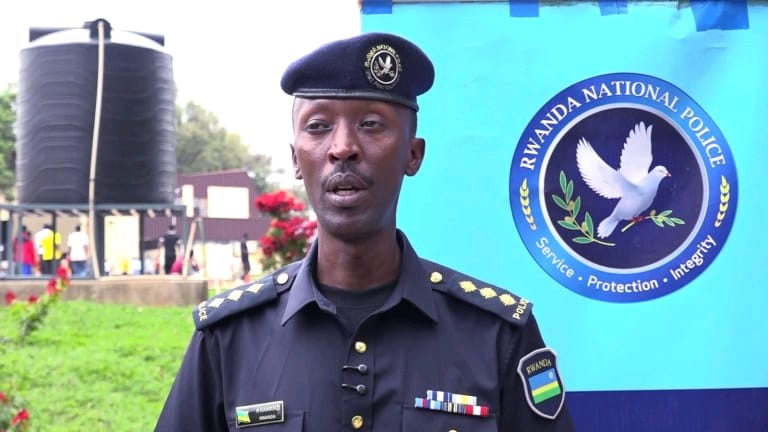
He said: “Young people are being reminded of their role in preventing and combating crime, and this can only be effectively achieved when they are guided by the values and moral principles of Rwandan culture. When youth understand and embrace these values, they are better equipped to conduct themselves responsibly and to recognise that they are the leaders of tomorrow.”
He further urged students to provide timely information whenever they become aware of criminal activities, stressing that effective crime prevention requires close cooperation between the Police and the wider community.
“Youth are a driving force for national development, and when they understand how to prevent and protect themselves from crime, society benefits as a whole. We therefore call for strong collaboration between the Police and all citizens in preventing and combating crime.”
The Director of the University of Rwanda’s Huye Campus, Alphonse Murefu, noted that awareness programmes of this nature are of immense value to students because they help nurture a generation grounded in strong moral values.
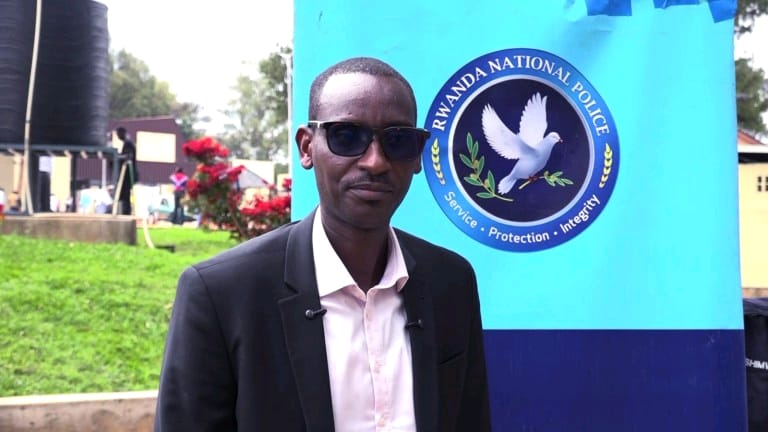
He said: “Whenever initiatives of this kind are organised for our students, they present a valuable opportunity for us as a university, as they enable us to fulfil our educational mission more effectively. The majority of our student population consists of young people, and statistics frequently show that many offences involve individuals within this demographic. It is therefore essential that we continue to instil positive values so that we cultivate a generation guided by the principles of Rwandan culture.”
Students who attended the campaign likewise expressed appreciation for the training, noting that it would help them identify potential criminal activities within the university environment, avoid becoming involved in them, and contribute to prevention efforts.
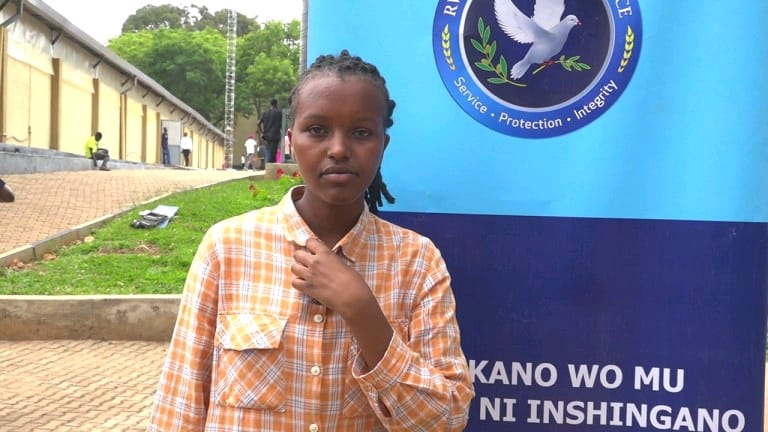
Cyinthia Mutoniwase, a student at the university, observed that various forms of crime can emerge even within academic institutions, including theft and drug abuse.
She said: “Different forms of crime, such as theft and drug use, can occur within a university setting. Awareness programmes conducted by the Police help us, as young people, to avoid becoming involved in such activities.”
Another student, Philippe Imanirahari, commended the Rwanda National Police for organising the campaign, stating that young people should be at the forefront of efforts to address crimes that predominantly affect their age group.
Marie Aimée Muneza also said that the campaign had enhanced students’ understanding of what constitutes criminal behaviour, enabling them to avoid unlawful activities and report offences occurring in their communities or places of study.
She said: “Campaigns such as this help us understand what constitutes a crime, enabling us to avoid such conduct and to report offences whenever we witness them.”
The Rwanda National Police continues to encourage young people to embrace positive values, reject drug abuse, violence, and other forms of criminal behaviour, and work alongside relevant institutions in safeguarding public security.
The Police further emphasised that security and development are shared responsibilities, underscoring that the youth should remain at the forefront of efforts to prevent crime and protect the progress Rwanda has achieved.