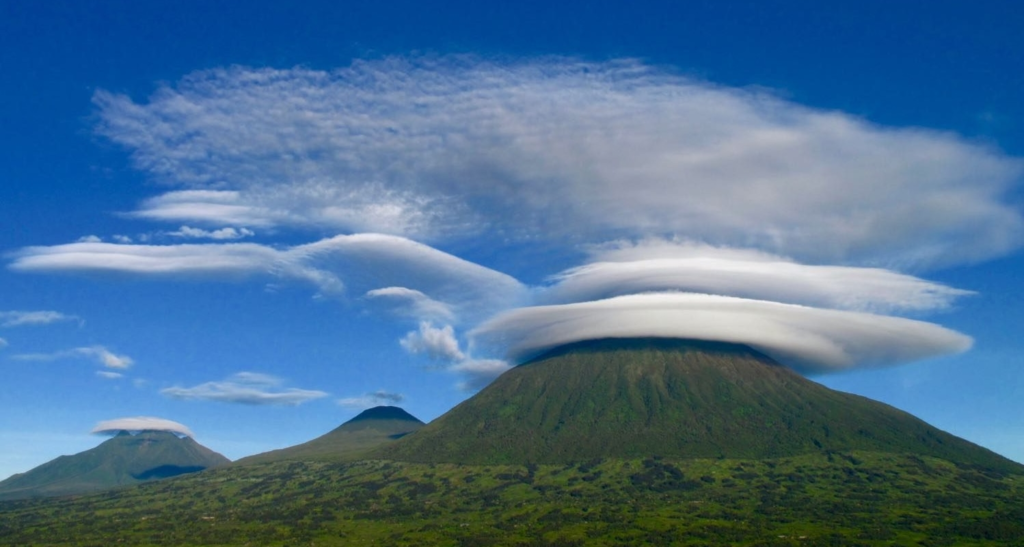
















The Government of Rwanda and the European Investment Bank (EIB) have signed a €65 million loan agreement (over Frw109.7 billion) to finance the implementation of the Volcanoes Community Resilience Project (VCRP), which aims to conserve biodiversity and improve the livelihoods of local communities.

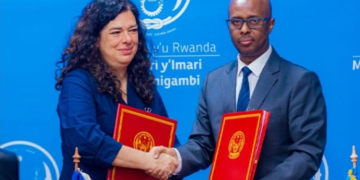
The agreement was signed on August 5, 2026, between the EIB and the Government of Rwanda, represented by the Ministry of Finance and Economic Planning (MINECOFIN).
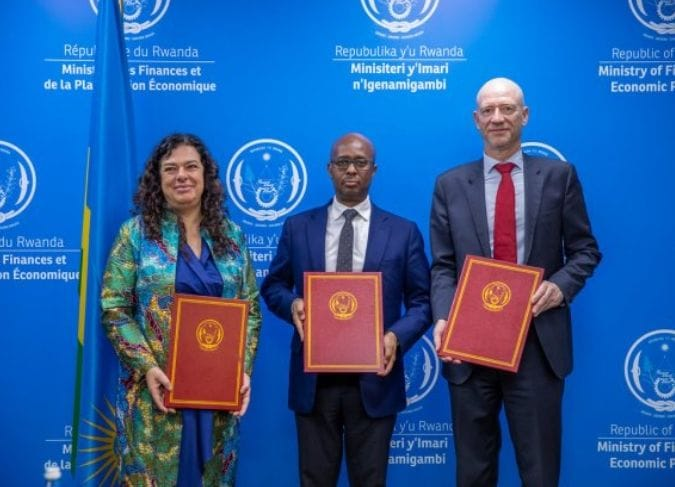
The funding will support climate change adaptation, environmental protection, biodiversity conservation, and socio-economic development for communities living in Rwanda’s Northern and Western provinces.
Project to Benefit Millions in Disaster-Prone Districts
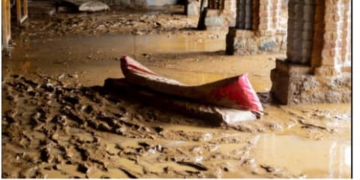
The project will focus primarily on areas that are highly vulnerable to natural disasters such as floods, landslides, and soil erosion. It will be implemented in the districts of Gakenke, Burera, Musanze, Nyabihu, Rubavu, Rutsiro, Ngororero, and Muhanga.
More than 2.3 million people living in these districts are expected to benefit from the project through disaster risk reduction measures, ecosystem restoration, biodiversity conservation, and the promotion of environmentally sustainable economic activities.
The VCRP will be implemented in collaboration with several institutions, including the Ministry of Environment, the Rwanda Water Resources Board, Meteo Rwanda, the Rwanda Environment Management Authority (REMA), and the Rwanda Development Board (RDB).
Major Investments in Climate Resilience
Valued at more than $300 million (over Frw435.6 billion), the Volcanoes Community Resilience Project consists of four main components: flood control, the expansion of Volcanoes National Park, restoration of degraded land, and strengthening communities’ capacity to prepare for and respond to natural disasters.
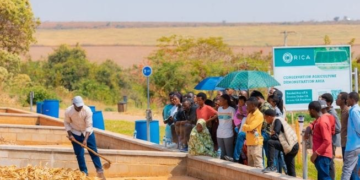
To help prevent flooding, a river monitoring system has been established. Around 15 monitoring stations have already been installed in the Vunga area to measure water levels, flow rates, and discharge volumes.
The project will also restore degraded land through activities such as afforestation, terracing, and supporting farmers in improving water management on their farms.
As part of ecosystem restoration, the project plans to establish forests on 1,177 hectares, promote agroforestry on 10,388 hectares, and rehabilitate 2,955 hectares of degraded forests.
Volcanoes National Park to Be Expanded
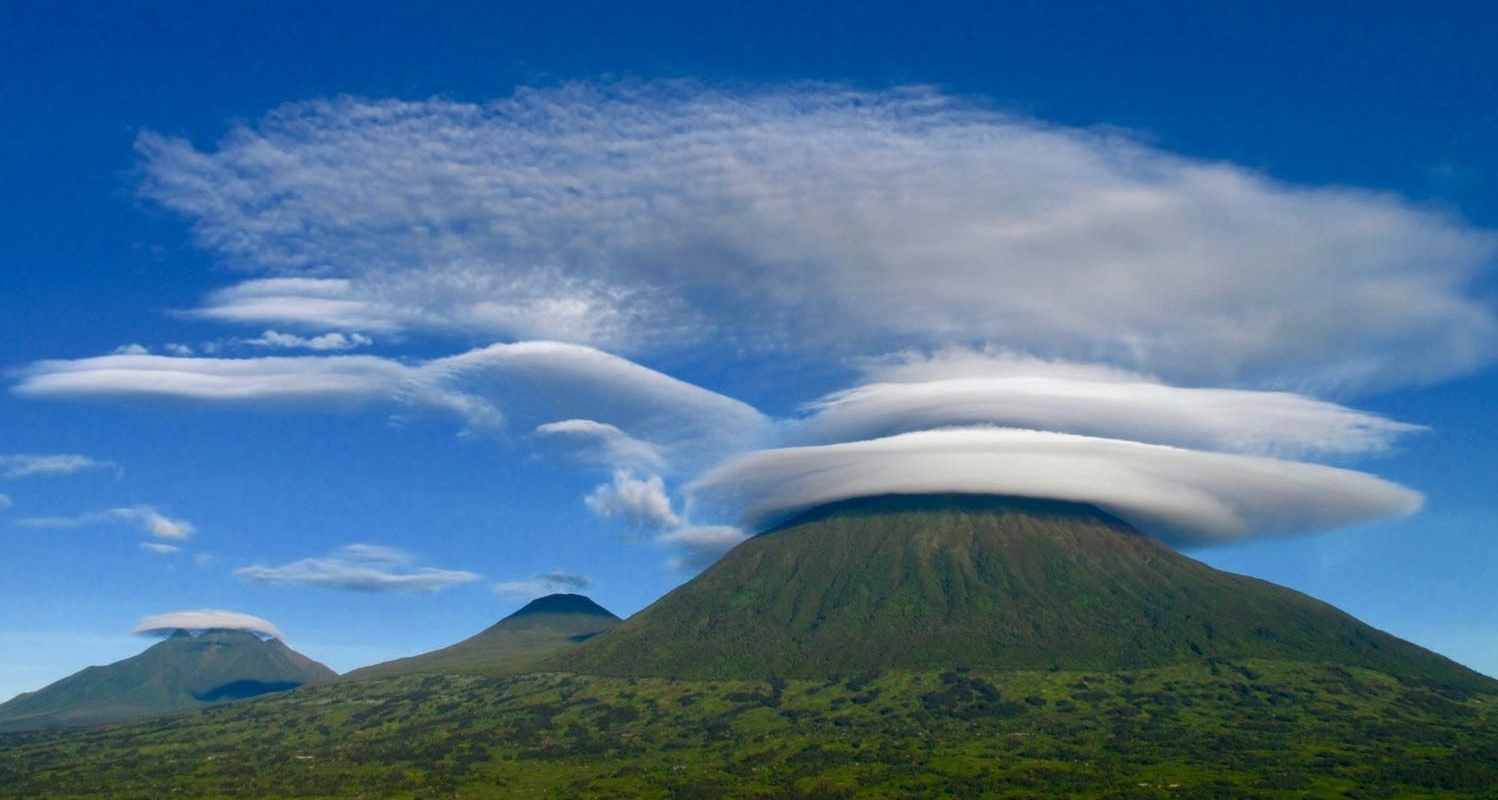
A key component of the project is the expansion of Volcanoes National Park, which will increase its size by 3,740 hectares, from its current area of nearly 16,000 hectares.
The expansion will enlarge the park by approximately 23%, with the objective of enhancing biodiversity conservation and reducing human-wildlife conflict.
Residents living in areas that will be incorporated into the park will be relocated. They will either receive compensation or be assisted in moving to environmentally sustainable planned villages.
During the first phase, an eco-friendly model village will be constructed to accommodate 510 households.
The relocated residents will also receive training in modern farming techniques.
Project to Promote Sustainable Livelihoods
Overall, the project aims to reduce the impact of natural disasters, protect Rwanda’s natural resources, and support communities in achieving sustainable livelihoods while safeguarding the environment.