


























A researcher on genocide and divisionism, Tom Ndahiro, has called for individuals who promoted, planned, or enabled the 1994 Genocide against the Tutsi to be fully documented in memorial history, including those who continue to deny the genocide.

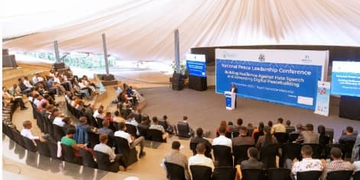
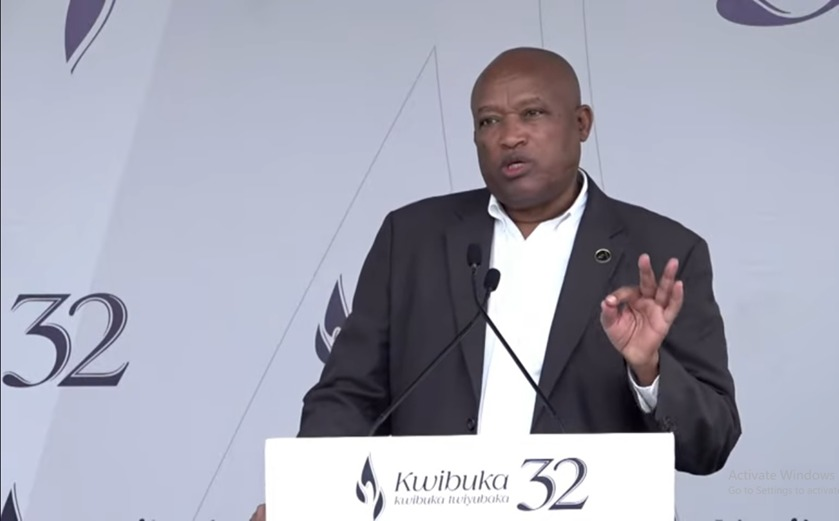
Ndahiro made the remarks on April 26 in Nyanza District during the 32nd commemoration of victims of the Genocide against the Tutsi. The event was held in Busasamana Sector at the district memorial site.
ALSO READ: https://agaciropress.com/bralirwa-plc-pays-tribute-genocide-remembrance/
Role of Ideology in the Genocide
He explained that although some people did not directly take part in the killings, their speeches, writings, and propaganda played a major role in spreading the ideology that led to genocide.
Ndahiro stressed that genocide memorials, especially major sites such as the Kigali Genocide Memorial, should display photos of known genocide deniers because their actions are closely linked to the crimes committed.
He said: “What should be done in memorials, especially the major ones like the Kigali memorial, is that known genocide deniers should have their photos displayed there as killers because there is no difference between them.”
Charles Onana Mentioned as an Example
Ndahiro cited writer Charles Onana, who has publicly denied the Genocide against the Tutsi through his publications.
He stated: “His ideas come from Kangura. In his book titled Ces tueurs Tutsis (Those Tutsi Killers), there is a section he copied from Kangura issue number four, pages two and three, and presented it as his own research. That person should be placed alongside Hassan Ngeze in memorials so visitors can see that there are perpetrators who are still alive and not imprisoned.”
ALSO READ: https://agaciropress.com/rutsiro-district-employees-reinstated-justice/
Anastase Makuza’s Statements Referenced
Ndahiro also referred to Anastase Makuza, a politician from the First Republic and former Minister of Education. In a 1964 interview with French television, Makuza claimed that Tutsi were not Rwandans and that Rwanda belonged to Hutu.
Ndahiro suggested that Makuza’s image and statements should be displayed in memorials such as the Nyamagabe Genocide Memorial, alongside other perpetrators, so that visitors can understand the role of hate ideology in Rwanda’s history.
He said: “There is no reason these individuals should only be talked about in words. If there is recorded evidence like Makuza’s 1964 interview given to France, it should be documented and displayed in memorials so visitors can read and understand the crimes committed.”
Controversial Historical Statement
In the widely referenced interview, Makuza responded to a journalist’s question about Tutsi students killed under President Kayibanda’s regime by claiming that Tutsi were foreigners.
He said: “Rwanda is inhabited by three ethnic groups: Hutu, who make up 85%, Tutsi, who are Hamites and make up 14%, and Twa, who are about 1%. According to our history, this minority of Tutsi colonized the majority Hutu, who are the true Rwandans.”
ALSO READ: https://agaciropress.com/canalbox-sanctions-rwanda-rura-compensation/
Minister Bizimana on the Roots of Hatred
This statement has also been highlighted by the Minister of National Unity and Civic Engagement, Dr. Jean Damascène Bizimana, as one of the ideas that fueled hatred against Tutsi and later contributed to the genocide.
Dr. Bizimana explained that such ideology portrayed Tutsi as foreigners who invaded a Hutu nation, reinforcing division and hatred. He added that understanding these early narratives is important in explaining how extremist groups such as Interahamwe later emerged and carried out the genocide.
Charles Onana Conviction
In 2019, the French judiciary found Charles Onana guilty of genocide denial in relation to his book titled: “Rwanda, la vérité sur l’opération Turquoise: Quand les archives parlent“.














Comments 1