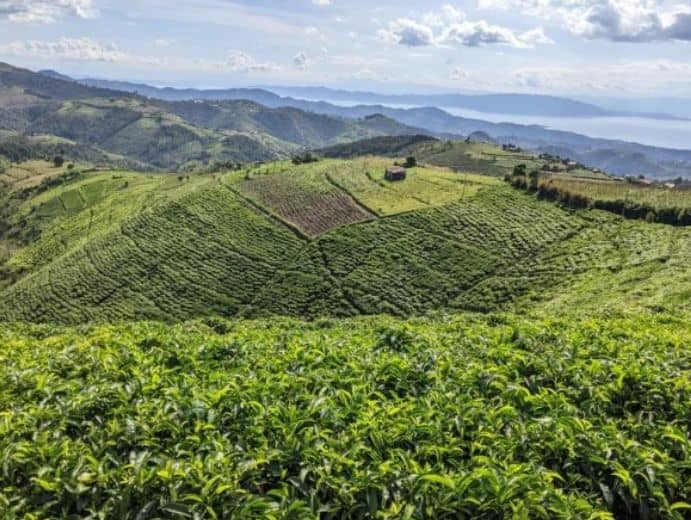



























Survivors of the Genocide against the Tutsi in Bisesero, located in Karongi District, have expressed gratitude to the leadership that took a long-term vision by helping them cultivate tea, an initiative that now provides them with monthly income. This comes after years in which the hills of Bisesero were barren or covered with forests that yielded little meaningful productivity.

In 2022, the Karongi District authorities, in partnership with various stakeholders, introduced tea farming in Bisesero. The first harvests have already been realized, and one farmer has even managed to purchase a vehicle from the proceeds.
Bisesero’s History: Bravery, Devastation, and the Path to Recovery
Bisesero is a mountainous area historically known for the bravery of its Tutsi residents, who resisted the Interahamwe militia using stones, spears, and sticks, confronting armed attackers during the Genocide.
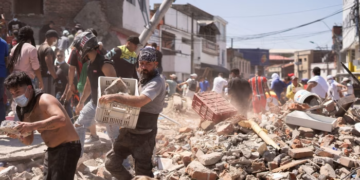
Immediately after the Genocide against the Tutsi was halted by the Inkotanyi forces, Bisesero was devastated, littered with bodies, destroyed homes, and livestock that had been looted or killed by the Interahamwe.
One of the first steps taken by the Government of Rwanda to restore life and hope in Bisesero was the distribution of cows to residents. Today, nearly every household owns at least one cow.
Leadership and Community Voices: From Aid Dependency to Empowerment
The President of Ibuka and Chairperson of the Karongi District Council, Vedaste Ngarambe, praised the district leadership for transforming the approach to supporting genocide survivors, shifting from a model of aid dependency to one of active partnership and empowerment.
He stated, “We appreciate the leadership that introduced tea farming in Bisesero. The residents have become self-reliant. Some earn as little as RWF 100,000 per month, while others earn up to RWF 1 million and one has even bought a car.”
Gasimba Narcisse, a genocide survivor from Bisesero, said that after the genocide, the government helped lift the area out of isolation.
He noted, “It is as if God guided them in what to do. They built houses for us and gave us cows. Even though we are not yet as wealthy as before, we no longer depend on begging. Apart from aging, we are not weakened. At first, introducing tea here seemed like an insult, but they trained us, and we accepted. Now it generates monthly income for us like salaried workers.”
Why Tea Was Absent: Historical Exclusion and Deliberate Misinformation
Sebirora Antoine explained that immediately after the genocide was stopped, Bisesero was desolate filled with corpses and abandoned, with no residents left, as survivors had relocated to safer centers such as Gakuta, Mubuga, and Gishyita where they were protected by Inkotanyi forces.
Although Bisesero is located near the Gisovu Tea Factory, tea farming had previously been restricted to the Rushishi area during the government of Juvénal Habyarimana. Residents were misled into believing that tea could not grow in Bisesero, and forests mainly pine trees were planted instead, limiting pasture for livestock and worsening poverty.
Tea Farming Today: Growth, Income, and Community Transformation
He added, “Tea is now more profitable than any other crop. Every household receives monthly payments. I personally own half a hectare, but those with larger land holdings can earn up to RWF 1 million per month.”
Since 2022, about 150 hectares of tea have been planted in Bisesero. Farmers provide land, and tea is planted for them free of charge.