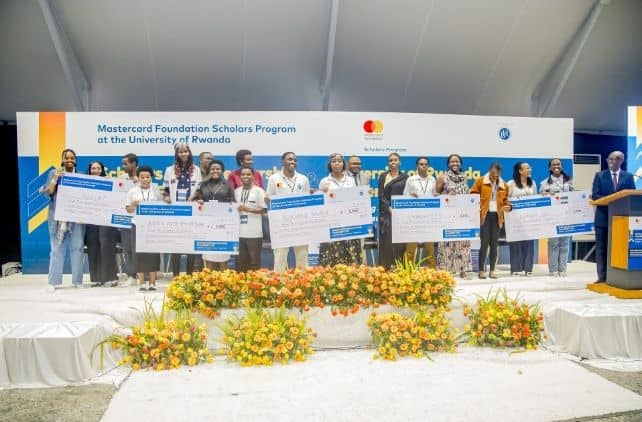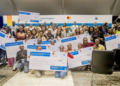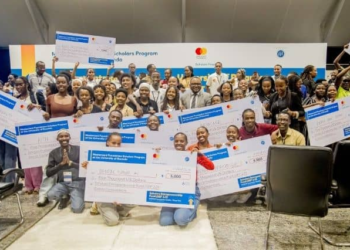
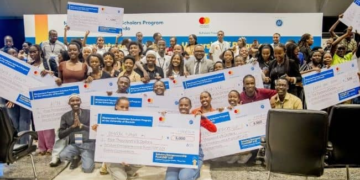


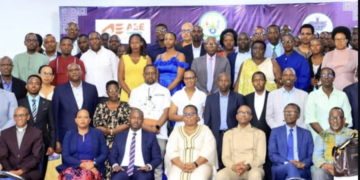







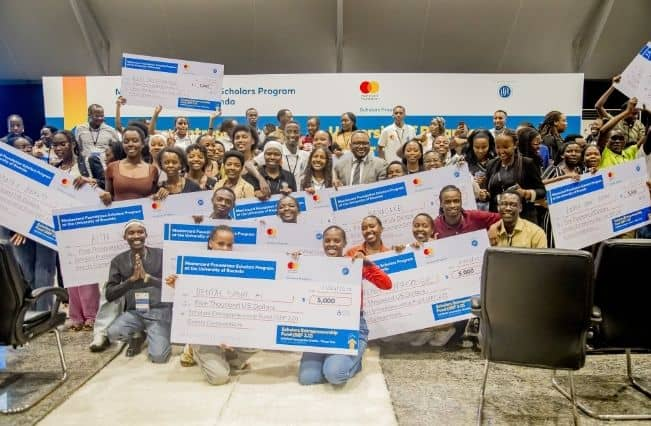
A total of 52 outstanding projects developed by students from the University of Rwanda (UR) have received funding. Each project was awarded $5,000 (about Rwf 7.5 million), bringing the total to $260,000.

This initiative promotes innovation, entrepreneurship, and practical solutions to real-life challenges. As a result, students can turn their ideas into impactful ventures.
Mastercard Foundation Supports Innovation
The University of Rwanda student projects funding is organized through the Mastercard Foundation Scholars Program, with financial support from the Mastercard Foundation.
The program empowers students to innovate and create their own employment opportunities. In addition, it equips them with skills needed to compete in the job market. Moreover, it prepares them to become future leaders in Rwanda and across Africa.
Strong Participation from Students
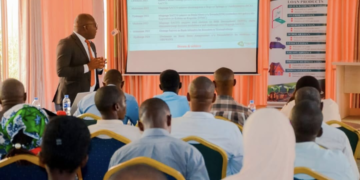
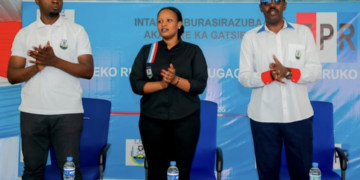
The award ceremony took place on March 27 at the Kigali Conference and Exhibition Village (KCEV).
Winners were selected from over 740 student teams, each made up of three to five members. Notably, every team included at least one Mastercard Foundation-supported student.
In total, more than 3,000 students participated. Therefore, the competition reflects strong interest in innovation among young people.
Projects Across Key Sectors
The funded University of Rwanda student projects span several sectors, including technology, agriculture, climate change, environmental protection, ICT, health, and social welfare.
Because of this wide coverage, the projects address real challenges facing communities.
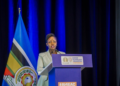
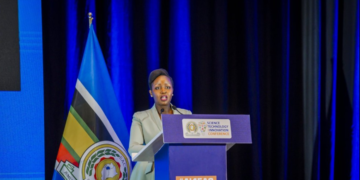
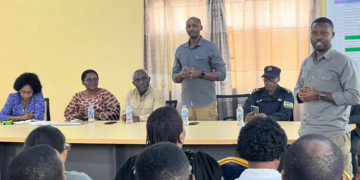
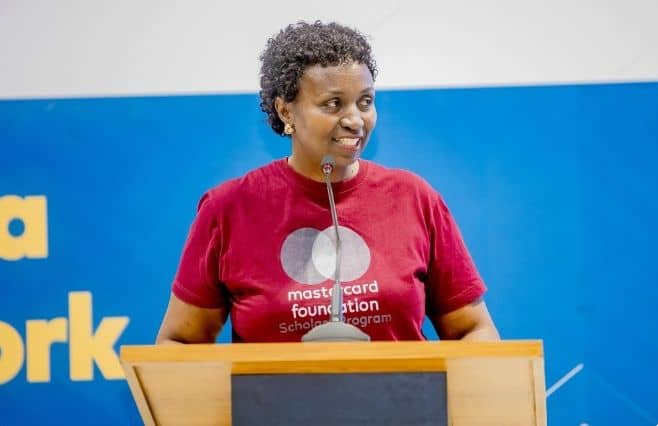
Assoc. Prof. Anne Marie Kagwesage, Head of the program at UR, said: “We commend students for your ideas. These are practical solutions that transform lives, create jobs, and address challenges affecting communities.”
Program Growth and Impact
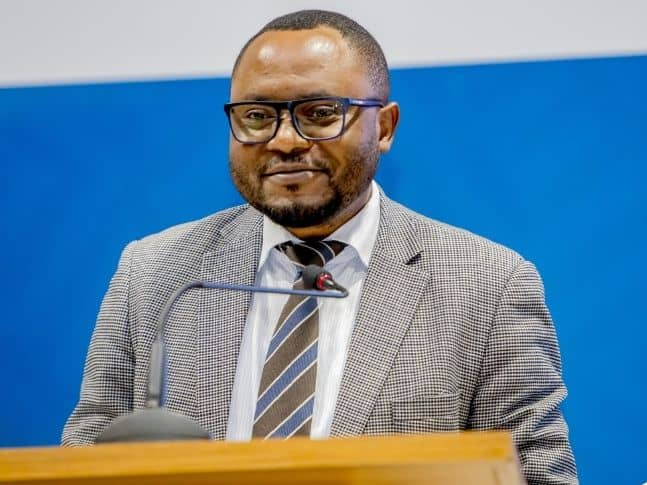
Dr. Raymond Ndikumana, Deputy Vice Chancellor for Planning and Administration at UR, highlighted the program’s growth. Participation increased from 583 students last year to 740 this year.
This rise shows that many students have innovative ideas worth supporting. As a result, partners like the Mastercard Foundation continue to back the initiative.
He also said: “Some students have already started earning income from projects developed last year, while continuing to perform well academically. It is entirely possible to study and run a business at the same time.”
Furthermore, he emphasized the importance of investing in youth. The university will continue to follow up on projects to ensure sustainability and strengthen the culture of innovation.
He added: “We grouped students to encourage peer learning and collaboration. At ages between 19 and 24, this is the right time to learn teamwork. They are also being trained to become leaders, and one cannot be an effective leader by working alone.”
Innovative Student Solutions
Some University of Rwanda student projects already show strong potential.
For example, the Kigali Urban Brain team is developing a smart urban mobility system. Their solution uses a mobile app powered by AI, cameras, and other technologies to provide real-time traffic data. As a result, drivers can choose less congested routes, reduce travel time, and improve road safety in Kigali.
In agriculture, the Smart Manure Project offers another solution. The team developed a system that determines the right amount of fertilizer based on nitrogen and phosphorus levels.
They explained: “This project is still in the testing phase, but we are refining it to deliver fast and tangible results. Farmers will greatly benefit from it, and we are ready to support as many as possible.”
Building Future Leaders in Rwanda
This competition, known as the Mastercard Foundation Scholars Entrepreneurship Fund (SEF 2.0), is in its second edition. Last year, 27 projects were also funded, and some have already started generating income.
The Mastercard Foundation Scholars Program is a 10-year partnership with the University of Rwanda. It supports talented but financially disadvantaged students to access higher education.
At the same time, it prepares them to become leaders and problem-solvers who can address challenges in Rwanda and across Africa.