



























Rwanda grain storage capacity is under renewed focus as the Senate reviews government strategies to improve food security.

The discussions revisit long-term targets, current storage levels, and plans to expand national reserves.
Leaders are focusing on how storage can better support national preparedness.
Long-Term Grain Storage Capacity Plans Revisited
Senator Dr Charles Muligande recalled that when he was still in the government, the then Minister of Agriculture and Livestock said they were going to build a grain storage facility of 20 thousand tons.
At that time, President Paul Kagame said he was not looking far ahead.
He added that there was a need to build a storage facility of 300 thousand tons.
Fifteen years later, Rwanda stores just under 50 thousand tons, showing a gap in Rwanda grain storage capacity.
Senate Raises Concerns Over Grain Storage Capacity
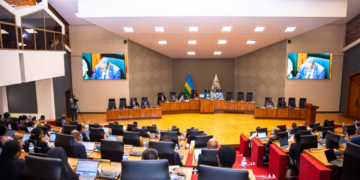
The Minister of Agriculture and Livestock, Dr Telesphore Ndabamenye, appeared before the Senate on behalf of the Prime Minister.
He presented the Government’s strategies to address challenges in agriculture and livestock, with Rwanda grain storage capacity emerging as a key issue.
Senator Dr. Muligande said that the stockpiles are small, stating, “If you put it into numbers, you can understand how small they are”.
he continued ” If we were to have a disaster and not have anything to harvest here in Rwanda, this stock would last us seven days.”
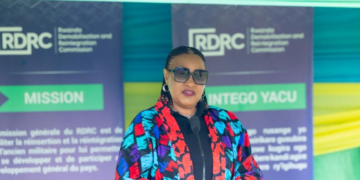
Also read: Become Ambassadors for Peace_ Chairperson RDCRC Nyirahabineza Valerie
he added “So you see, we have very little stockpiled,” he said, while also questioning whether there is sufficient infrastructure to store increased production.
Government Sets New Grain Storage Capacity Targets
The Ministry of Agriculture (Minagri) plans to build a 100,000-ton stockpiling facility over the next three years.
This plan is expected to significantly improve Rwanda grain storage capacity and strengthen food security preparedness.
This prompted Senator Muligande to ask the Minister, “I want to know what strategies you have that will help build in three years the stockpiling facility that has failed to be built during this entire period.”
He added that increasing storage would require higher agricultural production, noting that “it would require us to harvest more and have something to harvest, but also to import it.”
Concerns Over Implementation and Institutional Capacity
The discussion also drew in Senator Evode Uwizeyimana, who raised concerns about implementation timelines and institutional efficiency.
He referred to the Government’s plan to use Rwanda Medical Supply (RMS), a company that imports medicines used in human treatment, to also import veterinary medicines.
He said, “I ask you to give us a timeframe for this to be done. There are institutions that come and tell us things here, like after five years you ask about the progress and they tell you that they have awarded the contract, another five years later they say ‘we are going to terminate the contract with the contractor, things did not go well.’”
He added, “I hear things like a lie as I heard them many times, we talk to many institutions, so I ask you to give us a timeframe for this to be done and raise concerns because RMS is already doing poorly.”

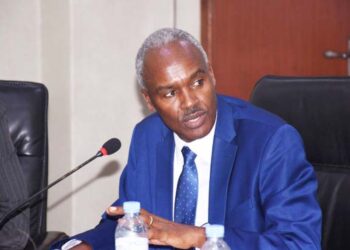
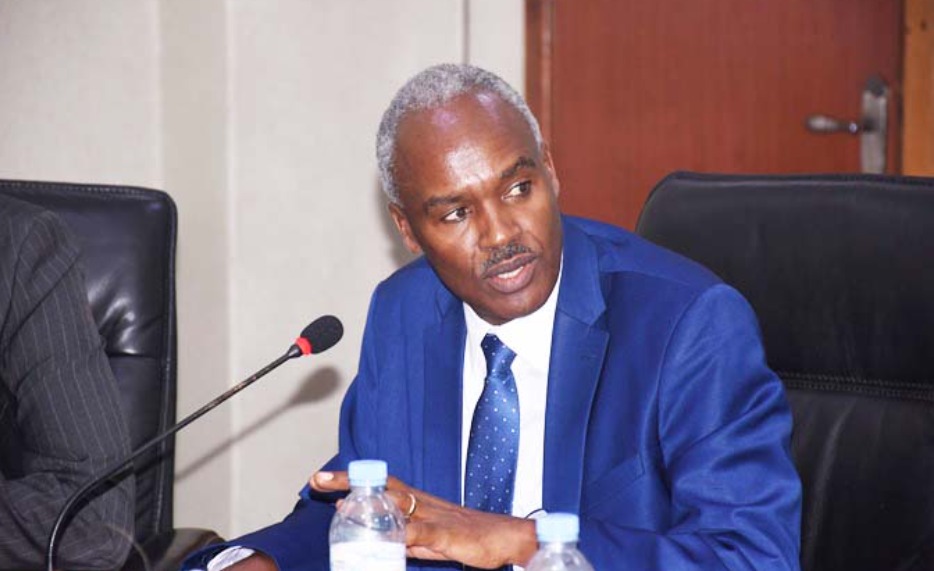
Senator Evode Uwizeyimana providing his view about the problem
He based this on observations from Senate visits to primary health centers (Posts de Sante) across the country.
These visits raised concerns about the company’s performance in importing human medicines. He warned that adding veterinary medicine imports could worsen the situation.
Government Response on Grain Storage Capacity
Responding to the concerns, Minister Ndabamenye agreed that Rwanda grain storage capacity remains low.
He noted that internationally, it is considered adequate for a country to have reserves capable of feeding its population for at least three months in case of a crisis.
He said that Minagri has already identified locations for new warehouses and awarded contracts for their construction to increase storage capacity.
Under standard benchmarks, the country should be able to store 15% of its production. This would be enough to feed at least 15% of the population for three months.
Regarding veterinary medicines, which are planned to be imported through a company that already handles human medicines, Minister Dr. Ndabamenye said they will be carefully examined.