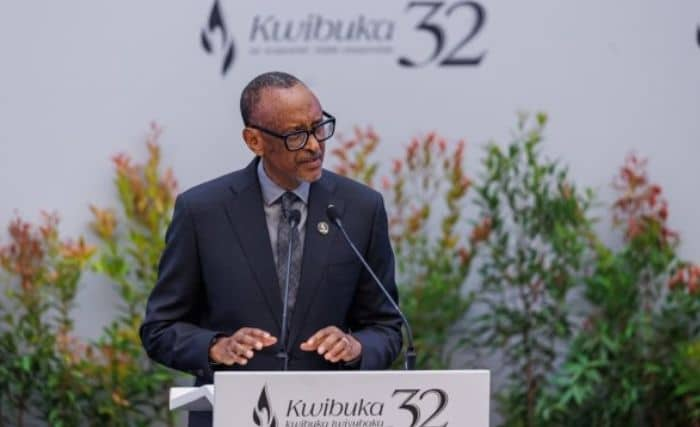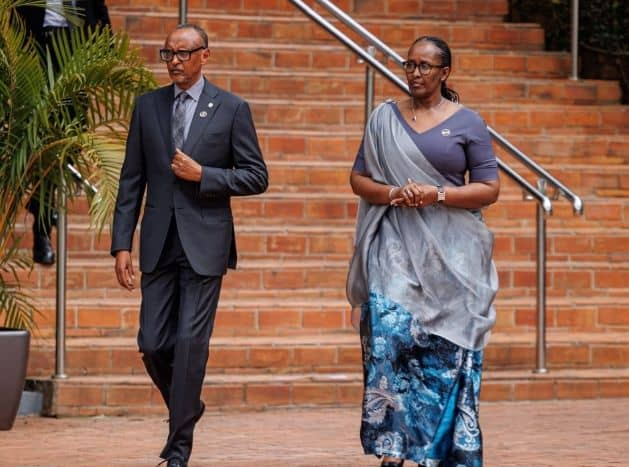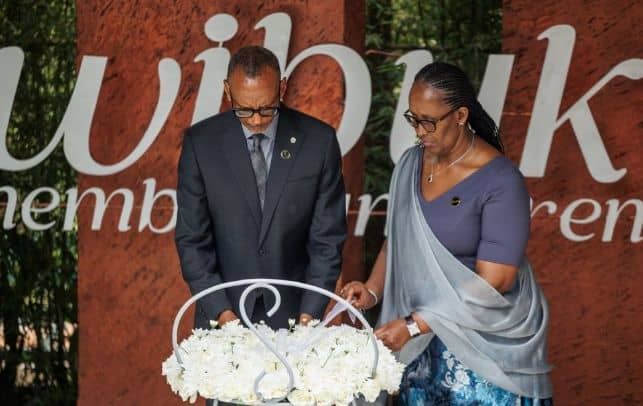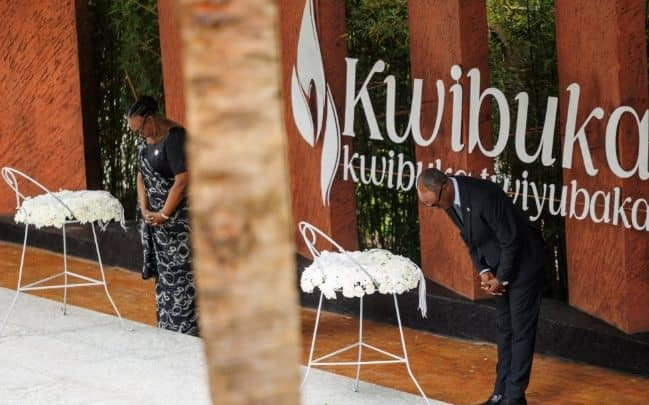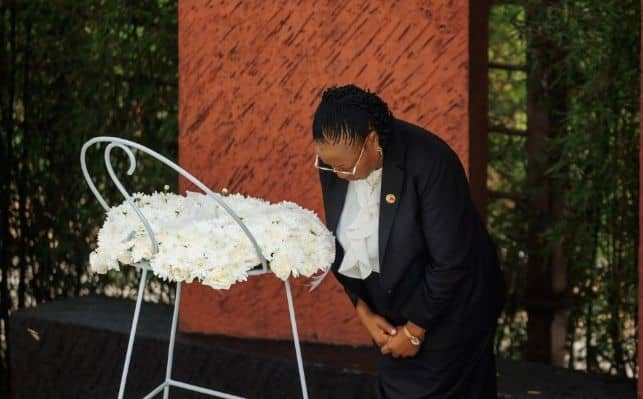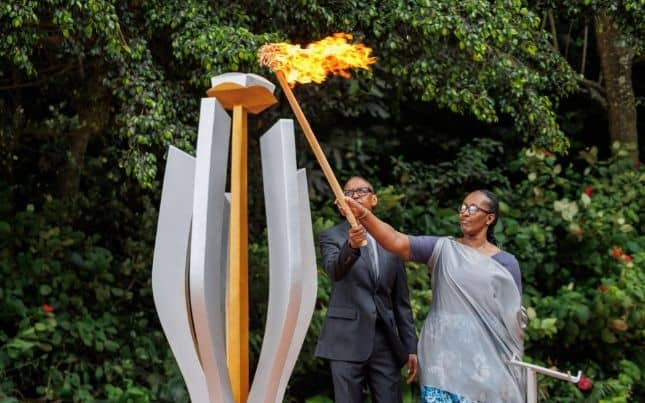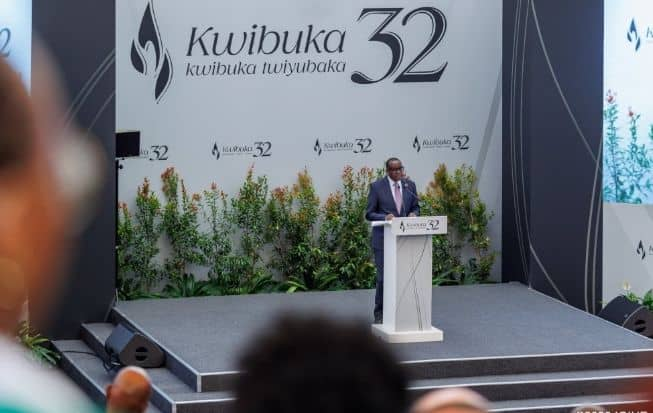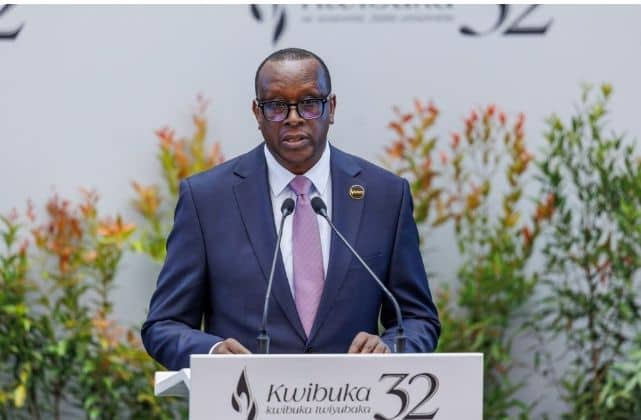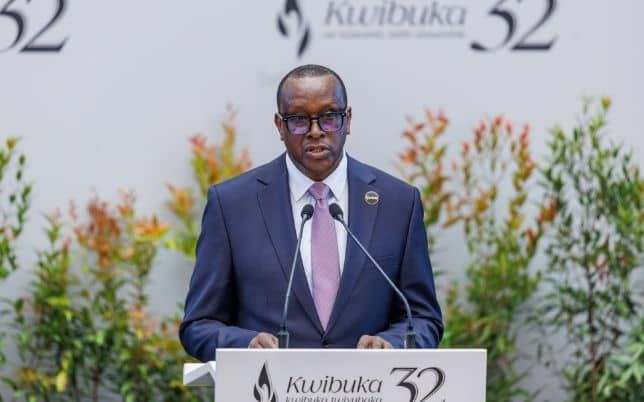




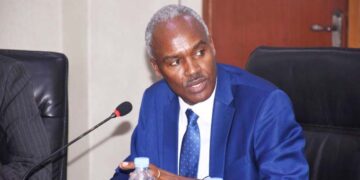
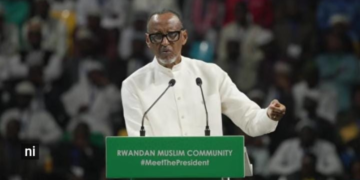




President Paul Kagame said the tragedy of the 1994 Genocide against the Tutsi will never happen again. He stressed that Rwandans will not die the same way twice. Instead, he said both the young and the old remain committed to preventing such atrocities from ever happening again.

ALSO READ: Faith Is the Foundation of Everything – Cardinal Kambanda
Launch of the 32nd Commemoration
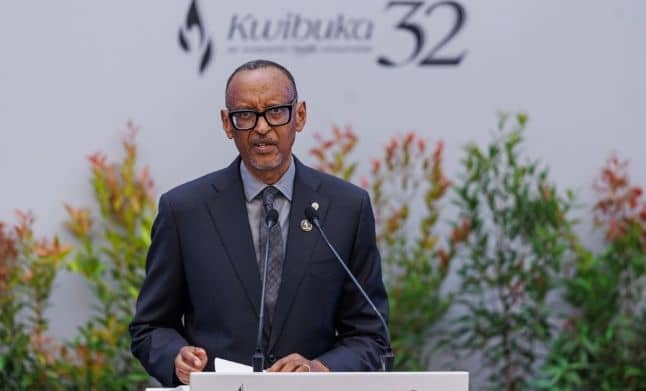
The Head of State made these remarks during the launch of the National Mourning Week and the 10-day commemoration marking the 32nd anniversary of the Genocide against the Tutsi. Before his speech, genocide survivor Ngiruwonsanga Théoneste gave his testimony.
A Survivor’s Horrific Testimony
Ngiruwonsanga recalled that on April 12, 1994, while fleeing, he witnessed a horrific act in Cyangugu. Interahamwe militia killed a Tutsi man named Bahati Enock. They removed and roasted his heart, claiming they were consuming his intelligence so it would not “go to waste.”
He stated: “All the Tutsi men gathered at that sector were killed—none survived. Bahati Enock was murdered there; they took out his heart, roasted it, and ate it, saying his intelligence should not be wasted.”
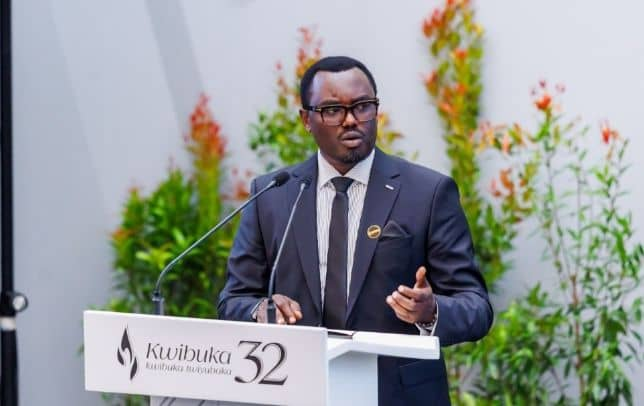
He also explained that after people sought refuge in a church, Interahamwe militias continued the killings. At one point, they disarmed survivors after giving false promises of safety. Later, the attackers returned and massacred them.
He stated: “They killed in such a way that when you pushed a body, you found it decapitated; you could feel your hand entering into a corpse. The blood burned me I even drank it as they dragged me from the pile of bodies. The skin on my legs was torn off and left behind in the corpses, like removing a sock.”
Truth Cannot Be Denied
President Kagame affirmed that these testimonies reflect the truth: “Those who attempt to deny or distort these accounts face a difficult task. It is not easy to rewrite such a history to fit different narratives, whether here or abroad. Anyone who tries will face the reality of the evidence.”
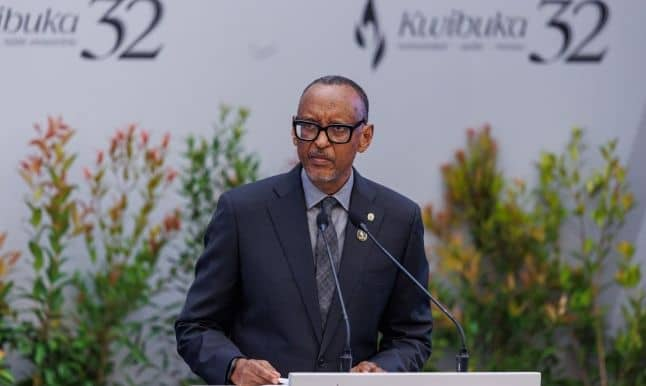
He insisted that Rwanda’s dark past will never return: “No one will die again as Théoneste described, or as he himself nearly did. He died, yet he lives it is like a resurrection. No one can die that way again. You cannot kill a person twice. If you try, they will stop you before you succeed.”
He added that Rwanda as a nation cannot be destroyed twice: “Some mock from afar, but the Rwanda you see cannot die twice. Before you kill Rwanda, it will kill you. It is impossible to kill a people twice. Neither we nor our children will be killed again. We will live as people are meant to live without asking anyone for permission.”
6. Unity, Justice, and Remembrance
President Kagame said remembrance plays a key role in rebuilding Rwanda. It helps the country overcome the divisions that once threatened to destroy it: “Today gives us strength. Survivors inspire us and remind us of our shared humanity. To all survivors, know that you are not alone we stand together as one nation.”
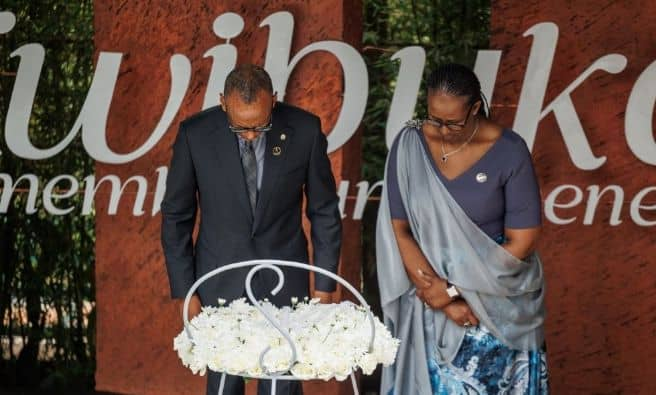
He noted that Rwanda’s progress comes from unity and collective effort. He also pointed out that international courts have already established the truth about the genocide, convicting those responsible based on strong evidence.
In addition, he highlighted the Gacaca courts, which recorded detailed testimonies that show how the genocide was carried out.
President Kagame also recalled that in 2018, the United Nations officially recognized the correct name the Genocide against the Tutsi, a term now widely accepted around the world.
Warning Signs and a Final Reflection
Despite this progress, he warned that genocide denial and distortion still exist: “Even today, some people mislead others and try to distort the truth. This is not just ignorance. It shows that the risk of repeating such a tragedy remains real, especially if we become indifferent.”
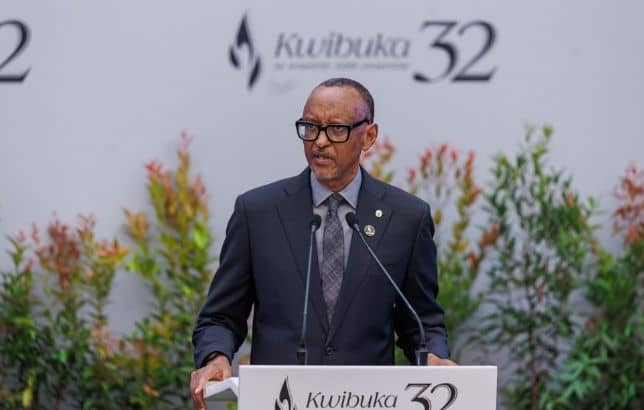
He explained that people often ignore early warning signs of genocide. In many cases, society tolerates hate speech instead of condemning it immediately, which allows violence to grow.
Before the genocide, those who spoke out were often dismissed as alarmists. At the same time, Interahamwe militias trained openly, weapons were brought in large numbers, and those who resisted faced threats or death: “Before 1994, attackers killed people gradually to normalize violence and test how the international community would react. Apart from a few brave individuals, the world remained silent until it was too late.”
He added that warnings about the planned genocide were ignored from the 1960s through 1993: “In January 1994, the UN Force Commander reported that Interahamwe were stockpiling weapons and preparing lists of Tutsi to be killed. He was told to inform the same government planning the genocide and not to take further action. Sadly, what we see in this region today is not very different.”
President Kagame concluded by noting that once the genocide began, Tutsi were hunted everywhere, and no place was safe for them.