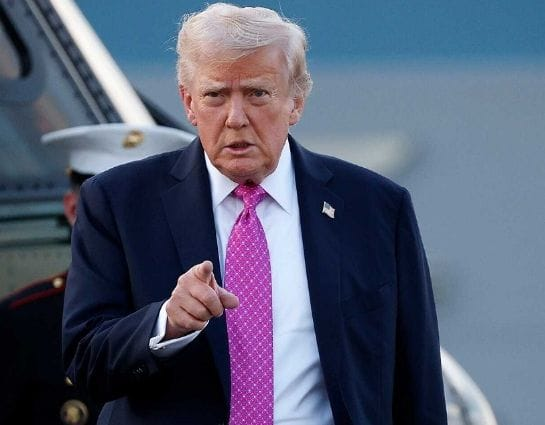































President Donald Trump has announced a new increase in tariffs on all countries, raising the minimum rate from 10 percent to 15 percent. The decision follows the cancellation of his earlier tariff measures by the Supreme Court of the United States.

According to the President, the new policy aims to protect American economic interests and strengthen domestic industries.
ALSO READ: President Évariste Ndayishimiye Orders Dismissal Over Alleged Misconduct
Background to the Trade Disputes and China Tariffs
Over the past year, President Trump had imposed high tariffs on several countries he accused of unfair trade practices. In particular, tariffs on China reached as high as 245 percent at one point.
However, these rates were later reduced after negotiations between China and the United States began. The talks focused on reducing trade imbalances and easing economic tensions.
Supreme Court Ruling Limits Presidential Authority
On February 20, 2026, the Supreme Court ruled that President Trump had exceeded his constitutional authority when imposing the earlier tariffs. The justices emphasized that United States Congress holds final power over trade and taxation policies.
As a result, the tariff measures introduced last year were officially invalidated, forcing the administration to reconsider its approach.
Trump Responds Through Truth Social
Following the ruling, President Trump reacted strongly on his social media platform, Truth Social. He welcomed the opportunity to introduce new measures and claimed they would generate billions of dollars in revenue.
Later that evening, he criticized the Court’s decision, describing it as “disgraceful” and arguing that the judges failed to understand the country’s economic needs.
New Tariff Policy and Expected Impact
On February 21, 2026, President Trump confirmed that tariffs on all countries would rise to 15 percent, effective February 24. He stated that the new rate was lawful and necessary to prevent foreign nations from exploiting American markets.
While supporters view the move as a strong defense of national interests, critics warn that higher tariffs may increase costs for consumers and strain international relations. As the new policy takes effect, its economic and political consequences will continue to draw close attention.