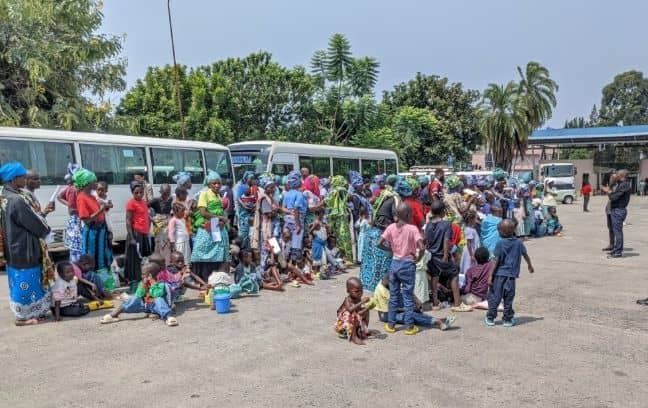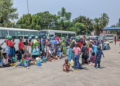
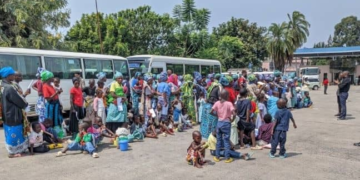
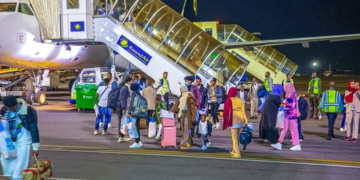














The Government of Rwanda has welcomed 208 citizens who returned home after escaping captivity by the Democratic Forces for the Liberation of Rwanda (FDLR) in eastern Democratic Republic of the Congo.

First, the return marks an important step in helping vulnerable citizens rebuild their lives. Moreover, officials say the exercise shows Rwanda’s commitment to protecting its people wherever they are.
ALSO READ: Karongi: 12,000 Households Benefit from Girinka Program
Safe Arrival and Warm Reception in Rubavu
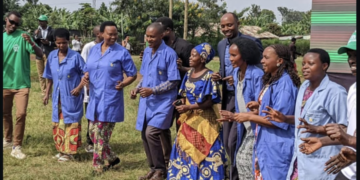
On Friday, local leaders received the returnees in Rubavu District, led by Mayor Prosper Mulindwa.
They crossed the border through the Grande Barrière post and entered Rwanda safely. In total, the group included 145 children, nine men, and 54 women. As a result, authorities gave special attention to women and children.
Local officials assured them of safety and full government support.
Support and Care at Nyarushishi Transit Center
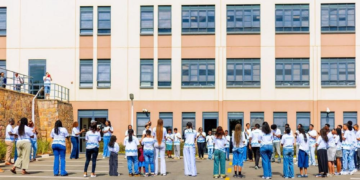
After arrival, officials transported the group to the Nyarushishi Transit Center in Rusizi District. There, staff provide: Shelter and meals. Medical and psychological care, Civic education sessions, Reintegration guidance.
In addition, social workers help the returnees prepare for family reunification and community life. Therefore, the center plays a key role in healing and recovery.
Regional Cooperation Makes Repatriation Possible
Meanwhile, Rwanda worked closely with the DRC and the United Nations High Commissioner for Refugees (UNHCR) to support the repatriation.
The three partners agreed on the process during a meeting in Addis Ababa on July 24, 2025. As a result, more stranded citizens can now return home safely.
Officials say strong regional cooperation remains essential for lasting peace.
Leaders Urge Unity and Rejection of Hate
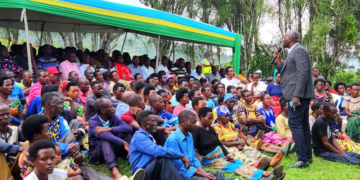
Mayor Prosper Mulindwa called on the returnees to reject hatred and division: “We remind them why they left and encourage them to choose unity and peace,” he said. “Rwanda stands for reconciliation and development.”
Furthermore, he explained that many returnees faced harmful teachings in captivity. Therefore, civic education and social cohesion remain priorities. He also urged them to contact relatives still in the forest and encourage them to return.
Financial and Social Support for New Beginnings
Finally, after receiving identity documents, the returnees will receive government assistance.
Support includes: USD 188 for each adult, USD 113 for each minor, Food supplies worth 45,000 Rwandan francs per person.
In addition, local leaders will continue to monitor their progress. As a result, beneficiaries can restart economic activities and become self-reliant.