
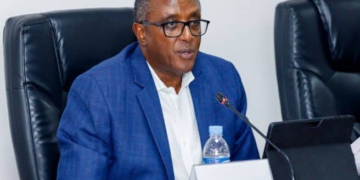




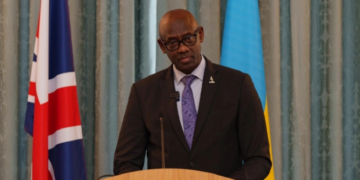










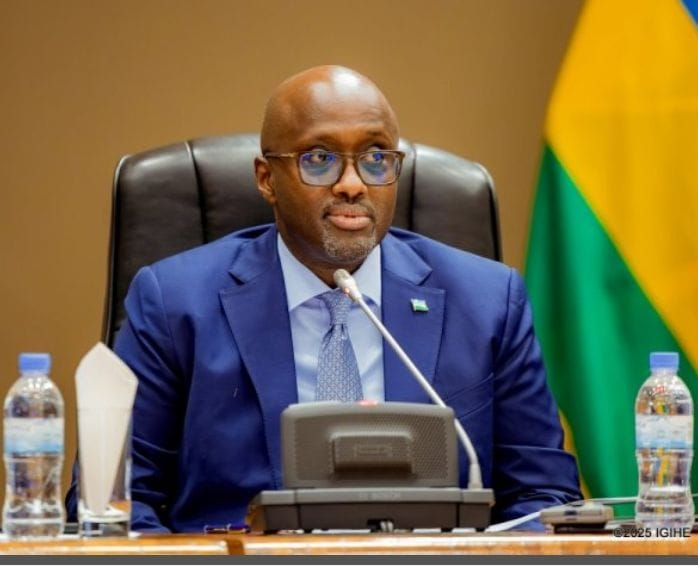
Minister of Foreign Affairs and International Cooperation, Amb. Olivier Nduhungirehe, said that if sanctions urged by the Democratic Republic of the Congo (DRC) could stop insecurity in eastern Congo, Rwanda would accept them. He made the remarks on January 30, 2026, in an exclusive interview with Rwanda National Television. The discussion focused on African Union (AU) mediators’ role in resolving regional insecurity.

ALSO READ: Kagame Receives AU Mediator Faure Gnassingbé at Village Urugwiro
Criticism of DRC’s Sanctions Campaign
Minister Nduhungirehe said the DRC has long lobbied the international community for sanctions against Rwanda. He stressed that sanctions do not solve the persistent insecurity in eastern DRC.
He said: “The Government of the DRC has never stopped calling for sanctions against Rwanda. Instead of traveling to Europe and the United States to seek sanctions against its neighbor, Rwanda, it should sit down and implement the commitments it has already made.”
ALSO READ: DRC Confirms It will present a Candidate to Challenge Mushikiwabo at the OIF
Civilian Attacks and Agreement Violations
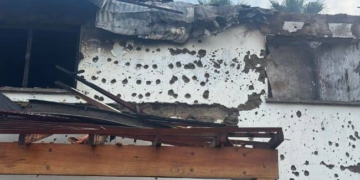
He noted that fighter jets and drones still attack civilians in eastern DRC, especially Congolese Tutsi communities. “These attacks occur daily and have been ongoing for several months, despite the fact that the government signed a ceasefire agreement,” he said.
He added that the DRC acts as if it is not bound by signed agreements, which cannot bring lasting peace.
“If there is anyone who deserves sanctions, it would be those who violate the agreements they signed, bomb civilians, and spread hate speech. What we tell the Government of the DRC is that instead of persistently seeking sanctions against Rwanda, it should sit down and implement what it committed to,” he said.
ALSO READ: Burkina Faso Dissolves All Political Parties
Rwanda’s Stance on Sanctions and Root Causes
Minister Nduhungirehe stressed that Rwanda would accept sanctions if they brought peace.
“If sanctions could resolve the problems that have persisted in Congo for many years, we would sign up for them tomorrow morning. But the reality is that we know sanctions cannot solve the problem. The Government of the DRC must address the root causes of its internal challenges so that peace can prevail in the region,” he said.
Security Concerns and AFC/M23
He explained that claims of cooperation between Rwanda and AFC/M23 arise from shared security concerns over the FDLR armed group. “This is understandable, but it does not mean that Rwanda is AFC/M23. That is a Congolese group with its own internal issues. Rwanda, on its part, has other threats to prevent—threats that history has already shown us,” he said.
ALSO READ: Trump Threatens Canada Over Aircraft Certification Dispute
He recalled that nearly 32 years after the 1994 Genocide, Rwanda continues to face attacks from armed groups. “That is why we stated that we must put defensive measures in place. This is something we, as a country, must manage and prevent because it concerns national and civilian security. The security we are protecting continues to be threatened by the FDLR armed group operating from the DRC,” he explained.
“That is why we coordinate actions in matters of security,” he added.
African-Led Mediation and the Way Forward
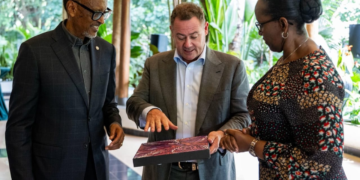
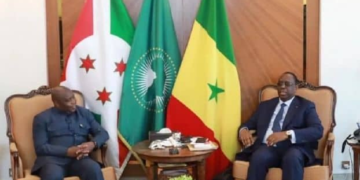
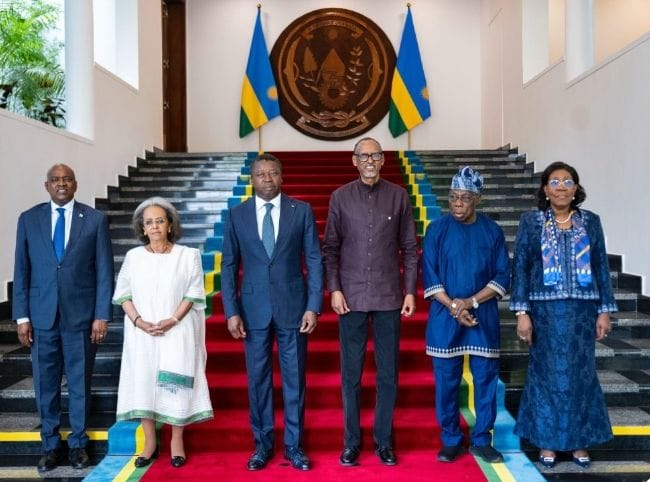
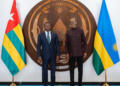
On January 30, 2026, President Paul Kagame received Togo’s Prime Minister, Faure Essozimna Gnassingbé, the AU-appointed mediator in the DRC crisis. They also met AU facilitators, including former leaders from Nigeria, Ethiopia, Botswana, and the Central African Republic.
Minister Nduhungirehe said Rwanda values AU-led mediation.
“We attach great importance to this mediation because, as you may recall, this conflict in eastern DRC was initially addressed through African-led initiatives… President Tshisekedi expelled M23 from the political talks in Nairobi and also withdrew the EAC regional force, which had been deployed to maintain security and had delivered tangible results,” he said.
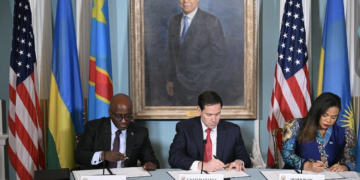
He added: “We would like African mediation to regain momentum in these processes so that we can focus on implementing the agreements that have already been signed—particularly the Washington Agreement, which has already been signed. What remains is its implementation.”
He emphasized that AU mediation complements efforts by Qatar and the United States to implement agreements and advance the Doha process for lasting peace.











Comments 1