





























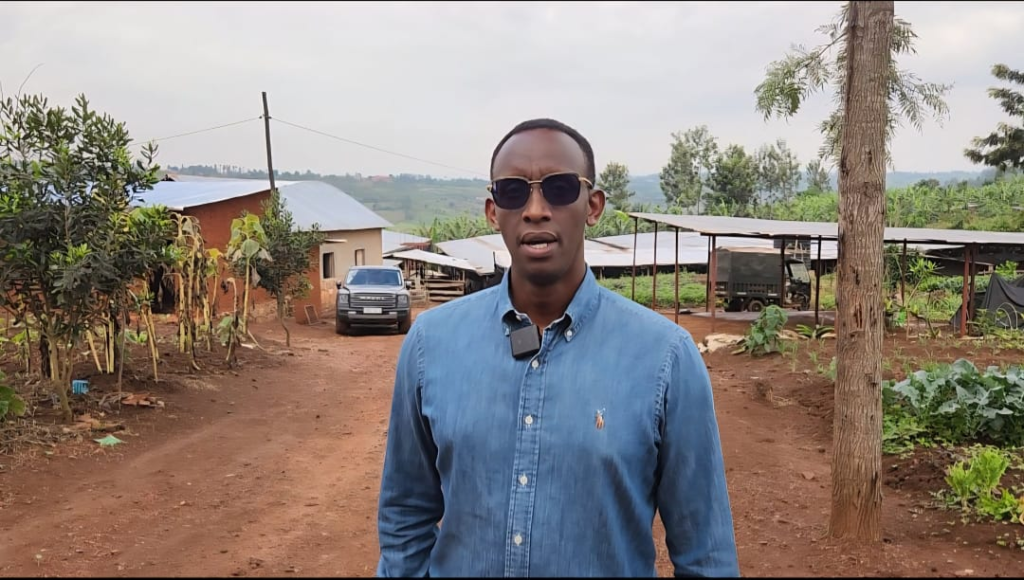
It was on a bright sunny day when a reporter from AGACIRO PRESS visited the large pig farm known as Eco-Farm Kayonza, owned by RUZAGIZA Francis. The farm is located in Mukarange Sector, Kayonza District, in eastern Rwanda.

At first glance, the farm reflects professionalism, dedication, and careful planning. Anyone arriving there quickly realizes that this is not just a small livestock project but a well-organized agricultural enterprise.
ALSO READ: Ngoma: Youth Entrepreneurs Receive Cash Awards Through “Gera ku Ntego” Program
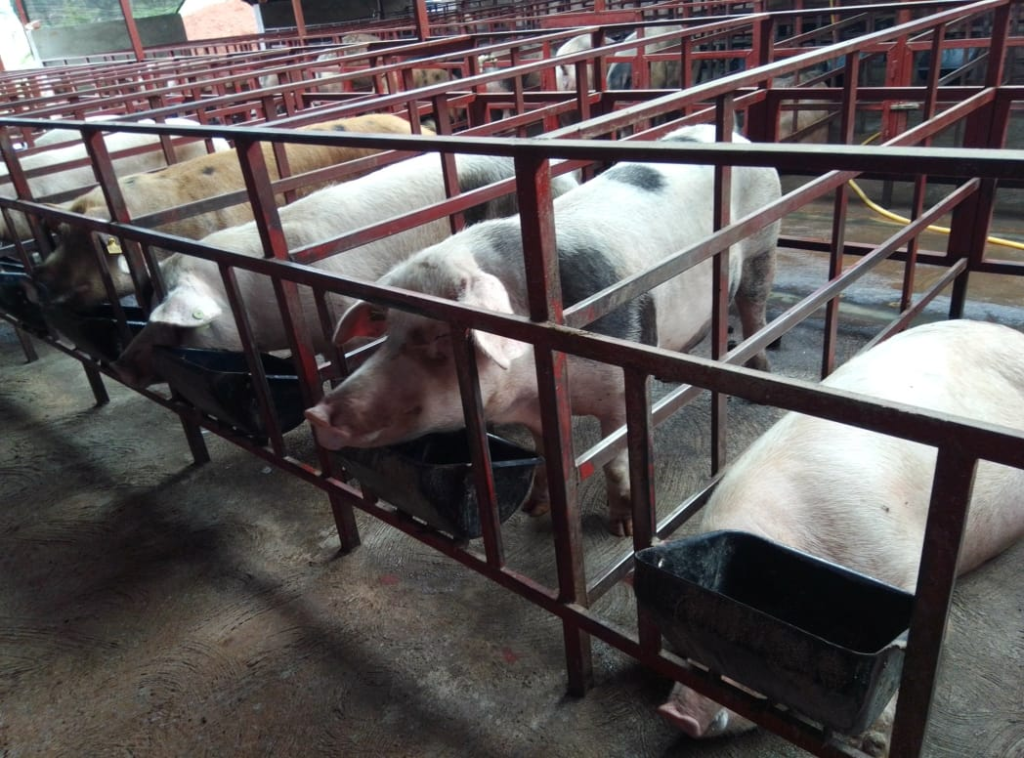
As one enters the farm, the sound of pigs from different breeds can be heard from every corner. Some workers are feeding them, others are washing and cleaning the animals, while some are busy maintaining the pig houses. In another section, workers are preparing feed, while others are processing pork from pigs that have already been slaughtered before being transported to markets in Kigali.
Amid this busy environment, the AGACIRO PRESS reporter approached RUZAGIZA Francis and asked him: “How the journey began?”

RUZAGIZA smiled before calmly explaining how everything started in a very simple way: “When I look at where I started and where I am today, sometimes even I get surprised,” he said. “I started with only 10 pigs. At that time, I never imagined that one day I would have a farm with nearly 1,000 pigs.”
Humble Beginnings with Big Dreams
RUZAGIZA Francis explains that the idea of pig farming came after he realized it could become a long-term investment that might improve his life: “I started with very little capital,” he told the reporter. “I bought only 10 pigs just to test whether the project could benefit me. I believed it could grow, but I never imagined it would reach the level it has today.”
He says the early days were challenging because he had to learn many things about pig farming, including proper feeding, hygiene, disease prevention, and farm management: “At the beginning, I was still learning. Sometimes I doubted whether it would work. But I kept learning from other farmers and from agricultural institutions. As time went on, I started realizing that success was possible.”
ALSO READ: Ngoma: Farmers Urged to Use Modern Inputs and Crop Insurance
RUZAGIZA explains that his goal was not just to raise pigs but to build a sustainable business that could last for many years and create jobs for others.
Expanding the Farm with Financial Support
After realizing that pig farming had real potential, RUZAGIZA decided to expand his operations. To do so, he approached financial institutions and requested loans to increase his livestock: “Once I saw the project was viable, I went to financial institutions and explained my business plan and the vision I had for the farm,” he said. “They understood and trusted me, and they supported me financially.”
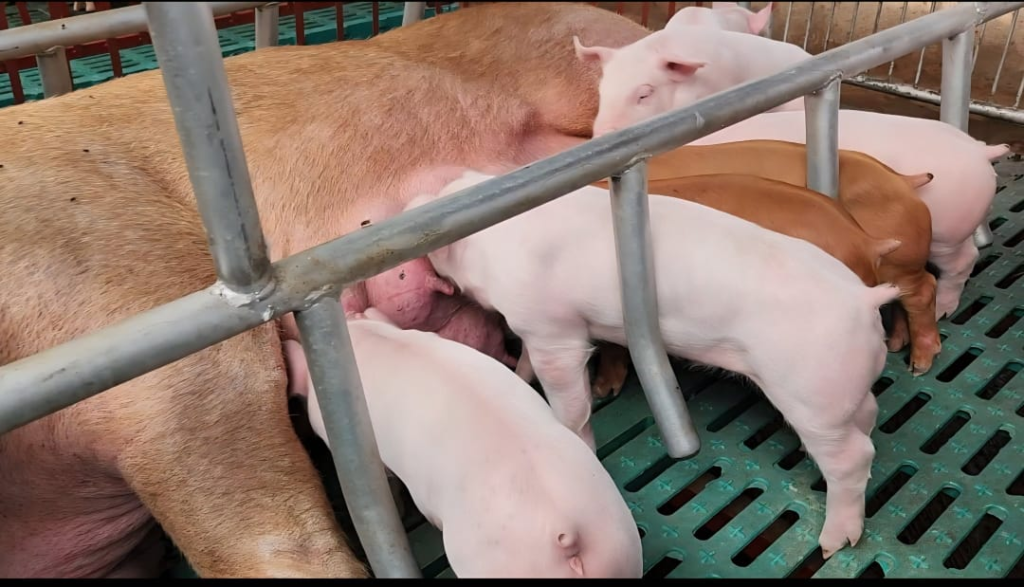
The loans enabled him to construct larger pig houses and increase the number of animals on the farm: “Today the farm has been operating successfully for about three years. All this growth came from having the courage to try and seeking help where necessary.”
Modern Pig Farming Practices
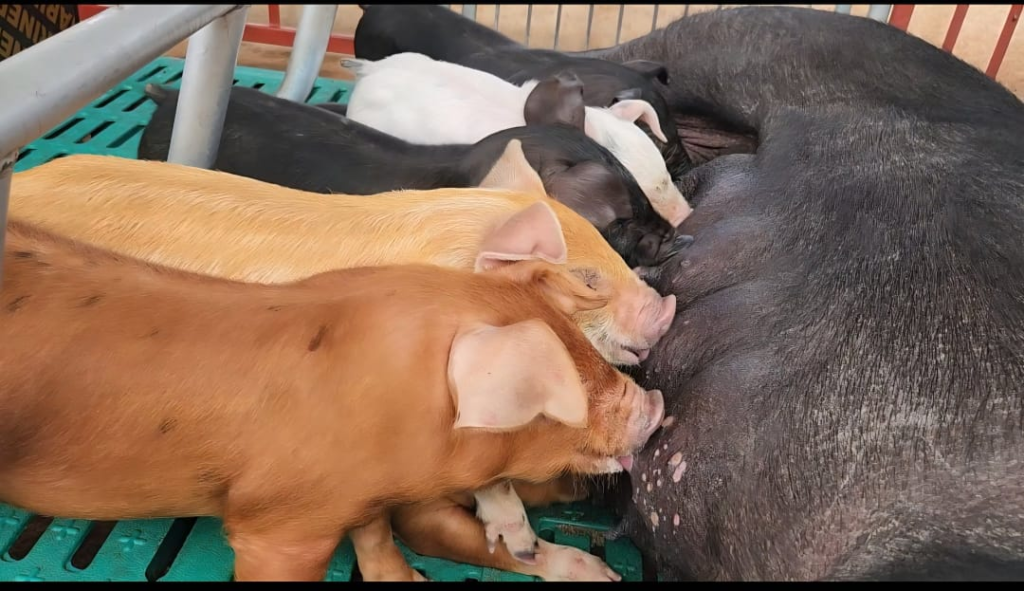
Today, RUZAGIZA Francis owns a farm with more than 900 pigs. These animals are managed under a well-organized daily system.
ALSO READ: Rwandan Soldiers and Police to Launch Community Welfare Activities
During the interview, he explained how the pigs are cared for: “I feed my pigs three times a day. Their diet is carefully prepared to ensure they grow well. In the evening we also give them grass to ensure they have a balanced diet and produce high-quality meat.”
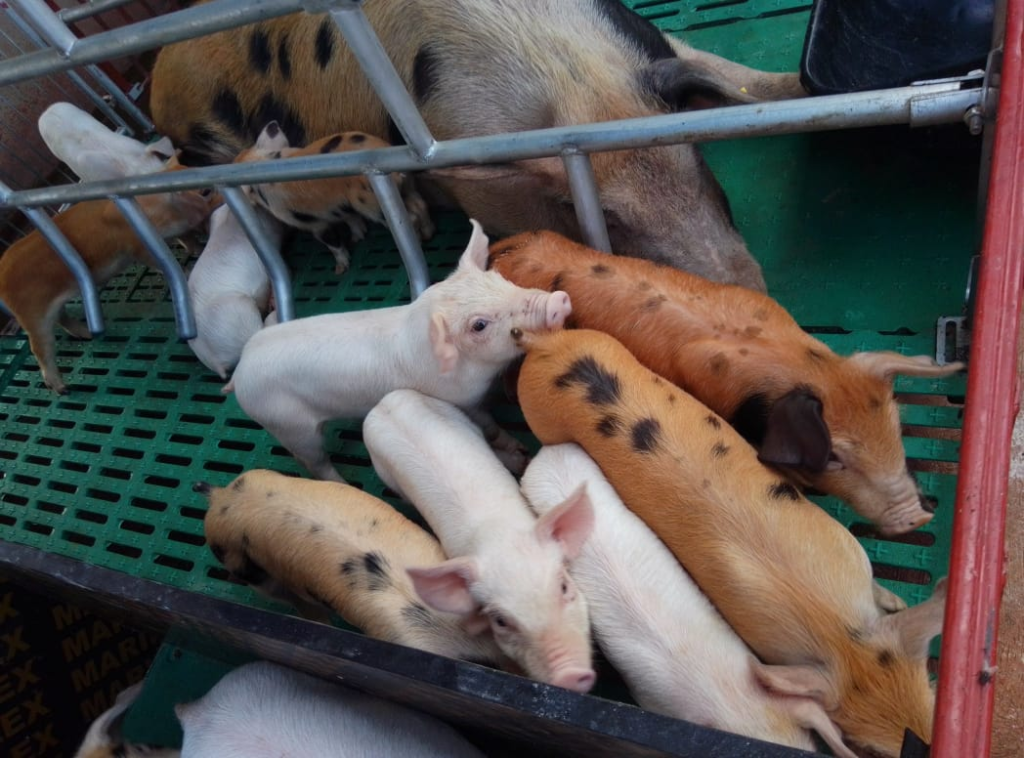
He says some pigs on the farm weigh between 100 and 130 kilograms, depending on how they are raised: “We have some pigs that are very large, you can see them yourself,” he said. “Some weigh about 100 kilograms, others reach 130 kilograms, and some even exceed that weight.”
However, he explains that the largest pigs are usually breeding animals: “Those are parent pigs used for breeding, so we don’t slaughter them. Instead, we slaughter others that we raise specifically for meat.”
Most pigs raised for meat reach market size between five and eight months of age: “When our pigs give birth, we keep the piglets and raise them ourselves. We do not sell piglets. Instead, we raise them so that some will become breeders while others will eventually be slaughtered for meat.”
Supplying Pork to Kigali Markets
In addition to raising pigs, RUZAGIZA has established a system to supply pork to markets in Kigali: “Every day we slaughter three to four pigs,” he explained. “The meat is transported to the Kigali market, where demand is high.”
According to him, pork consumption in Rwanda continues to increase: “There is a strong and growing market. Many people enjoy pork, especially when it comes from well-raised pigs.”
He says pork from his farm sells for around 7,000 Rwandan francs per kilogram.

Creating Jobs for the Community
While touring the farm, the AGACIRO PRESS reporter noticed many workers performing different tasks. Some were working inside the pig houses, others were cultivating vegetables used to feed the pigs, while others were handling meat processing.
Curious about how many people work on the farm, the reporter asked RUZAGIZA about his workforce.
RUZAGIZA explained that the farm currently employs more than 50 workers: “I am not the only one benefiting from this project,” he said. “This farm provides jobs for many people. More than 50 workers earn a living here, and they all have families to support.”
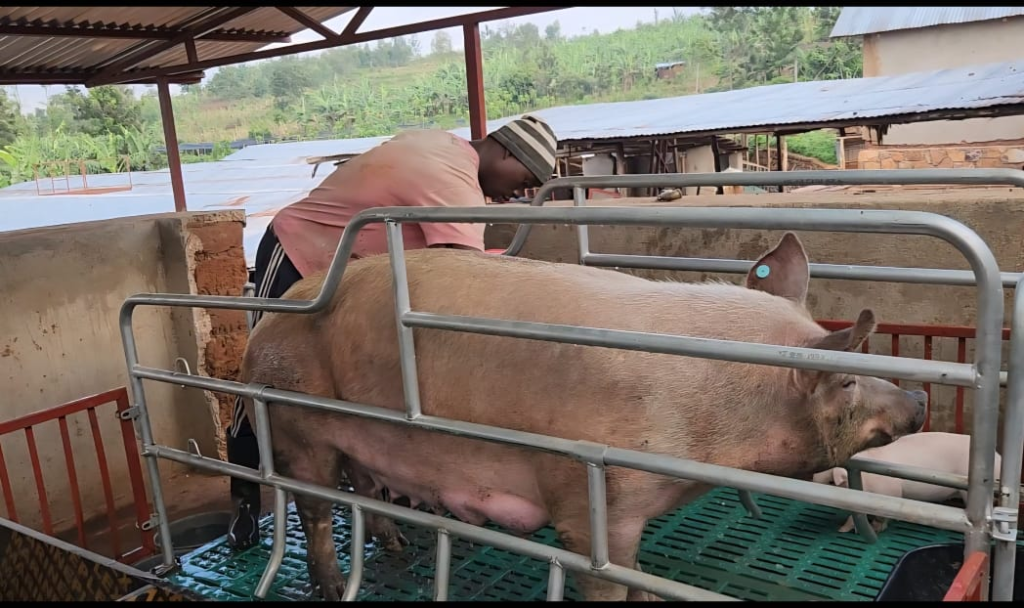
He says creating employment opportunities is one of the things that gives him the greatest pride.
Appreciating Government Support
RUZAGIZA also expressed gratitude to the Government of Rwanda for supporting agricultural and livestock development: “The government supports us through the Ministry of Agriculture and Animal Resources and the Rwanda Agriculture and Animal Resources Development Board (RAB). They provide training and help farmers improve livestock management.”
He believes government programs have helped many small investors grow their agricultural businesses.
Advice to Young Entrepreneurs
As the interview came to an end, RUZAGIZA encouraged young people and aspiring entrepreneurs to consider pig farming: “Pig farming can generate significant income,” he said. “If someone has discipline, planning, and determination, they can succeed quickly.”
He also emphasized the importance of starting small: “People should not fear starting small. I also started with just 10 pigs, but today I have nearly 1,000 pigs.”
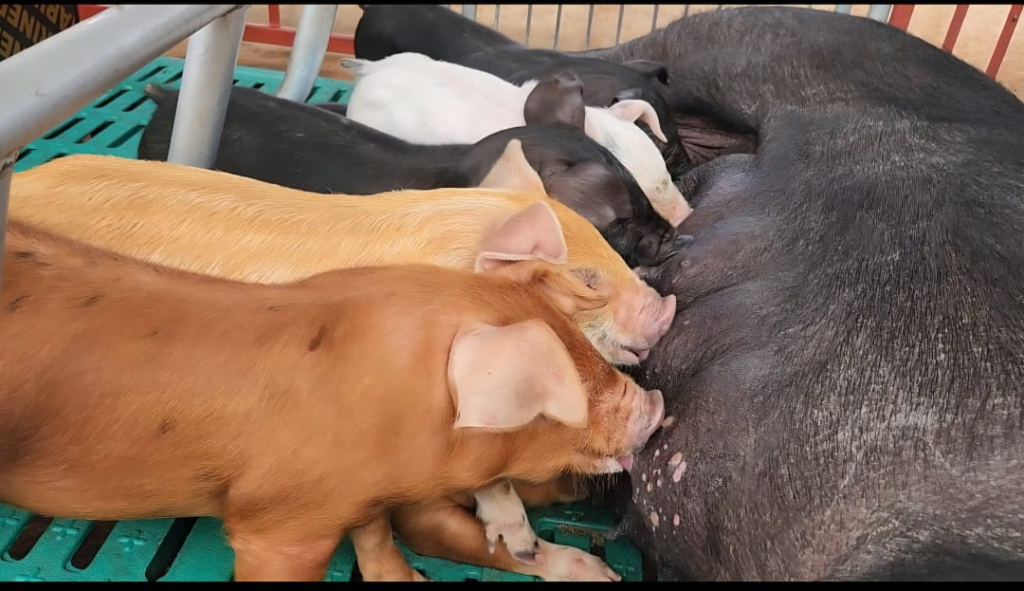
RUZAGIZA concluded by sharing his future vision: “My dream is to continue expanding this project. Right now the farm covers only two hectares, but I want to increase the land size, raise more pigs, and create more jobs for people. When you work hard and love what you do, progress is possible.”
Why Pig Farming is Profitable in Rwanda
Pig farming is one of the fastest-growing livestock sectors in Rwanda. This is mainly because pigs reproduce quickly, generate income for farmers, and help meet the increasing demand for pork.
Economic Benefits for Farmers
Pigs can generate income faster compared to many other livestock animals. They reproduce quickly and can produce many piglets in a single birth.
Some improved pig breeds can give birth to up to 20 piglets at once, while traditional breeds usually produce fewer than 10.
Because of this high reproduction rate, pig farming can help farmers grow their wealth within a relatively short period.
Pork Production in Rwanda
Pork has become increasingly popular among Rwandan consumers. In 2023, Rwanda produced approximately 22,839 tons of pork. The government aims to increase this production to 31,144 tons by 2029 as demand continues to grow. This shows that national agricultural institutions are investing heavily in expanding the pig farming sector.
Pig Population in Rwanda
Statistics show that pig farming has grown significantly in Rwanda over the years:
- In 2010, Rwanda had about 684,708 pigs.
- By 2022, the number had risen to nearly 1.49 million pigs.
- Recent estimates suggest that Rwanda currently has between 1.1 million and 1.3 million pigs.
Although outbreaks of diseases such as African Swine Fever have sometimes affected pig populations, the sector remains one of the fastest-growing livestock industries in the country.
Contribution to the National Economy
Pig farming contributes significantly to Rwanda’s food supply and economic development. In 2018, pork accounted for 21% of all meat produced in Rwanda.
The sector also creates employment opportunities for thousands of people, including farmers, traders, feed producers, transporters, and meat processors.
Technology Improving Pig Farming
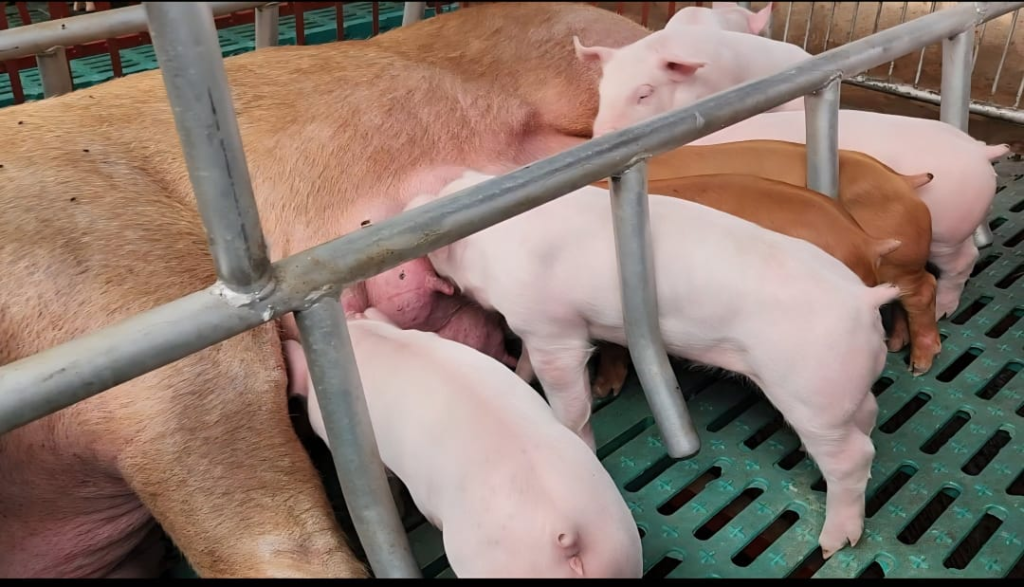
To improve productivity, many pig farmers in Rwanda are adopting modern technologies such as artificial insemination.
Currently, about 65% of pig farmers in Rwanda use artificial insemination techniques. This technology allows farmers to access high-quality pig breeds that grow faster and produce more piglets.
A Sector Full of Opportunity
Pig farming remains one of the most promising agricultural businesses in Rwanda. With a growing market for pork and the animals’ fast reproduction rate, the sector continues to attract investors and farmers looking to improve their livelihoods.
The statistics show that Rwanda already has over one million pigs, and government plans aim to further increase pork production in the coming years.
For entrepreneurs like RUZAGIZA Francis, pig farming is not just a business—it is proof that with dedication, smart planning, and perseverance, small beginnings can grow into remarkable success stories.