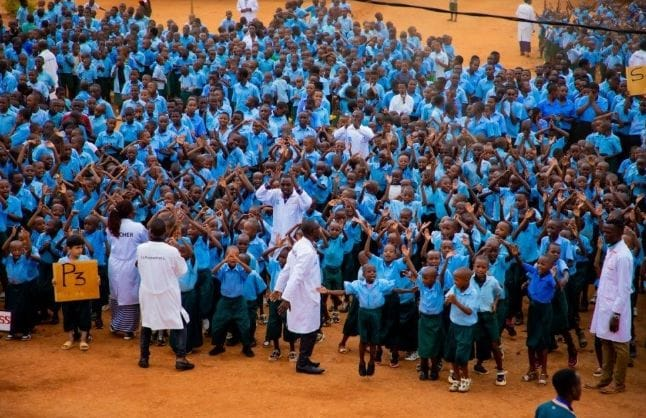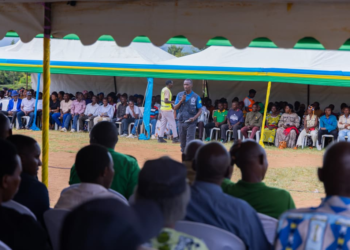
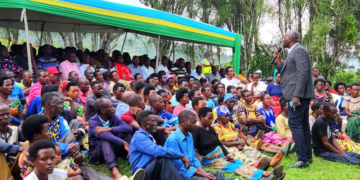
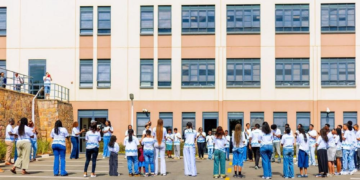

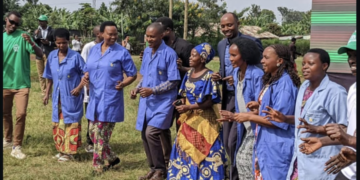
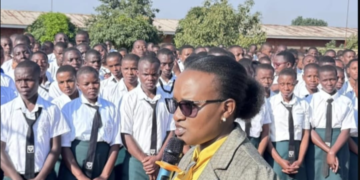






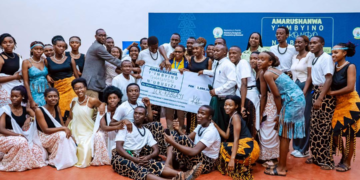


More than 26,000 refugee children living in Mahama Refugee Camp, in Kirehe District, have thanked the Government of Rwanda for giving them access to education and vocational training. They say these opportunities have helped them build better futures and support their families.

Mahama is the largest refugee camp in Rwanda. It hosts about 72,340 refugees from 14 countries. Most come from the Democratic Republic of the Congo and Burundi. More than 26,000 children in the camp attend different levels of education.
ALSO READ: Two People Lose Their Lives in the First Stage of the Tour du Rwanda
Besides schooling, refugees benefit from improved living conditions. They receive cooking gas and access schools in different parts of the country. These services help them live with dignity and hope for a better future.
Investment in Technical and Vocational Education
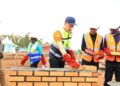
The Jyambere Project, implemented under the Ministry in charge of Emergency Management (MINEMA), has strengthened technical education in Kirehe District. The project focuses on equipping young refugees with practical skills.
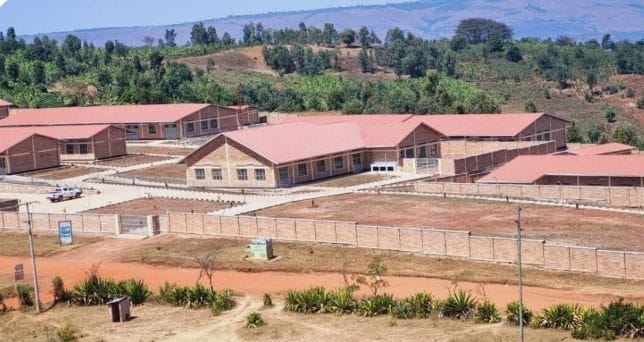
It supported the construction of Musaza Technical Secondary School, which cost over Rwf 2 billion, including equipment. It also funded Bukora Technical Secondary School, built at more than Rwf 3.5 billion.
These schools train students in technical and vocational fields. As a result, many graduates can find jobs or start small businesses after completing their studies.
Students Share Stories of Hope and Determination
Many students say Rwanda’s education system has transformed their lives. Munana Elie, an 18-year-old Senior Five student studying Electrical Technology at Musaza TSS, arrived in Rwanda when he was very young. He said he has never faced discrimination because of his refugee status.
He said: “I now have the skills to work with electrical technology. I can get a job in industries, and I am confident that after completing my studies, I will either secure employment immediately or continue my education at university. I am grateful to Rwanda for supporting us without discrimination and for helping us integrate well with other students.”
Iranejeje Nicole, a tailoring student at Musaza TSS, shared similar views. She said her classmates treat her equally and with respect. She added that she hopes to use her skills to lift her family out of poverty.
Local Authorities Emphasize Equal Treatment
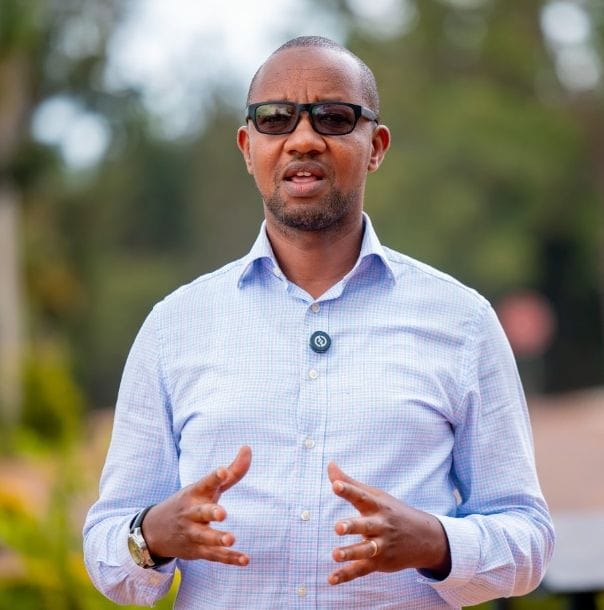
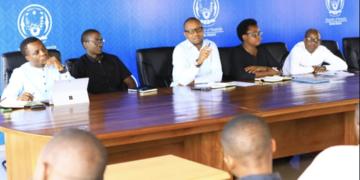
Local leaders say refugees enjoy the same rights as other residents. The Mayor of Kirehe District, Rangira Bruno, explained that the district follows national laws that promote equality.
He said: “They attend the same schools as other children, receive healthcare services, and access economic services without exclusion. This enables us to monitor their welfare just as we do for other residents, and also to identify opportunities where their diverse skills can contribute to accelerating development in our district.”
According to the mayor, this approach promotes unity and peaceful coexistence. It also strengthens cooperation between refugees and host communities.
Infrastructure Development and Rising Enrollment
For the past seven years, the Jyambere Project has supported infrastructure development in refugee-hosting districts. These include Gisagara, Nyamagabe, Karongi, Gicumbi, Gatsibo, and Kirehe.
In Kirehe, the project built Musaza TSS and Bukora TSS. It also constructed a two-storey building at Kirehe Hospital. In addition, authorities are upgrading Nyarubuye Health Centre into a hospital. Drainage systems around the refugee camp are also being improved.
These projects benefit both refugees and local residents. They improve access to health care, education, and sanitation.
Meanwhile, the Ministry of Education reports steady growth in refugee enrollment. The number of refugee students increased by 10.9% during the 2023/2024 academic year.
A report published in March 2025 shows that enrollment rose from 39,728 in 2022/2023 to 44,051 in 2023/2024. Of these students, 51.3% are boys and 48.7% are girls. This growth reflects Rwanda’s continued commitment to inclusive education.