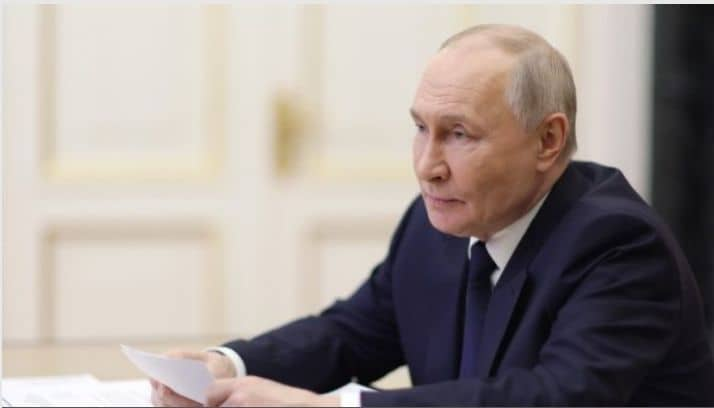









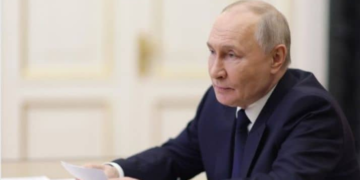









President Vladimir Putin has warned that Russia could halt natural gas and petroleum supplies to countries in the European Union at any time.

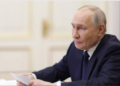
Putin made the remarks on March 4, 2026, during a meeting in Moscow with Péter Szijjártó, the Foreign Minister of Hungary. His comments come as many European countries continue efforts to reduce their dependence on Russian energy following the war between Russia and Ukraine.
ALSO READ: The United Kingdom Deploys Additional Fighter Jets to Qatar
Russia Responds to Europe’s Plan to End Gas Purchases
Several European governments have announced plans to gradually stop buying Russian gas and petroleum products. In response, Putin suggested that Russia might act first instead of waiting for European countries to end the trade themselves.
He said Russia could stop the supply earlier and redirect its energy exports to countries considered more reliable partners.
Putin stated: “This is not for political reasons, but if we are going to stop this trade in a month or two, it would be better to end it now and focus on reliable partner countries. This is not a final decision; it is my personal view. I will instruct the government to work on this issue together with our companies.”
Europe’s Shift Away From Russian Energy
Before the conflict in Ukraine began in 2022, Russia was one of the largest suppliers of gas and petroleum products to Europe. However, the war prompted many European governments to reduce their reliance on Russian energy sources.
Since then, several countries have invested in alternative suppliers and energy infrastructure to limit their dependence on Moscow.
Some Countries Still Depend on Russian Gas
Despite the shift, some European countries still receive Russian gas through pipeline networks. These include Hungary, Slovakia, and Serbia.
Other nations such as France, Belgium, Spain, Netherlands, and Portugal also import Russian gas, although they mainly do so through liquefied natural gas shipments rather than large pipeline systems.
Reports suggest that Russia may maintain energy agreements with Hungary and Slovakia, while other European buyers could face possible supply cuts if Moscow decides to change its export policy.