





























Farmers in Mpanga Sector, located in Kirehe District, are recording remarkable improvements in crop production following the introduction of modern irrigation technology known as the Pivot System.

The innovation is helping transform traditional farming into climate-resilient, high-yield agriculture, supporting food security and economic growth in Rwanda.
ALSO READ: Rwanda Receives 208 Nationals Repatriated After Escaping FDLR
Struggles with Climate and Traditional Farming Methods
For many years, farmers in Mpanga depended on rainfall and manual farming practices. However, frequent droughts and irregular weather patterns made farming unpredictable.
As a result, farmers invested long hours in the fields but harvested low yields. In addition, large areas of fertile land remained unused due to lack of reliable water sources. This situation limited income and discouraged large-scale production.
Pivot Irrigation System Transforms Farmland
The introduction of the Pivot irrigation system marked a major turning point for farmers in the area.
So far, more than 600 hectares of land have been developed and equipped with modern irrigation facilities. The system distributes water evenly across fields, ensuring that crops receive sufficient moisture throughout the year.
As a result, farmers can now grow maize, soybeans, and other staple crops under stable conditions, leading to higher productivity and better-quality harvests.
Improved Yields and Year-Round Production
With consistent water supply, farmers are no longer restricted to seasonal farming.
They now practice year-round cultivation, which has significantly increased both yields and income. Many farmers report stronger crops, reduced losses, and improved market value.
Furthermore, access to reliable irrigation has encouraged farmers to adopt better seeds, fertilizers, and modern farming techniques, strengthening overall agricultural performance.
Strong Partnerships Drive Agricultural Development
Local authorities credit the success of the project to close cooperation between government agencies, development partners, and farmer cooperatives.
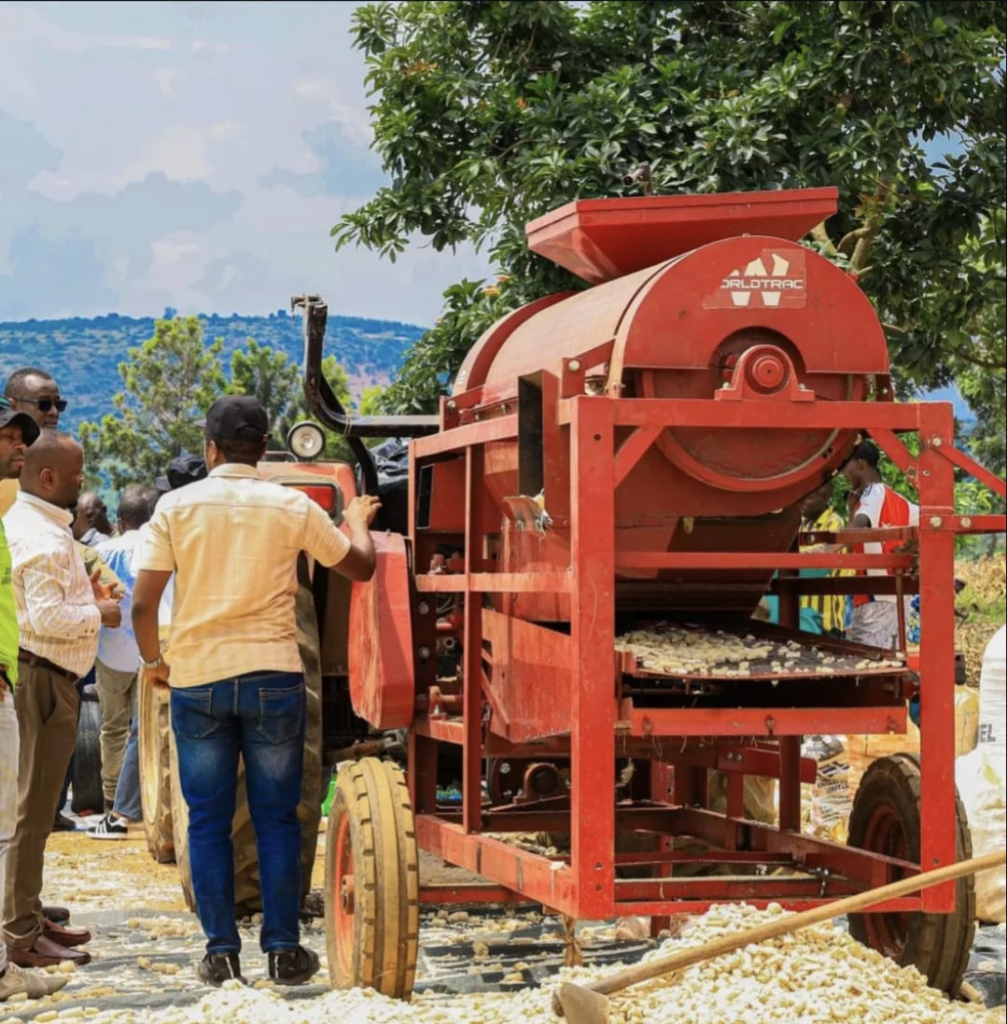
The Vice Mayor in charge of Economic Development, Modeste Nziranbatinya, emphasized that land consolidation and mechanized farming are central to modern agriculture.
He noted that organized farming and shared infrastructure make it easier to introduce technology, improve efficiency, and promote sustainable production.
Better Livelihoods and Future Opportunities for Farmers
Members of farming cooperatives say the increased output has greatly improved their living standards.
Higher income has enabled families to pay school fees, access healthcare, and invest in livestock and small businesses. In addition, working in cooperatives has made it easier to obtain loans, farm inputs, and training.
Overall, the Pivot irrigation system has become a foundation for long-term rural development. By combining technology, cooperation, and good governance, Kirehe District is setting an example of how modern farming can boost food security and transform rural communities.